Cold Fusion (eBook)
634 Seiten
Bookbaby (Verlag)
978-1-5439-0619-6 (ISBN)
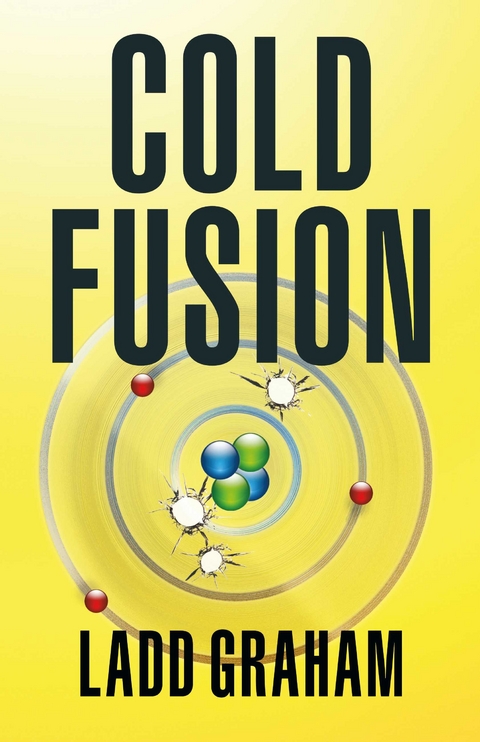
Clean, safe, nuclear energy became a reality in 2005. A reactor small enough to be carried in a suitcase promised power for the entire planet. No radioactivity. No toxic waste. Unlimited cheap energy. Cold fusion!When the rumors began to fly about cold fusion, powerful fossil fuel interests around the world were not pleased. Fortunes and empires would collapse if cold fusion were possible. This invention had to be shut down, annihilated, and erased from memory. The only way to do that was to silence, by whatever means, the scientist who had invented cold fusion before it went public!Preston Cook discovered the solution to cold fusion after years of solitary work in his home laboratory and suddenly, overnight, he found himself a target and a pariah! He was forced to run from a tightening circle of international assassins to save himself, his family, and his work.
Chapter 1
Preston Cook’s life was on the cusp of world-changing promise. Cold fusion was not a wild fantasy. In October of 2005, Preston would make it work. He would make it work in spite of all the other failed attempts back in the late eighties when the disappointing premature announcements by other physicists were followed by paltry, empty findings in replications around the globe. The enthusiasm for cold fusion had been sucked dry after the nineties and the foci for energy research had moved on, gone in other directions, turned to bio-fuels, solar panels, and wind turbines. And, predictably, a boat-load of energy researchers got in bed with the hard money and were trying to squeeze more and more efficiency out of every drop of fossil fuel, desperately shoving back the inevitable day when there would be none remaining. Cold fusion had gone completely by the wayside. Everyone had concluded it was a pipedream. The concept could still generate a few sparks of interest here and there, but not enough to power a flashlight, much less save the planet.
As far as Preston Cook knew, he was about the last scientist who still thoroughly believed in cold fusion, as he tweaked his contraptions, and continued the pursuit. He knew in his heart that he could pull it off. He could taste success. He could hear the future breathing inside the equipment he built in his Pasadena garage, which was converted into a laboratory years ago for that very project. It was soundproofed and air-conditioned, with precision lathes, a high-speed gas centrifuge, refrigerated lockers, and a fully-plumbed chemistry bench. There was even a clean room that looked like something unearthly occupying the rear third of the garage, made from inch thick floor to ceiling glass, with a twin-door airlock. The garage lab smelled like warm electrical wiring and sulfates. It was half space station and half metal shop, with chemistry paraphernalia tossed in. Computer monitors were everywhere, tapping into a series of a dozen PCs Preston had linked together to make a powerful single brain that ran simulations day and night.
Much to his wife’s everlasting dismay, a good deal of their retirement savings had gone into the lab. There was no money to be had at Tech-U, as California Technological University was frequently dubbed, because Preston was on hiatus. Nor was there money from anywhere else for Preston Cook and his God forsaken obsession.
Cold fusion was collateral damage on the international scientific front. The early experimenters in the enterprise – creating “nuclear reactions in thermos bottles”, as detractors said – had gone straight to the press with their findings, rather than introducing them gradually by asking colleagues to vet the experiments, as is expected in the research community. Consequently, volumes of misbegotten information about cold fusion were already in the public domain. It was a common view among potential investors that nobody could successfully patent such a reactor. Not only was Preston Cook pariah to conventional research grants because of the concept’s checkered history, but his research was equally off-putting to funding from venture capitalists. There was zero support in both directions. Nonetheless, Dr. Cook had pushed unwaveringly and heroically onward with his research over the years, all by himself and on his own nickel.
Preston’s friend and research partner in the early going, Dr. Maxwell Umberto, had given up and moved on finally, two years earlier, returning to his dissertation love, gravity and the elusive “unified theory”. Since then, Max’s voice had mutated into yet another one in the chorus reminding Dr. Cook that his commitment to cold fusion was folly, advising him to return to his students, to his classes, and to more traditional bench research at California Technological University, CTU or Tech-U, a mile away in Pasadena. Preston’s former partner had always had a weakness for popular science, anything that might prick up a few ears, and the unified theory was an edgy topic, always getting attention, like the ever-so mysterious beauty on the perimeter of a mixer who speaks to no one. One might expect as much from a fashion plate like Dr. Umberto, but Maxwell Umberto was also a smart scientist, no doubt there. Like Preston, his PhD was from MIT. In fact, they had known one another in graduate school and became strong friends amidst MIT’s somber, granite, mausoleum-like buildings along the Charles River in Cambridge, Mass.
Dr. Umberto’s curriculum vitae weighed a couple of pounds and it listed presentations at pretty much every major professional conference around the globe. It included publications in all the correct refereed journals, but it also included quite a few contributions to the likes of Science Digest and The Los Angeles Times. And that was because Max was a bit of a celebrity in the world of physics, which like nearby Hollywood had its own luminaries. He relished fame, notoriety, and the spotlight. Early in his career Maxwell Umberto had finagled himself into a very public spat with Carl Sagan, back when Sagan was on television holding forth on the vastness of the cosmos and its billions and billions of suns. Such a fight was not everyone’s badge of accomplishment, but Max wore it that way. It got him onto the national stage at a fairly young age. Yet, in spite of the limelight and in spite of what some considered his superficial manners and pandering to the press, Maxwell Umberto had also recently earned a nomination to become the new Chair of the Physics Department at Tech-U . This was a highly a coveted spot soon to be vacated by a world-renowned scholar who was retiring, a stuffy white guy who had lost touch with the cutting edge years ago. But tenured professors tend to hang on too long and too late in their careers, embarrassingly similar to the vociferous drunk one is unable to shed at a cocktail party. For Max, however, this departmental Chair’s impending vacancy was a propitious opportunity.
One is not considered for distinguished positions like the Chair of the Physics Department at Tech-U by being popular and by trading snipes with Carl Sagan. There had to be some meat on his bones. Still, because of Maxwell Umberto’s irrepressible showmanship there was more opposition to his appointment than was really justified. Many saw his publicity shenanigans as sufficiently off-putting that they readily and vocally discounted him for the Chair’s office. They had concerns about CTU’s image in the professional community, but with that opposition having been noted, Max Umberto countered with substantial professional clout. Almost no one thought he was a lightweight in his field. Even his most vehement detractors reluctantly conceded Max was a worthy scholar and scientist when he put his talents to it.
The Parthaneum at the southeast corner of the CTU campus is a spacious dining and drinking accommodation for the faculty and important friends of the institution. Stucco walls and dark wood echoed the Spanish architecture on the rest of the campus, but it also had a luxurious and stately quality, standing as it did near the perimeter of the lovely grounds where tall California oaks shaded the greens. Across each of the surrounding streets were quiet upscale neighborhoods ensconcing the campus and the Parthaneum in legacy and lending an imposing affect usually reserved for an exclusive club rather than college facilities. Faculty members and their guests were welcomed to the Parthaneum’s sanctuary through an open-air foyer that surrounded a gurgling baroque fountain. Heavy, white linen covered the dining tables spaced generously beneath a vaulted ceiling. Conversations were hushed with a dignity usually reserved for a library or cathedral. It was all contrived to provide a contemplative mealtime retreat that might honor the men and women who were guiding a goodly portion the next generation of the world’s premier scientists and engineers through their arduous studies. They all took these traditions and presumptions quite seriously. This was a trait that Tech-U cultivated, lending a distinct snobbishness to everyone associated with the institution. Even administrative assistants and clerks were known to be rather snooty when dealing with the general public as though they were personally responsible for the institution’s lofty credentials.
In September of 2005, Preston Cook still counted Maxwell Umberto as one of his closest friends and confidants, in spite of Maxwell’s abandonment of the cold fusion project two years earlier. At least once a week they would have lunch in the faculty dining room in the Parthaneum. Their lunches would typically conclude after an hour or so, with Preston describing some recent near miss in his research, after which a puzzled and despondent Preston would hang his head at the linen covered table, where rested the crystal goblets and the CTU bone china, and he would mumble something about lithium, or diodes, or heavy water and high frequency sound. It had become miserably predictable.
That was the queue for Max to reach across and touch his friend on the forearm and affectionately assure him the Physics Department would still take him back. Preston Cook was a wonderful teacher after all. And somewhere in the conversation, Max would remind Preston that cold fusion is a grand and beautiful notion, but it just wasn’t going to happen. Ever since Maxwell abandoned Preston to be as alone as Sisyphus shoving his boulder up the hill, Max repeatedly had compared the cold fusion idea to a search for a perpetual motion machine. The math on the energy involved just doesn’t add up...
| Erscheint lt. Verlag | 16.6.2017 |
|---|---|
| Sprache | englisch |
| Themenwelt | Literatur ► Fantasy / Science Fiction ► Science Fiction |
| ISBN-10 | 1-5439-0619-2 / 1543906192 |
| ISBN-13 | 978-1-5439-0619-6 / 9781543906196 |
| Informationen gemäß Produktsicherheitsverordnung (GPSR) | |
| Haben Sie eine Frage zum Produkt? |
 EPUB (Adobe DRM)
Größe: 841 KB
Kopierschutz: Adobe-DRM
Adobe-DRM ist ein Kopierschutz, der das eBook vor Mißbrauch schützen soll. Dabei wird das eBook bereits beim Download auf Ihre persönliche Adobe-ID autorisiert. Lesen können Sie das eBook dann nur auf den Geräten, welche ebenfalls auf Ihre Adobe-ID registriert sind.
Details zum Adobe-DRM
Dateiformat: EPUB (Electronic Publication)
EPUB ist ein offener Standard für eBooks und eignet sich besonders zur Darstellung von Belletristik und Sachbüchern. Der Fließtext wird dynamisch an die Display- und Schriftgröße angepasst. Auch für mobile Lesegeräte ist EPUB daher gut geeignet.
Systemvoraussetzungen:
PC/Mac: Mit einem PC oder Mac können Sie dieses eBook lesen. Sie benötigen eine
eReader: Dieses eBook kann mit (fast) allen eBook-Readern gelesen werden. Mit dem amazon-Kindle ist es aber nicht kompatibel.
Smartphone/Tablet: Egal ob Apple oder Android, dieses eBook können Sie lesen. Sie benötigen eine
Geräteliste und zusätzliche Hinweise
Buying eBooks from abroad
For tax law reasons we can sell eBooks just within Germany and Switzerland. Regrettably we cannot fulfill eBook-orders from other countries.
aus dem Bereich