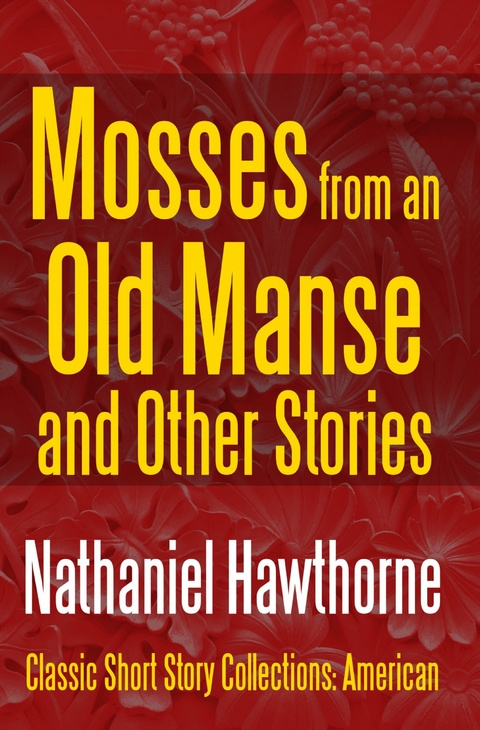
Mosses from an Old Manse and Other Stories (eBook)
220 Seiten
Publishdrive (Verlag)
978-1-387-08506-4 (ISBN)
First published in 1846 in the present form, famous English story writer Nathaniel Hawthorne's book 'Mosses from an Old Manse, and Other Stories' is a collection of fictional short stories.
The collection includes several previously-published short stories, and was named in honor of The Old Manse where Hawthorne and his wife lived for the first three years of their marriage. The first edition was published in 1846.Hawthorne seems to have been paid $75 for the publication.
Many of the tales collected in Mosses from an Old Manse are allegories and, typical of Hawthorne, focus on the negative side of human nature. Hawthorne's friend Herman Melville noted this aspect in his review 'Hawthorne and His Mosses':This black conceit pervades him through and through. You may be
witched by his sunlight,-transported by the bright gildings in the skies
he builds over you; but there is the blackness of darkness beyond; and
even his bright gildings but fringe and play upon the edges of
thunder-clouds.
William Henry Channing noted in his review of the collection, in The Harbinger, its author 'had been baptized in the deep waters of Tragedy', and his work was dark with only brief moments of 'serene brightness' which was never brighter than 'dusky twilight'.
After the book's first publication, Hawthorne sent copies to critics including Margaret Fuller, Rufus Wilmot Griswold, Edgar Allan Poe, and Henry Theodore Tuckerman. Poe responded with a lengthy review in which he praised Hawthorne'swriting but faulted him for associating with New England journals, Ralph Waldo Emerson, and the Transcendentalists. He wrote, 'Let him mend his pen, get a bottle of visible ink, come out from the Old Manse, cut Mr. Alcott, hang (if possible) the editor of 'The Dial,' and throw out of the window to the pigs all his odd numbers of the North American Review. A young Walt Whitman
wrote that Hawthorne was underpaid, and it was unfair that his book
competed with imported European books. He asked, 'Shall real American
genius shiver with neglect while the public runs after this foreign
trash?' Generally, most contemporary critics praised the collection and considered it better than Hawthorne's earlier collection, Twice-Told Tales.
Regarding the second edition, published in 1854, Hawthorne wrote to publisher James Thomas Fields
that he no longer understood the messages he was sending in these
stories. He shared, 'I remember that I always had a meaning-or, at
least, thought I had', and noted, 'Upon my honor, I am not quite sure that I entirely
comprehend my own meaning in some of these blasted allegories... I am a
good deal changed since those times; and to tell you the truth, my past
self is not very much to my taste, as I see in this book.' (from Wikipedia)
First published in 1846 in the present form, famous English story writer Nathaniel Hawthorne's book 'Mosses from an Old Manse, and Other Stories' is a collection of fictional short stories.The collection includes several previously-published short stories, and was named in honor of The Old Manse where Hawthorne and his wife lived for the first three years of their marriage. The first edition was published in 1846.Hawthorne seems to have been paid $75 for the publication.Many of the tales collected in Mosses from an Old Manse are allegories and, typical of Hawthorne, focus on the negative side of human nature. Hawthorne's friend Herman Melville noted this aspect in his review "e;Hawthorne and His Mosses"e;:This black conceit pervades him through and through. You may be witched by his sunlight, transported by the bright gildings in the skies he builds over you; but there is the blackness of darkness beyond; and even his bright gildings but fringe and play upon the edges of thunder-clouds.William Henry Channing noted in his review of the collection, in The Harbinger, its author "e;had been baptized in the deep waters of Tragedy"e;, and his work was dark with only brief moments of "e;serene brightness"e; which was never brighter than "e;dusky twilight"e;.After the book's first publication, Hawthorne sent copies to critics including Margaret Fuller, Rufus Wilmot Griswold, Edgar Allan Poe, and Henry Theodore Tuckerman. Poe responded with a lengthy review in which he praised Hawthorne's writing but faulted him for associating with New England journals, Ralph Waldo Emerson, and the Transcendentalists. He wrote, "e;Let him mend his pen, get a bottle of visible ink, come out from the Old Manse, cut Mr. Alcott, hang (if possible) the editor of 'The Dial,' and throw out of the window to the pigs all his odd numbers of the North American Review. A young Walt Whitman wrote that Hawthorne was underpaid, and it was unfair that his book competed with imported European books. He asked, "e;Shall real American genius shiver with neglect while the public runs after this foreign trash?"e; Generally, most contemporary critics praised the collection and considered it better than Hawthorne's earlier collection, Twice-Told Tales.Regarding the second edition, published in 1854, Hawthorne wrote to publisher James Thomas Fields that he no longer understood the messages he was sending in these stories. He shared, "e;I remember that I always had a meaning or, at least, thought I had"e;, and noted, "e;Upon my honor, I am not quite sure that I entirely comprehend my own meaning in some of these blasted allegories... I am a good deal changed since those times; and to tell you the truth, my past self is not very much to my taste, as I see in this book."e; (from Wikipedia)
| Erscheint lt. Verlag | 15.8.2017 |
|---|---|
| Reihe/Serie | Classic Short Story Collections: American | Classic Short Story Collections: American |
| Sprache | englisch |
| Themenwelt | Literatur ► Romane / Erzählungen |
| Schlagworte | American Short Stories • collection single author • Fiction • New England -- Social life and customs -- Fiction • short reads • Short Stories |
| ISBN-10 | 1-387-08506-9 / 1387085069 |
| ISBN-13 | 978-1-387-08506-4 / 9781387085064 |
| Informationen gemäß Produktsicherheitsverordnung (GPSR) | |
| Haben Sie eine Frage zum Produkt? |
 EPUB (Adobe DRM)
Größe: 676 KB
Kopierschutz: Adobe-DRM
Adobe-DRM ist ein Kopierschutz, der das eBook vor Mißbrauch schützen soll. Dabei wird das eBook bereits beim Download auf Ihre persönliche Adobe-ID autorisiert. Lesen können Sie das eBook dann nur auf den Geräten, welche ebenfalls auf Ihre Adobe-ID registriert sind.
Details zum Adobe-DRM
Dateiformat: EPUB (Electronic Publication)
EPUB ist ein offener Standard für eBooks und eignet sich besonders zur Darstellung von Belletristik und Sachbüchern. Der Fließtext wird dynamisch an die Display- und Schriftgröße angepasst. Auch für mobile Lesegeräte ist EPUB daher gut geeignet.
Systemvoraussetzungen:
PC/Mac: Mit einem PC oder Mac können Sie dieses eBook lesen. Sie benötigen eine
eReader: Dieses eBook kann mit (fast) allen eBook-Readern gelesen werden. Mit dem amazon-Kindle ist es aber nicht kompatibel.
Smartphone/Tablet: Egal ob Apple oder Android, dieses eBook können Sie lesen. Sie benötigen eine
Geräteliste und zusätzliche Hinweise
Buying eBooks from abroad
For tax law reasons we can sell eBooks just within Germany and Switzerland. Regrettably we cannot fulfill eBook-orders from other countries.
EPUB (Ohne DRM)Digital Rights Management: ohne DRM
Dieses eBook enthält kein DRM oder Kopierschutz. Eine Weitergabe an Dritte ist jedoch rechtlich nicht zulässig, weil Sie beim Kauf nur die Rechte an der persönlichen Nutzung erwerben.
Dateiformat: EPUB (Electronic Publication)
EPUB ist ein offener Standard für eBooks und eignet sich besonders zur Darstellung von Belletristik und Sachbüchern. Der Fließtext wird dynamisch an die Display- und Schriftgröße angepasst. Auch für mobile Lesegeräte ist EPUB daher gut geeignet.
Systemvoraussetzungen:
PC/Mac: Mit einem PC oder Mac können Sie dieses eBook lesen. Sie benötigen dafür die kostenlose Software Adobe Digital Editions.
eReader: Dieses eBook kann mit (fast) allen eBook-Readern gelesen werden. Mit dem amazon-Kindle ist es aber nicht kompatibel.
Smartphone/Tablet: Egal ob Apple oder Android, dieses eBook können Sie lesen. Sie benötigen dafür eine kostenlose App.
Geräteliste und zusätzliche Hinweise
Buying eBooks from abroad
For tax law reasons we can sell eBooks just within Germany and Switzerland. Regrettably we cannot fulfill eBook-orders from other countries.
aus dem Bereich