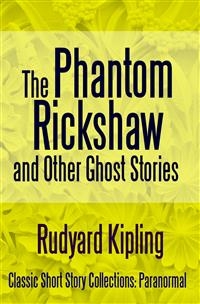
Phantom Rickshaw and Other Ghost Stories (eBook)
139 Seiten
Publishdrive (Verlag)
978-1-387-14886-8 (ISBN)
The Phantom 'Rickshaw and Other Tales, also known as The Phantom 'Rickshaw & other Eerie Tales, is a collection of short stories by Rudyard Kipling, first published in 1888.
The Phantom 'RickshawAfter an affair with a Mrs. Agnes Keith-Wessington in Simla,
the narrator, Jack, repudiates her and eventually becomes engaged to
Miss Kitty Mannering. Yet Mrs. Wessington continually reappears in
Jack's life, begging him to reconsider, insisting that it was all just a
mistake. But Jack wants nothing to do with her and continues to spurn
her. Eventually Mrs. Wessington dies, much to Jack's relief. However,
some time thereafter he sees her old rickshaw
and assumes that someone has bought it. Then, to his astonishment, the
rickshaw and the men pulling it pass through a horse, revealing
themselves to be phantoms, bearing the departed ghost of Mrs.
Wessington. This leads Jack into increasingly erratic behavior which he
tries to cover up by concocting increasingly elaborate lies to assuage
Kitty's suspicions. Eventually a Dr. Heatherlegh takes him in, supposing
the visions to be the result of disease or madness. Despite their
efforts, Kitty and her family become increasingly suspicious and
eventually call off the engagement. Jack loses hope and begins wandering
the city aimlessly, accompanied by the ghost of Mrs. Wessington.
The narrator, while staying at a dâk-bungalow in Katmal, India,
hears someone in the next room playing billiards. He assumes that it is
a group of doolie-bearers who've just arrived. The next morning he
complains, only to learn that there were no coolies in the dâk-bungalow
the night before. The owner then tells him that ten years ago it was a
billiard-hall. An engineer who'd been fond of the billiard hall had died
somewhere far from it and they suspected that it was his ghost that
occasionally came to visit it.
One
evening Morrowbie Jukes, an Englishman, is feeling a bit feverish and
the barking of the dogs outside his tent is upsetting him. So he mounts
his horse in order to pursue them. The horse bolts and they eventually
fall into a sandy ravine on the edge of a river. He awakens the next
morning to find himself in a village of the living dead, where people
who appear to have died of, for instance, cholera, but who revived when
their bodies were about to be burned, are imprisoned. He quickly learns
that it is impossible to climb out because of the sandy slope. And the
river is doubly treacherous with quicksand and a rifleman who will try
to pick them off. He recognizes one man there, a Brahmin named Gunga Dass. Gunga has become ruthless, but he does feed Jukes with dead crow.
Eventually Jukes discovered that another Englishman had been there and
died. On his corpse Jukes finds a note explaining how to safely get
through the quicksand. After Jukes explains it to Gunga, Gunga confesses
to murdering the Englishman for fear of being left behind. They plan
their escape for that evening, when the rifleman will be unable to see
them in the dark. When the time to escape arrives, Gunga knocks Jukes
unconscious and escapes alone. When Jukes awakes he is found by the boy
who kept his dogs and is helped to escape by means of a rope.
The narrator, a journalist, meets two colorful characters, Daniel Dravot and Peachey Carnahan, while on a train. Later they seek him out at his printing press in Lahore, for books or maps of Kafiristan.
He then plays witness to their vow to each other to become kings of
Kafiristan, a venture which he sees as ill-advised. Two years later
Peachey returns and informs the narrator that they indeed reached
Kafiristan. While there, were seen as gods and eventually Daniel is made
king. They taught the Kafiristanis how to use rifles and military
tactics. Eventually Dravot decides to take a Kafiristani woman to wife.
In her terror she bites him. Upon seeing him bleed, the priests declare
him not to be a god and the Kafiristanis immediately seek their deaths.
One clan chief, whom they call 'Billy Fish' helps them to escape but
eventually they are caught and Daniel is thrown into a gorge to his
death. They crucified Peachey but then let him go when he survived. The
narrator puts Peachey in an asylum where he dies soon thereafter.
Joseph Rudyard Kipling (30 December 1865 - 18 January 1936) was an English journalist, short-story writer, poet, and novelist.
Kipling's works of fiction include The Jungle Book (1894), Kim (1901), and many short stories, including 'The Man Who Would Be King' (1888). His poems include 'Mandalay' (1890), 'Gunga Din' (1890), 'The Gods of the Copybook Headings' (1919), 'The White Man's Burden' (1899), and 'If-' (1910). He is regarded as a major innovator in the art of the short story; his children's books are classics of children's literature, and one
critic described his work as exhibiting 'a versatile and luminous
narrative gift'.
Kipling was one of the most popular writers in the United Kingdom, in
both prose and verse, in the late 19th and early 20th centuries. Henry James
said: 'Kipling strikes me personally as the most complete man of
genius, as distinct from fine intelligence, that I have ever known.'In 1907, at the age of 42, he was awarded the Nobel Prize in Literature, making him the first English-language writer to receive the prize and its youngest recipient to date. He was also sounded out for the British Poet Laureateship and on several occasions for a knighthood, both of which he declined.
The Phantom 'Rickshaw and Other Tales, also known as The Phantom 'Rickshaw & other Eerie Tales, is a collection of short stories by Rudyard Kipling, first published in 1888.The Phantom 'RickshawAfter an affair with a Mrs. Agnes Keith-Wessington in Simla, the narrator, Jack, repudiates her and eventually becomes engaged to Miss Kitty Mannering. Yet Mrs. Wessington continually reappears in Jack's life, begging him to reconsider, insisting that it was all just a mistake. But Jack wants nothing to do with her and continues to spurn her. Eventually Mrs. Wessington dies, much to Jack's relief. However, some time thereafter he sees her old rickshaw and assumes that someone has bought it. Then, to his astonishment, the rickshaw and the men pulling it pass through a horse, revealing themselves to be phantoms, bearing the departed ghost of Mrs. Wessington. This leads Jack into increasingly erratic behavior which he tries to cover up by concocting increasingly elaborate lies to assuage Kitty's suspicions. Eventually a Dr. Heatherlegh takes him in, supposing the visions to be the result of disease or madness. Despite their efforts, Kitty and her family become increasingly suspicious and eventually call off the engagement. Jack loses hope and begins wandering the city aimlessly, accompanied by the ghost of Mrs. Wessington.My Own True Ghost StoryThe narrator, while staying at a dk-bungalow in Katmal, India, hears someone in the next room playing billiards. He assumes that it is a group of doolie-bearers who've just arrived. The next morning he complains, only to learn that there were no coolies in the dk-bungalow the night before. The owner then tells him that ten years ago it was a billiard-hall. An engineer who'd been fond of the billiard hall had died somewhere far from it and they suspected that it was his ghost that occasionally came to visit it.The Strange Ride of Morrowbie JukesOne evening Morrowbie Jukes, an Englishman, is feeling a bit feverish and the barking of the dogs outside his tent is upsetting him. So he mounts his horse in order to pursue them. The horse bolts and they eventually fall into a sandy ravine on the edge of a river. He awakens the next morning to find himself in a village of the living dead, where people who appear to have died of, for instance, cholera, but who revived when their bodies were about to be burned, are imprisoned. He quickly learns that it is impossible to climb out because of the sandy slope. And the river is doubly treacherous with quicksand and a rifleman who will try to pick them off. He recognizes one man there, a Brahmin named Gunga Dass. Gunga has become ruthless, but he does feed Jukes with dead crow. Eventually Jukes discovered that another Englishman had been there and died. On his corpse Jukes finds a note explaining how to safely get through the quicksand. After Jukes explains it to Gunga, Gunga confesses to murdering the Englishman for fear of being left behind. They plan their escape for that evening, when the rifleman will be unable to see them in the dark. When the time to escape arrives, Gunga knocks Jukes unconscious and escapes alone. When Jukes awakes he is found by the boy who kept his dogs and is helped to escape by means of a rope.The Man Who Would Be KingThe narrator, a journalist, meets two colorful characters, Daniel Dravot and Peachey Carnahan, while on a train. Later they seek him out at his printing press in Lahore, for books or maps of Kafiristan. He then plays witness to their vow to each other to become kings of Kafiristan, a venture which he sees as ill-advised. Two years later Peachey returns and informs the narrator that they indeed reached Kafiristan. While there, were seen as gods and eventually Daniel is made king. They taught the Kafiristanis how to use rifles and military tactics. Eventually Dravot decides to take a Kafiristani woman to wife. In her terror she bites him. Upon seeing him bleed, the priests declare him not to be a god and the Kafiristanis immediately seek their deaths. One clan chief, whom they call "e;Billy Fish"e; helps them to escape but eventually they are caught and Daniel is thrown into a gorge to his death. They crucified Peachey but then let him go when he survived. The narrator puts Peachey in an asylum where he dies soon thereafter.Joseph Rudyard Kipling (30 December 1865 18 January 1936) was an English journalist, short-story writer, poet, and novelist.Kipling's works of fiction include The Jungle Book (1894), Kim (1901), and many short stories, including "e;The Man Who Would Be King"e; (1888). His poems include "e;Mandalay"e; (1890), "e;Gunga Din"e; (1890), "e;The Gods of the Copybook Headings"e; (1919), "e;The White Man's Burden"e; (1899), and "e;If "e; (1910). He is regarded as a major innovator in the art of the short story; his children's books are classics of children's literature, and one critic described his work as exhibiting "e;a versatile and luminous narrative gift"e;.Kipling was one of the most popular writers in the United Kingdom, in both prose and verse, in the late 19th and early 20th centuries. Henry James said: "e;Kipling strikes me personally as the most complete man of genius, as distinct from fine intelligence, that I have ever known."e;In 1907, at the age of 42, he was awarded the Nobel Prize in Literature, making him the first English-language writer to receive the prize and its youngest recipient to date. He was also sounded out for the British Poet Laureateship and on several occasions for a knighthood, both of which he declined.
| Erscheint lt. Verlag | 15.8.2017 |
|---|---|
| Reihe/Serie | Classic Short Story Collections: Paranormal |
| Classic Short Story Collections: Paranormal | Classic Short Story Collections: Paranormal |
| Sprache | englisch |
| Themenwelt | Literatur ► Fantasy / Science Fiction ► Fantasy |
| Literatur ► Romane / Erzählungen | |
| Schlagworte | collection single author • Fiction • ghost • Occult & Supernatural • paranormal short stories • short reads • Short Stories • supernatural creatures |
| ISBN-10 | 1-387-14886-9 / 1387148869 |
| ISBN-13 | 978-1-387-14886-8 / 9781387148868 |
| Informationen gemäß Produktsicherheitsverordnung (GPSR) | |
| Haben Sie eine Frage zum Produkt? |
 EPUB (Adobe DRM)
Größe: 607 KB
Kopierschutz: Adobe-DRM
Adobe-DRM ist ein Kopierschutz, der das eBook vor Mißbrauch schützen soll. Dabei wird das eBook bereits beim Download auf Ihre persönliche Adobe-ID autorisiert. Lesen können Sie das eBook dann nur auf den Geräten, welche ebenfalls auf Ihre Adobe-ID registriert sind.
Details zum Adobe-DRM
Dateiformat: EPUB (Electronic Publication)
EPUB ist ein offener Standard für eBooks und eignet sich besonders zur Darstellung von Belletristik und Sachbüchern. Der Fließtext wird dynamisch an die Display- und Schriftgröße angepasst. Auch für mobile Lesegeräte ist EPUB daher gut geeignet.
Systemvoraussetzungen:
PC/Mac: Mit einem PC oder Mac können Sie dieses eBook lesen. Sie benötigen eine
eReader: Dieses eBook kann mit (fast) allen eBook-Readern gelesen werden. Mit dem amazon-Kindle ist es aber nicht kompatibel.
Smartphone/Tablet: Egal ob Apple oder Android, dieses eBook können Sie lesen. Sie benötigen eine
Geräteliste und zusätzliche Hinweise
Buying eBooks from abroad
For tax law reasons we can sell eBooks just within Germany and Switzerland. Regrettably we cannot fulfill eBook-orders from other countries.
EPUB (Ohne DRM)Digital Rights Management: ohne DRM
Dieses eBook enthält kein DRM oder Kopierschutz. Eine Weitergabe an Dritte ist jedoch rechtlich nicht zulässig, weil Sie beim Kauf nur die Rechte an der persönlichen Nutzung erwerben.
Dateiformat: EPUB (Electronic Publication)
EPUB ist ein offener Standard für eBooks und eignet sich besonders zur Darstellung von Belletristik und Sachbüchern. Der Fließtext wird dynamisch an die Display- und Schriftgröße angepasst. Auch für mobile Lesegeräte ist EPUB daher gut geeignet.
Systemvoraussetzungen:
PC/Mac: Mit einem PC oder Mac können Sie dieses eBook lesen. Sie benötigen dafür die kostenlose Software Adobe Digital Editions.
eReader: Dieses eBook kann mit (fast) allen eBook-Readern gelesen werden. Mit dem amazon-Kindle ist es aber nicht kompatibel.
Smartphone/Tablet: Egal ob Apple oder Android, dieses eBook können Sie lesen. Sie benötigen dafür eine kostenlose App.
Geräteliste und zusätzliche Hinweise
Buying eBooks from abroad
For tax law reasons we can sell eBooks just within Germany and Switzerland. Regrettably we cannot fulfill eBook-orders from other countries.
aus dem Bereich