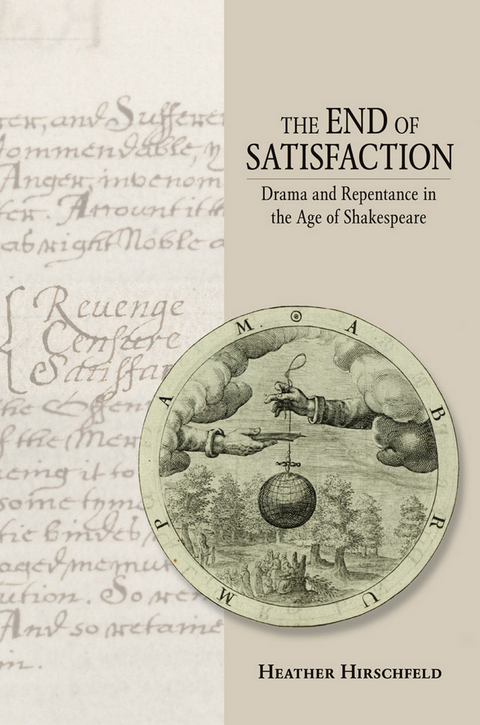
The End of Satisfaction (eBook)
256 Seiten
Cornell University Press (Verlag)
978-0-8014-7062-2 (ISBN)
Heather Hirschfeld recovers the historical specificity and the conceptual vigor of the term "satisfaction" as used in dramas of the sixteenth and early seventeenth centuries.
In The End of Satisfaction, Heather Hirschfeld recovers the historical specificity and the conceptual vigor of the term "satisfaction" during the sixteenth and early seventeenth centuries. Focusing on the term’s significance as an organizing principle of Christian repentance, she examines the ways in which Shakespeare and his contemporaries dramatized the consequences of its re- or de-valuation in the process of Reformation doctrinal change. The Protestant theology of repentance, Hirschfeld suggests, underwrote a variety of theatrical plots "to set things right" in a world shorn of the prospect of "making enough" (satisfacere).Hirschfeld’s semantic history traces today’s use of "satisfaction"—as an unexamined measure of inward gratification rather than a finely nuanced standard of relational exchange—to the pressures on legal, economic, and marital discourses wrought by the Protestant rejection of the Catholic sacrament of penance (contrition, confession, satisfaction) and represented imaginatively on the stage. In so doing, it offers fresh readings of the penitential economies of canonical plays including Dr. Faustus, The Revenger’s Tragedy, The Merchant of Venice, and Othello; considers the doctrinal and generic importance of lesser-known plays including Enough Is as Good as a Feast and Love’s Pilgrimage; and opens new avenues into the study of literature and repentance in early modern England.
In The End of Satisfaction, Heather Hirschfeld recovers the historical specificity and the conceptual vigor of the term "satisfaction" during the sixteenth and early seventeenth centuries. Focusing on the term's significance as an organizing principle of Christian repentance, she examines the ways in which Shakespeare and his contemporaries dramatized the consequences of its re- or de-valuation in the process of Reformation doctrinal change. The Protestant theology of repentance, Hirschfeld suggests, underwrote a variety of theatrical plots "to set things right" in a world shorn of the prospect of "making enough" (satisfacere).
Hirschfeld's semantic history traces today's use of "satisfaction"—as an unexamined measure of inward gratification rather than a finely nuanced standard of relational exchange—to the pressures on legal, economic, and marital discourses wrought by the Protestant rejection of the Catholic sacrament of penance (contrition, confession, satisfaction) and represented imaginatively on the stage. In so doing, it offers fresh readings of the penitential economies of canonical plays including Dr. Faustus, The Revenger's Tragedy, The Merchant of Venice, and Othello; considers the doctrinal and generic importance of lesser-known plays including Enough Is as Good as a Feast and Love's Pilgrimage; and opens new avenues into the study of literature and repentance in early modern England.
Heather Hirschfeld is Associate Professor of English at the University of Tennessee. She is the author of Joint Enterprises: Collaborative Drama and the Institutionalization of the English Renaissance Theater.
Introduction: Where's Satisfaction?
1. "Adew, to all Popish satisfactions": Reforming Repentance in Early Modern England
2. The Satisfactions of Hell: Doctor Faustus and the Descensus Tradition
3. Setting Things Right: The Satisfactions of Revenge
4. As Good as a Feast?: Playing (with) Enough on the Elizabethan Stage5. "Wooing, wedding, and repenting": The Satisfactions of
Marriage in Othello and Love’s Pilgrimage
Postscript: Where’s the Stage at the End of Satisfaction?
| Erscheint lt. Verlag | 17.4.2014 |
|---|---|
| Zusatzinfo | 1 halftone |
| Verlagsort | Ithaca |
| Sprache | englisch |
| Maße | 150 x 150 mm |
| Gewicht | 28 g |
| Themenwelt | Literatur ► Essays / Feuilleton |
| Geschichte ► Allgemeine Geschichte ► Neuzeit (bis 1918) | |
| Geisteswissenschaften ► Geschichte ► Regional- / Ländergeschichte | |
| Geisteswissenschaften ► Sprach- / Literaturwissenschaft ► Anglistik / Amerikanistik | |
| Geisteswissenschaften ► Sprach- / Literaturwissenschaft ► Literaturgeschichte | |
| Geisteswissenschaften ► Sprach- / Literaturwissenschaft ► Literaturwissenschaft | |
| Schlagworte | reformation, early modern stage, medieval and reformed thinking, christian repentance, shakespeare and reformation, protestant theology, defining satisfaction |
| ISBN-10 | 0-8014-7062-5 / 0801470625 |
| ISBN-13 | 978-0-8014-7062-2 / 9780801470622 |
| Informationen gemäß Produktsicherheitsverordnung (GPSR) | |
| Haben Sie eine Frage zum Produkt? |
 EPUB (Adobe DRM)
Kopierschutz: Adobe-DRM
Adobe-DRM ist ein Kopierschutz, der das eBook vor Mißbrauch schützen soll. Dabei wird das eBook bereits beim Download auf Ihre persönliche Adobe-ID autorisiert. Lesen können Sie das eBook dann nur auf den Geräten, welche ebenfalls auf Ihre Adobe-ID registriert sind.
Details zum Adobe-DRM
Dateiformat: EPUB (Electronic Publication)
EPUB ist ein offener Standard für eBooks und eignet sich besonders zur Darstellung von Belletristik und Sachbüchern. Der Fließtext wird dynamisch an die Display- und Schriftgröße angepasst. Auch für mobile Lesegeräte ist EPUB daher gut geeignet.
Systemvoraussetzungen:
PC/Mac: Mit einem PC oder Mac können Sie dieses eBook lesen. Sie benötigen eine
eReader: Dieses eBook kann mit (fast) allen eBook-Readern gelesen werden. Mit dem amazon-Kindle ist es aber nicht kompatibel.
Smartphone/Tablet: Egal ob Apple oder Android, dieses eBook können Sie lesen. Sie benötigen eine
Geräteliste und zusätzliche Hinweise
Buying eBooks from abroad
For tax law reasons we can sell eBooks just within Germany and Switzerland. Regrettably we cannot fulfill eBook-orders from other countries.
aus dem Bereich