Fatal Love (eBook)
456 Seiten
Stanford University Press (Verlag)
978-0-8047-9631-6 (ISBN)
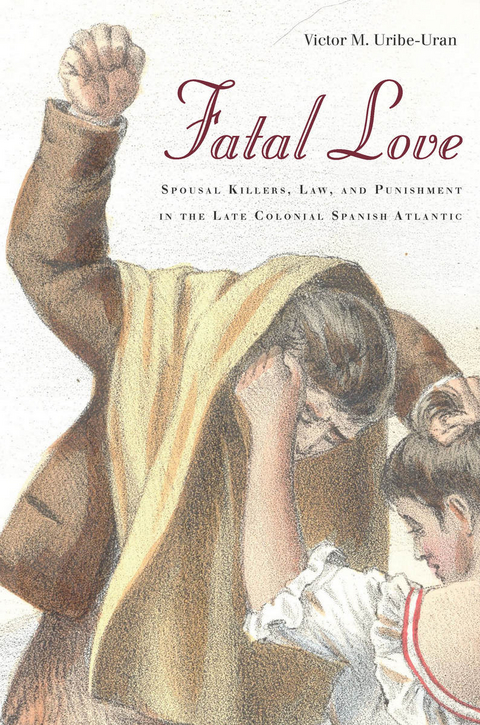
One night in December 1800, in the distant mission outpost of San Antonio in northern Mexico, Eulalia Californio and her lover Primo plotted the murder of her abusive husband. While the victim was sleeping, Prio and his brother tied a rope around Juan Californio's neck. One of them sat on his body while the other pulled on the rope and the woman, grabbing her husband by the legs, pulled in the opposite direction. After Juan Californio suffocated, Eulalia ran to the mission and reported that her husband had choked while chewing tobacco. Suspicious, the mission priests reported the crime to the authorities in charge of the nearest presidio.For historians, spousal murders are significant for what they reveal about social and family history, in particular the hidden history of day-to-day gender relations, conflicts, crimes, and punishments. Fatal Love examines this phenomenon in the late colonial Spanish Atlantic, focusing on incidents occurring in New Spain (colonial Mexico), New Granada (colonial Colombia), and Spain from the 1740s to the 1820s. In the more than 200 cases consulted, it considers not only the social features of the murders, but also the legal discourses and judicial practices guiding the historical treatment of spousal murders, helping us understand the historical intersection of domestic violence, private and state/church patriarchy, and the law.
Victor M. Uribe-Uran is Associate Professor of History and of Law at Florida International University. He is the author of Honorable Lives: Lawyers, Family, and Politics in Colombia, 1780–1850 and the editor of State and Society in Spanish America during the Age of Revolution.
Contents and AbstractsIntroduction chapter abstractAddresses historiographical and theoretical issues, discussing the literatures on domestic violence, crime, in particular homicide, and legal history. It proposes that this study bridges the worlds of social and legal history and contributes to historiographical debates concerning the reasons behind the alleged gap between law and reality, the doctrinal roots regarding leniency towards Indians, the extent to which women remained restricted to the domestic sphere, and the functioning of masculine honor. Finally, it describes the study's sources, methodology and time period, highlighting their significance.1Access to Justice: Domestic Violence, Laws and Procedures chapter abstractLooks at canon or ecclesiastical and civil laws pertaining to marriage and marriage-related crimes in Spain and those in the colonies, and examines judicial procedures concerning the trial of public crimes. The chapter establishes that access to justice and knowledge of legal procedures was widespread and central to the legitimation of the monarchy.2Innocent Infants? Indians and Domestic Violence in Colonial Mexico. chapter abstractFocuses on 87 cases of spousal murder taking place in late colonial Mexico. In addition to shedding light on the circumstances and motives of the crimes, the discussion centers on the ethnic dimensions of the murders in question, a majority of which were committed by members of the indigenous community.3The King's Forgiveness: Earthly Intercessions and Legal Culture chapter abstractLooks at excuses murderers could use to reduce their sentences, in particular those derived from drinking and other mitigating factors. It examines also the favorable treatment granted to Indians, and the extensive use of royal pardons. The chapter argues that forgiveness was essential to the image and legitimacy of the Spanish monarchy and strategic to its hegemonic control over society.4Honor and Punishment in Late Eighteenth-Century Spain chapter abstractFocuses on over 65 murders committed by Spanish wives and husbands, detailing their characteristics. Given the saliency of murders committed by unfaithful wives, this chapter explores the culture of honor and the extent to which it could be considered central to explaining the events under consideration. It demonstrates that most incidents resulting from extramarital affairs involved women who killed their husbands, not the other way around. This suggests that the honor codes were upended.5God's Forgiveness: Heavenly Intercessions chapter abstractExamines legal mechanisms whereby the Catholic church sheltered spousal murderers and other criminals and the King acted as God's proxy to extend pardon to criminals during the Catholic Holy Week. It also shows the central role of the church in the alleviation of punishment and the accompaniment of those marching to the gallows. It establishes that forgiveness was thus also critical to the legitimacy of the Church and its hegemony, both a complementary and competing force relative to the monarchy.6Dangerous Women: Gender and Domestic Disputes in Colonial Colombia chapter abstractExamines 54 cases of spousal murder that took place in late colonial Colombia. Similar to the discussion on Mexico, this chapter addresses the circumstances and motives of the crimes. Rather than concentrating on the ethic aspects of the various crimes, however, it highlights the gender dimensions. This is important in light of the fact that a considerable portion of the murders were committed by women, a peculiar situation the chapter seeks to understand.7The Many Shades of Pain and Punishment in the Spanish Atlantic chapter abstractTurns attention to punishments by considering encubamiento and confinement, the decline of judicial torture, and harshness against mixed-races. It shows the overall decline of the death penalty, the fact that it impacted much more metropolitan than colonial subjects and whites that non-whites, while establishing also the significance of other forms of punishment in particular confinement. It confirms too the great significance of clemency.8Transition to Independence, Criminal Justice and the Reinvention of Hegemony and Coercion in the Spanish Atlantic chapter abstractExamines briefly some of the changes brought about by Independence and peninsular liberalism. It establishes that the humanization of punishment was not the abrupt result of independence and liberalism but a long-term ("developmental") process extending back to even the 16th centuryConclusion chapter abstractReiterates the centrality of law and justice in the lives of late colonial Spanish Atlantic couples, even members of Indigenous communities and colored peoples. It summarizes the study's findings about ethnic, gender and other cultural relations. Highlights, in particular, the apparent upending of stereotypes on negative legal discrimination against the natives; the exclusion of women from public life; and, the alleged male proclivity to avenge honor besmirched by morally inappropriate sexual behavior on the part of female companions. Stresses too hegemony at work, through the observance of longstanding legal rules, judicial routines, ceremonies and habitus concerning appropriate individual, familial and social behavior, as well as the right behavior on the part of Crown and Church, during times of peace and conflict.
| Erscheint lt. Verlag | 16.12.2015 |
|---|---|
| Zusatzinfo | 50 tables, 8 halftones, 3 maps |
| Sprache | englisch |
| Themenwelt | Literatur ► Biografien / Erfahrungsberichte |
| Sachbuch/Ratgeber ► Geschichte / Politik ► Allgemeines / Lexika | |
| Geisteswissenschaften ► Geschichte ► Regional- / Ländergeschichte | |
| Recht / Steuern ► Strafrecht ► Kriminologie | |
| Schlagworte | Domestic • Gender • Latin America. • Law • marriage • Murder • pardon • punishment • Spain • Violence |
| ISBN-10 | 0-8047-9631-9 / 0804796319 |
| ISBN-13 | 978-0-8047-9631-6 / 9780804796316 |
| Informationen gemäß Produktsicherheitsverordnung (GPSR) | |
| Haben Sie eine Frage zum Produkt? |
 EPUB (Adobe DRM)
Kopierschutz: Adobe-DRM
Adobe-DRM ist ein Kopierschutz, der das eBook vor Mißbrauch schützen soll. Dabei wird das eBook bereits beim Download auf Ihre persönliche Adobe-ID autorisiert. Lesen können Sie das eBook dann nur auf den Geräten, welche ebenfalls auf Ihre Adobe-ID registriert sind.
Details zum Adobe-DRM
Dateiformat: EPUB (Electronic Publication)
EPUB ist ein offener Standard für eBooks und eignet sich besonders zur Darstellung von Belletristik und Sachbüchern. Der Fließtext wird dynamisch an die Display- und Schriftgröße angepasst. Auch für mobile Lesegeräte ist EPUB daher gut geeignet.
Systemvoraussetzungen:
PC/Mac: Mit einem PC oder Mac können Sie dieses eBook lesen. Sie benötigen eine
eReader: Dieses eBook kann mit (fast) allen eBook-Readern gelesen werden. Mit dem amazon-Kindle ist es aber nicht kompatibel.
Smartphone/Tablet: Egal ob Apple oder Android, dieses eBook können Sie lesen. Sie benötigen eine
Geräteliste und zusätzliche Hinweise
Buying eBooks from abroad
For tax law reasons we can sell eBooks just within Germany and Switzerland. Regrettably we cannot fulfill eBook-orders from other countries.
aus dem Bereich