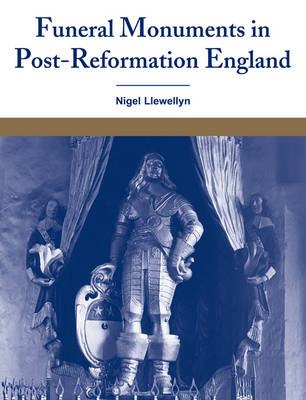
Funeral Monuments in Post-Reformation England
Cambridge University Press (Verlag)
978-0-521-10752-5 (ISBN)
This book takes as its subject the most important kind of surviving post-Reformation church art and the most important genre of English Renaissance sculpture, the carved stone funeral monument. These complex constructions, comprising not just sculpted figures but also architectural framing, heraldic decoration and inscribed text, were set up in huge numbers during the years around 1600 and still survive in their thousands in parish churches across England. This is a comprehensive account of the subject, Llewellyn examines the place of the tomb in the historiography of English art, issues of patronage and the business of erecting a monument, the tomb-makers, their world and the materials, and Reformist iconoclasm in England and its impact on the tombs. The volume is lavishly illustrated with rare photographs of tombs and monuments and offers a valuable and informative record of one of England's greatest treasures.
List of illustrations; Acknowledgements; Preface; Part I. Historiography and the Discourse of Art History: 1. The antiquaries and the rule of taste; 2. Art history - nation and place; 3. Art history - the period; 4. Art history - artists and the theory of art; 5. Alternatives; 6. In the presence of death; 6. Differentiation, replication and portrayal; 7. Continuity and separation; 8. The Reformation; 9. Emotion and mourning; 9. Monuments to living people; 10. Conclusion; Part II. Form and Design: 1. Regional variation; 2. Medieval precedents; 3. England and Europe; 4. Changes through time; 5. The components of design; 6. Recumbent figures; 7. Standing, kneeling and seated figures; 8. Other poses and types; 9. Traditional compositions; 10. Inscriptions; 11. Allegories and histories; 12. Decoration, surface and painted finishes; Part III. Building Monuments: 1. Securing and maintaining a place; 2. The business of erecting a monument; 3. Transportation; 4. The tomb-makers and their materials; 5. Materials; Part IV. Habits and Skills in Visual Culture: 1. Descriptions; 2. Aesthetic and visual categories; 3. Hierarchies and dangers; 4. Image theory and religious controversy; 5. Iconoclasm; 6. The defence of monuments; Part V. Exemplifications: 1. Patrons and society; 2. Monuments and the state; 3. The expression of virtue; Part VI. Conclusion. Four Discourses: 1. The four discourses; 2. The architectural frame; 3. The effigial body; 4. The heraldic sign; 5. The inscribed word; 6. English art and the exemplary tradition; Notes; Bibliography; Documents and manuscripts in original and published forms; Printed materials; Index.
| Erscheint lt. Verlag | 2.4.2009 |
|---|---|
| Zusatzinfo | 6 Maps; 250 Halftones, unspecified |
| Verlagsort | Cambridge |
| Sprache | englisch |
| Maße | 189 x 246 mm |
| Gewicht | 880 g |
| Themenwelt | Kunst / Musik / Theater ► Kunstgeschichte / Kunststile |
| Kunst / Musik / Theater ► Malerei / Plastik | |
| ISBN-10 | 0-521-10752-0 / 0521107520 |
| ISBN-13 | 978-0-521-10752-5 / 9780521107525 |
| Zustand | Neuware |
| Informationen gemäß Produktsicherheitsverordnung (GPSR) | |
| Haben Sie eine Frage zum Produkt? |
aus dem Bereich