


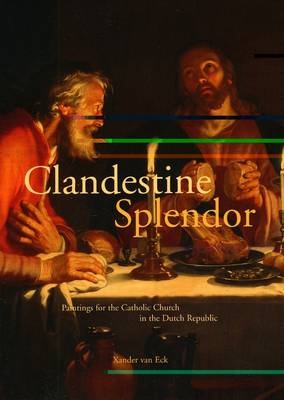
Clandestine Splendor
Paintings for the Catholic Church in the Dutch Republic
Seiten
2008
Waanders BV, Uitgeverij (Verlag)
978-90-400-8468-3 (ISBN)
Waanders BV, Uitgeverij (Verlag)
978-90-400-8468-3 (ISBN)
- Keine Verlagsinformationen verfügbar
- Artikel merken
Presents a survey of Catholic North Netherlandish history painting during the seventeenth and eighteenth centuries. This book features the richly variegated Counter Reformation culture which flourished in the Protestant ruled country.
This book gives a survey of Catholic North Netherlandish history painting during the seventeenth and eighteenth centuries, against the background of richly variegated Counter Reformation culture which flourished in the Protestant ruled country. While the civilian government of the Republic of the Seven United Netherlands had chosen Calvinism and forbidden the celebration of Mass, a not inconsiderable part of the Dutch population remained Catholic. Along with their spiritual leaders, the believers set up a network of clandestine churches hidden behind the walls of houses and industrial buildings.Above the alters and along the walls of these hidden churches, ambitious, monumental paintings depicting biblical themes, devout tales or Catholic beliefs appeared. They were mostly created by prominent artists who also supported the Catholic faith themselves, like Abraham Bloemaert from Utrecht or Pieter de Grebber, Salomon de Bray and his son Jan from Haarlem, Jacob de Wit from Amsterdam and Jan Cossiers, Cornelis Schut and Eramus Quellinus from Antwerp. The devotional, religious and political preferences of their other clients are also looked at in detail.
This book gives a survey of Catholic North Netherlandish history painting during the seventeenth and eighteenth centuries, against the background of richly variegated Counter Reformation culture which flourished in the Protestant ruled country. While the civilian government of the Republic of the Seven United Netherlands had chosen Calvinism and forbidden the celebration of Mass, a not inconsiderable part of the Dutch population remained Catholic. Along with their spiritual leaders, the believers set up a network of clandestine churches hidden behind the walls of houses and industrial buildings.Above the alters and along the walls of these hidden churches, ambitious, monumental paintings depicting biblical themes, devout tales or Catholic beliefs appeared. They were mostly created by prominent artists who also supported the Catholic faith themselves, like Abraham Bloemaert from Utrecht or Pieter de Grebber, Salomon de Bray and his son Jan from Haarlem, Jacob de Wit from Amsterdam and Jan Cossiers, Cornelis Schut and Eramus Quellinus from Antwerp. The devotional, religious and political preferences of their other clients are also looked at in detail.
| Erscheint lt. Verlag | 1.9.2008 |
|---|---|
| Zusatzinfo | 120 b/w, 20 col |
| Verlagsort | Zwolle |
| Sprache | englisch |
| Maße | 170 x 240 mm |
| Themenwelt | Kunst / Musik / Theater ► Kunstgeschichte / Kunststile |
| Kunst / Musik / Theater ► Malerei / Plastik | |
| ISBN-10 | 90-400-8468-8 / 9040084688 |
| ISBN-13 | 978-90-400-8468-3 / 9789040084683 |
| Zustand | Neuware |
| Informationen gemäß Produktsicherheitsverordnung (GPSR) | |
| Haben Sie eine Frage zum Produkt? |
Mehr entdecken
aus dem Bereich

aus dem Bereich
kleine Kulturgeschichte einer brillanten Allianz
Buch | Softcover (2025)
Iudicium (Verlag)
CHF 33,90


