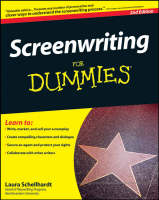
Screenwriting For Dummies
For Dummies (Verlag)
978-0-470-34540-5 (ISBN)
- Titel erscheint in neuer Auflage
- Artikel merken
Write a great script and get it into the hands of the Hollywood players! So you want to be a screenwriter? Whether you want to write a feature film or a TV script or adapt your favorite book, this friendly guide gives you expert advice in everything from creating your story and developing memorable characters to formatting your script and selling it to the studios. You get savvy industry tips and strategies for getting your screenplay noticed!
The screenwriting process from A to Z -- from developing a concept and thinking visually to plotline, conflicts, pacing, and the conclusion
Craft living, breathing characters -- from creating the backstory to letting your characters speak to balancing dialogue with action
Turn your story into a script -- from developing an outline and getting over writer's block to formatting your screenplay and handling rewrites
Prepare for Hollywood -- from understanding the players and setting your expectations to polishing your copy and protecting your work
Sell your script to the industry -- from preparing your pitch and finding an agent to meeting with executives and making a deal
Open the book and find:
The latest on the biz, from entertainment blogs to top agents to box office jargon
New story examples from recently released films
Tips on character development, a story's time clock, dramatic structure, and dialogue
New details on developing the nontraditional screenplay -- from musicals to animation to high dramatic style
Expanded information on adaptation and collaboration, with examples from successful screenwriting duos
Laura Schellhardt holds an MFA in Literary Arts from Brown University and degrees in Theatre and Creative Writing from Northwestern University in Chicago. Her scripts have been produced in New York (SPF, The Hangar, The Exchange Theatre), Seattle (Seattle Repertory Theatre, ACT), Chicago (Northlight Theatre, Serendipity Theatre, New Leaf Theatre, Citadel Theatre), Washington DC (The Kennedy Center, Woolly Mammoth), Providence (Trinity Repertory Company, Brown University), Minneapolis (Theatre Limina), North Carolina (Center for Performing Arts), and Provincetown, Massachusetts (Provincetown Repertory Theatre, Provincetown Theatre Company). Original works include The K of D, The Chair, Courting Vampires, Shapeshifter, The Apothecary’s Girl, Inheritance, and Je Ne Sais Quoi. Adaptations include The Phantom Tollbooth, The Mysteries of Harris Burdick, The Outfit (Jeff Award Nominee), and Creole Folktales. Laura is a recipient of the Theatre Communications Group 2007–8 Playwriting Residency, The Jerome Fellowship, the New Play Award from ACT in Seattle, and a Dramatist Guild Playwriting Fellowship. She has participated in the SoHo Rep. Writer/Director Lab and the O’Neill National Playwright’s Festival. Laura has assisted in the development of new work at The Goodman, Steppenwolf Theatre, Northlight Theatre, and Trinity Repertory Company. She has studied writing with the likes of Paula Vogel, Maria Irene Fornes, Erin Cressida Wilson and has taught alongside Oscar-nominated John Logan of Aviator and Sweeney Todd fame. Laura currently heads the playwriting program at Northwestern University in Evanston, Illinois and teaches workshops across the country.
Foreword xvi
Introduction 1
About This Book 1
Conventions Used in This Book 1
Foolish Assumptions 2
How This Book Is Organized 2
Part I: So You Want to Write for Pictures 2
Part II: Breaking Down the Elements of a Story 3
Part III: Turning Your Story into a Script 3
Part IV: Selling Your Script to Show Business 3
Part V: The Part of Tens 3
Icons Used in This Book 3
Where to Go from Here 4
Part I: So You Want to Write for Pictures 5
Chapter 1: Introducing the Art of Screenwriting 7
Thinking Visually 7
Developing the Writer’s Mind 8
Approaching Screenwriting as a Craft 9
Finding Your Screenplay’s Story 9
Working through the Writing Process 10
Formatting Your Screenplay 10
Constructing Your First Draft 11
Rewriting Your Script 12
Adapting Your Screenplay from an Outside Source 12
Selling Your Screenplay to Show Business 14
Chapter 2: Preparing to Think Visually 15
Exploring Other Mediums 15
Fiction 16
Stage plays 17
Poetry and studio arts 17
Screenplays 18
The Visual Life of a Screenplay 20
From the outside in 21
From the inside out 22
Chapter 3: Diving In to the Screenwriter’s Mind 23
Learning from Other Writers 24
Reading for dramatic intent 25
Recognizing a screenplay’s genre 26
Art and Life: What’s the Difference? 27
Developing an Artistic Sensibility 28
What a writer sees 29
What a writer hears 30
What a writer remembers and what a writer forgets 31
Recognizing a Story When You See One 33
Identifying the call to write 33
The four important P’s of story 34
Finding an opening image 34
Chapter 4: Approaching Screenwriting as a Craft 37
A Look at the Creative Process 38
Imagination: Your Creative Arsenal 39
Flexing the imagination 39
Putting the imagination to work 41
Identifying your writing voice 44
Craft: A Vehicle for Your Imagination 46
Form 46
Technique 46
Discipline 50
Part II: Breaking Down the Elements of a Story 53
Chapter 5: Unpacking Your Idea 55
I Have This Great Idea Now What? 55
Pinpointing your interest in the idea 55
Documenting your interest in the idea 57
Getting to Know Your Audience 58
Matching the story to the audience 59
Connecting with your audience 61
Knowing What Happened Before Your Story Began: Creating the Backstory 63
Elements of the backstory 63
Developing a screenplay through backstory 65
Identifying the Tone of Your Piece 66
Establishing Your Story’s Time Clock 67
Deciding When to Start Your Story 69
Getting to Know Aristotle: A Dramatist’s Best Friend 70
What’s It All About?: Writing a Nutshell Synopsis 72
Chapter 6: Plot Part I: Beginnings 75
Enhancing Your Opening Images 75
Person, place, or thing: What do you want to present first? 76
Conflict: What’s wrong with your story? 79
Possible ways to begin your story 80
Tracking Success: Three Compelling (and Contrasting) Movie Beginnings 81
The Untouchables 81
American Beauty 82
Jaws 83
Chapter 7: Plot Part II: Middles 85
Deciding What Comes Next 85
From Lights to Camera to ACTION! 87
Presenting both action and activity 88
Revisiting the story’s time clock 89
Status: Where’s the Upper Hand? 90
What’s Your Problem? Introducing Conflicts and Obstacles 92
Exposition: From Clunky to Creative 94
Sharing info the characters know 95
Sharing info the characters may not know 96
Determining What to Write from What You’ve Already Written 97
Continuing Success: Tracking Three Successful Movie Middles 99
Jaws 100
The Untouchables 101
American Beauty 101
Chapter 8: Plot Part III: Endings 103
How Do You Know When You’re Done? 104
Tracking the change: What’s different now? 105
Crafting your story’s conclusion 109
Danger Will Robinson: Threats to an Otherwise Healthy Plot 112
Would that really happen? The probable versus the possible 113
Scenes where nothing happens: Two final threats to watch for 116
Ultimate Success: Tracking Three Movies through Their Triumphant Conclusions 117
Jaws 117
The Untouchables 118
American Beauty 119
Chapter 9: Character Building 121
Portrait of a Person: Constructing a Physical World 122
Your character’s physical being 122
Your character’s physical environment 125
The Good, the Bad, and the Ugly: Constructing an Internal World 129
Dreams, desires, and passions 130
Talents and expertise 130
Internal obstacles 131
Your character’s argument 132
From the Inside Out: Making the Inner World Visible 133
Balancing character dialogue with character action 134
Crafting concrete character goals 135
Providing character opportunities 135
Establishing routines that change 136
Forcing your characters to choose 136
Using a mentor 137
Using a narrator 137
Crafting secondary characters 138
Chapter 10: Say What? Constructing Dynamic Dialogue 139
Diction: What’s in a Word? 140
Isn’t versus ain’t: Diction’s determining factors 141
The highs and the lows of language 145
Name That Tune: Crafting Your Character’s Music 148
Sound 101: Using poetry as a guide 149
Fascinating rhythm: Crafting your script’s pulse 150
Listening: The Other Half of Conversation 152
Putting It Together: Letting Your Characters Speak 154
Setting the scene 155
Dialogue do’s and don’ts 156
Chapter 11: The Nontraditional Film 163
Breaking with Tradition — Other Ways to Get the Job Done 164
Thinking Out of Time 165
Song and Dance: The Movie Musical 167
Original musicals 168
Musical adaptations 169
Chapter 12: Maintaining an Audience’s Trust 171
Screenwriting and Ethics 171
Screenwriting and Responsibility 173
What are you willing to put your name on? 173
Approaching difficult subject matter 174
The Immunity Factor 175
Part III: Turning Your Story into a Script 177
Chapter 13: Mapping Out Your Screenplay 179
Conceptualizing Your Concept 180
How to Treat Your Treatment 182
Before you begin 182
Putting it on the page 183
Exploring the Ins and Outs of an Outline 184
One sentence at a time 185
One step at a time 187
What to Do When the Outline’s Through 188
Chapter 14: Surviving Writer’s Block 191
From Panic to Peace: Switching Mind-Sets 192
The top ten reasons for writer’s block 193
A survival guide 196
Reevaluating Your Routine 197
Seeking Outside Help 198
Chapter 15: Formatting Your Screenplay 201
How the Screenplay Looks on the Page 202
Setting your typeface and your margins 202
Spacing your script correctly 203
Making your computer work for you 205
Creating a PDF 206
Key Formatting Elements 207
Character introductions 207
Cinematic description 210
Camera concerns 214
Terms that defy categorization 218
A Sample Scene 220
Chapter 16: Putting It Together: Structuring Your First Draft 223
Navigating the Three-Act Structure 223
Act I: Introductions 224
Your opening moments 225
The first ten pages 225
The inciting incident 226
Plot point one 227
Act II: Salting the Wound 228
Know where the action is 229
The about-face 231
The midpoint: A halfway house 231
Plot point two 231
Act III: The Final Frontier 232
The climax 232
The resolution 233
A Note on Subplots 234
Chapter 17: Take Two: Rewriting Your Script 237
Downshifting between Drafts 237
How to work when you’re not working 238
Your first time back: Read-through #1 240
A second glance: Read-through #2 241
Back in the Saddle Again: Rewrites 247
Finding a Reader 248
Your Critique: Surviving the Aftermath 250
Chapter 18: Adaptation and Collaboration: Two Alternate Ways to Work 251
Acquiring Rights to Primary Material 251
Understanding copyrights 252
Obtaining permission 252
Determining how much to adapt 253
Navigating between Forms 254
From fiction to film 255
From stage to screen 257
Poetry and music 259
The Process of Adaptation 260
How to approach an original work 260
What to do when you’re stuck 262
The Art of Collaboration 262
What to look for in a writing partner 263
How to approach collaboration 263
Learning from the Masters 265
Alexander Payne and Jim Taylor 265
Joel and Ethan Coen 265
Part IV: Selling Your Script to Show Business 267
Chapter 19: Before You Send It: Premarketing Considerations 269
Understanding the “Biz” in Showbiz 270
Getting to know the players: The Hollywood hierarchy 270
Getting to know the buyers: The studio hierarchy 271
Getting a “grip”: Hollywood jargon 273
Preparing Yourself for the Biz 275
Putting on a happy face: The art of attitude 275
Organizing your records 276
Acquiring the right information 278
Setting personal expectations 281
Polishing the Copy You Send 282
A last-minute checklist 282
Front-page news 284
Protecting Your Work 285
The Library of Congress 285
The Writer’s Guild of America 285
The “poor-man’s copyright” 286
Chapter 20: Getting Your Screenplay Noticed 287
Designing Your Own Package 287
Highlighting the universal 288
Gaining the competitive edge 290
Considering the reader 290
Preparing to Pitch 292
The teaser pitch 292
The story pitch 293
Finding an Agent 294
Approaching an Agent 296
Small versus large: Does size matter? 297
The query letter 298
The “cold call” and the “drop in” 301
Pitching Your Script without an Agent 302
What to Do When They Say Yes 304
Meeting with an agent 304
Meeting with executives 305
Looking Ahead: Upon Achieving Success 306
A Final Note 307
Part V: The Part of Tens 309
Chapter 21: Ten Screenwriters You Should Know 311
William Goldman 311
Ruth Prawer Jhabvala 312
Alan Ball 313
Nora Ephron 314
John Logan 315
Sofia Coppola 316
Wes Anderson 317
Charlie Kaufman 318
Christopher Nolan 319
Diablo Cody 320
Chapter 22: Ten Screenwriting Myths 321
I Have to Live in Los Angeles to Write Screenplays 321
You Have to Go to School to Learn How to Write 322
Screenwriting Is Entertainment; It’s Not a Real Profession 323
If You’ve Never Written Before, It’s Too Late to Start Now 323
Writing Is a Lonely Profession 323
Hollywood Has No Ethics; It’ll Ruin the Integrity of My Script 324
It’s Not What You Know; It’s Who You Know That Matters 325
I Have Too Many Obligations to Be a Writer 325
You’re Only as Successful as the Last Screenplay You Sold 326
I’m Not Talented Enough to Be a Writer 327
Index 329
| Erscheint lt. Verlag | 27.6.2008 |
|---|---|
| Vorwort | John Logan |
| Sprache | englisch |
| Maße | 188 x 231 mm |
| Gewicht | 499 g |
| Themenwelt | Kunst / Musik / Theater ► Film / TV |
| Geisteswissenschaften ► Sprach- / Literaturwissenschaft ► Literaturwissenschaft | |
| ISBN-10 | 0-470-34540-3 / 0470345403 |
| ISBN-13 | 978-0-470-34540-5 / 9780470345405 |
| Zustand | Neuware |
| Informationen gemäß Produktsicherheitsverordnung (GPSR) | |
| Haben Sie eine Frage zum Produkt? |
aus dem Bereich