


Spirit (eBook)
144 Seiten
Publishdrive (Verlag)
978-1-78952-489-5 (ISBN)
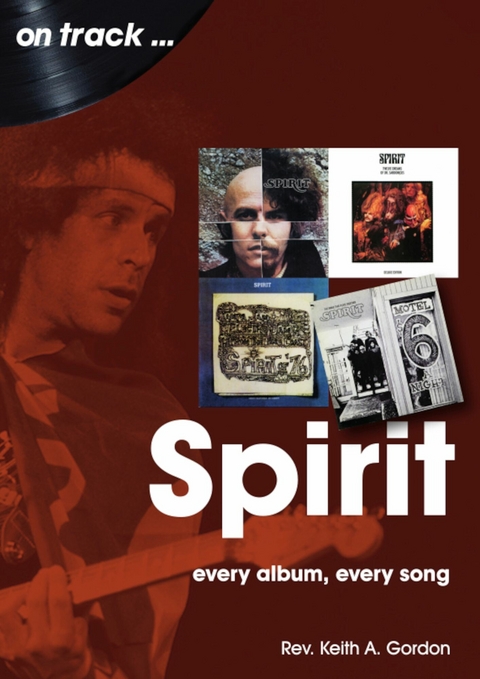
Even in an age of unparalleled innovation and artistic freedom, Spirit stood head and shoulders above their 1960s-era rock 'n' roll contemporaries. Perhaps only Love shared the same sort of expansive and adventurous artistic vision as the five guys in Spirit, whose disparate and diverse musical backgrounds led them to explore the outer regions of rock 'n' roll as the band incorporated elements of the blues, folk, R&B, and jazz into their heady brew of psychedelia-tinted hard rock. Although they never experienced the level of commercial success that their talents and innovative music deserved, few bands since have matched Spirit in eccentricity, originality, intensity, and instrumental virtuosity.
For all their creative accomplishments, Spirit's legacy is that of a half-forgotten band whose name is seldom brought up in 'classic rock' discussions. Spirit on track corrects this oversight, revisiting the band album by album, song by song, from their ground-breaking self-titled 1968 debut and their masterpiece, Twelve Dreams of Dr. Sardonicus , through the break-ups and reunions and solo efforts of the lean years until their resurgence in the 1990s with albums like Tent of Miracles. More than a mere album guide, this book recounts 30 years of the trailblazing artistry of Spirit.
The 'Reverend of Rock 'n' Roll,' Rev. Keith A. Gordon has been writing about classic rock and blues music for 50 years, his words appearing in over 100 publications worldwide including Creem, Blues Music Magazine, Live! Music Review, and the Rock and Roll Globe. A former All Music Guide contributor, Gordon has written 25 previous music-related books including Anarchy In The Music City!, The Other Side of Nashville, and Scorched Earth: A Jason & the Scorchers Scrapbook. The Reverend lives in Buffalo, NY, with his wife of 33 years and their two 'boogaloo' beagles. You'll find him online at www.thatdevilmusic.com.
Even in an age of unparalleled innovation and artistic freedom, Spirit stood head and shoulders above their 1960s-era rock 'n' roll contemporaries. Perhaps only Love shared the same sort of expansive and adventurous artistic vision as the five guys in Spirit, whose disparate and diverse musical backgrounds led them to explore the outer regions of rock 'n' roll as the band incorporated elements of the blues, folk, R&B, and jazz into their heady brew of psychedelia-tinted hard rock. Although they never experienced the level of commercial success that their talents and innovative music deserved, few bands since have matched Spirit in eccentricity, originality, intensity, and instrumental virtuosity.For all their creative accomplishments, Spirit's legacy is that of a half-forgotten band whose name is seldom brought up in 'classic rock' discussions. Spirit on track corrects this oversight, revisiting the band album by album, song by song, from their ground-breaking self-titled 1968 debut and their masterpiece, Twelve Dreams of Dr. Sardonicus , through the break-ups and reunions and solo efforts of the lean years until their resurgence in the 1990s with albums like Tent of Miracles. More than a mere album guide, this book recounts 30 years of the trailblazing artistry of Spirit.The Reverend of Rock n Roll, Rev. Keith A. Gordon has been writing about classic rock and blues music for 50 years, his words appearing in over 100 publications worldwide including Creem, Blues Music Magazine, Live! Music Review, and the Rock and Roll Globe. A former All Music Guide contributor, Gordon has written 25 previous music-related books including Anarchy In The Music City!, The Other Side of Nashville, and Scorched Earth: A Jason & the Scorchers Scrapbook. The Reverend lives in Buffalo, NY, with his wife of 33 years and their two boogaloo beagles. You ll find him online at www.thatdevilmusic.com.
Spirit (1968)
Personnel:
Jay Ferguson: vocals, percussion
Randy California: vocals, guitar
Mark Andes: bass, vocals
John Locke: keyboards
Ed Cassidy: drums, percussion
Additional personnel:
Marty Paich: string and horn arrangements
Producer: Lou Adler
Engineers: Eric Wienbang, Armin Steiner, Mike Leitz
Label: Ode Records
Release date: January 1968
Chart position: US: 31
CD reissue produced by Bob Irwin; remixed and mastered by Vic Anesini at Sony Music, NYC
Current editions: US: Sony Legacy Recordings, 2017 (CD), UK: Music On Vinyl, 2019 (LP)
In June 1967, Spirit was playing gigs around the Los Angeles area, looking for a record deal while holding down a regular Monday-night gig at The Ash Grove. The band’s friend and roommate Barry Hansen recorded a demo tape of the band, which they shopped to labels around town. They auditioned for producer Lou Adler (The Mamas & the Papas), who’d formed the new label Ode Records, which was distributed by CBS subsidiary Epic Records. He signed Spirit to Ode in August 1967, and rushed them into the studio to record.
Spirit’s self-titled debut album was released in January 1968 to a receptive audience. The album was experimental, with an innovative blend of psychedelic rock, blues and folk with jazz undercurrents. Spirit spent more than six months on the Billboard album chart, peaking at 31: impressive for a debut by an unknown West Coast band. When reissued in 1973 as part of a two-disc set with their 1969 album Clear, it inched back into the Top 200 at 191.
While not the band’s most influential work, the debut nevertheless inspired a number of musicians, with Led Zeppelin regularly covering ‘Fresh Garbage’ in concert in their early days, and The C.A. Quintet playing the song for their Live Trips 1971 album. Art rock band Paranoise reimagined ‘Mechanical World’ for their 2000 album Private Power, while Australian psychedelic outfit Tyrnaround included ‘Uncle Jack’ on their 2019 compilation Colour Your Mind. Artists like Brian Eno and Soft Machine have also cited Spirit as an influence.
The album was generally well-received, with Hansen writing a Rolling Stone review saying Spirit ‘is a most uncommon album: one that defies some recent fashions. It’s not a frontal assault on the eardrums, and it’s not a return to rock and roll. These musicians use their chops in the most imaginative way possible, yet they don’t let the experimental tail wag the rocking dog’ ... every listen to Spirit – live or recorded – increased my enthusiasm.’ Reassessing the album more recently for All Music Guide, Richie Unterberger wrote:
Spirit’s debut unveiled a band that seemed determined to out-eclecticize everybody else on the California psychedelic scene, with its mélange of rock, jazz, blues, folk rock, and even a bit of classical and Indian music. Teenaged Randy California immediately established a signature sound with his humming, sustain-heavy tone; middle-aged drummer Ed Cassidy gave the group unusual versatility, and the songs tackled unusual lyrical themes: like ‘Fresh Garbage’ and ‘Mechanical World’. As is often the case in such hybrids, the sum fell somewhat short of the parts – they could play more styles than almost any other group, but couldn’t play (or, more crucially, write) as well as the top acts in any given one of those styles.
Spirit also found an early champion in popular BBC radio personality John Peel, who first wrote about the band in his column for International Times in 1968. As per the John Peel Wiki, on the 7 February 1970 Top Gear show, the influential British DJ mentioned that he’d seen Spirit perform the previous week, calling them ‘an amazing band,’ and that they were ‘perhaps the most impressive band I’ve ever seen play in my life’ before playing their new single ‘1984’. The band received further UK acclaim from ZigZag magazine, while BBC radio host Andy Finney named his Peel-influenced radio program Fresh Garbage after the song. CBS Records included the track on the budget compilation The Rock Machine Turns You On, which introduced the band in the UK.
In a 2001 interview with publisher Ron Garmon of the zine Worldly Remains, Jay Ferguson talked about the band’s early sound:
We were a new category of band, and I think you were hot and cold with Spirit. You either just didn’t like it, or you really loved it. You had to be open-minded and you had to be ready to take the jazz, because in the beginning, I’d say we were 60% a jazz band, and rock and blues would take up the other 40%. And in the process of that year, the songs began to be written, and we turned into what we were on that first album. But yeah, we were an acquired taste for people.
The debut album wasn’t reissued on CD until 1996. As the original 1968 stereo mixes were not available for the CD, the album was remixed, and included four previously-unreleased tracks. In 2017, Audio Fidelity reissued Spirit as a limited-edition numbered hybrid Super Audio CD (SACD), which included the original stereo mixes remastered, as the stereo master tape had been found. The SACD release included the same bonus tracks as the 1996 reissue.
‘Fresh Garbage’ (Ferguson) (3:11)
The song opens with a hypnotic guitar pattern as the other instruments creep in on the edges in lockstep with California’s recurring riff. The vocals drift in with a mournful reiteration of the title, as Ferguson swings into the rather simple – albeit effective – lyric:
Look beneath your lid some morning
See the things you didn’t quite consume
The world’s a can for your fresh garbage
The words are a placeholder for the track’s instrumental passages, which are ambitious, inventive, and almost totally without precedent in the rock field in 1968.
If California’s succinct guitar patterns weren’t exotic enough, Andes adds a hearty bass line, Locke fingers his way across the piano keys with a jazz-flecked solo, and Cass strikes the right balance of light-handed, early-A.M. nightclub brushwork and minor percussion. In the CD liner notes, California said the song was inspired by a garbage strike and the resultant piles of refuse, referring to ‘Fresh Garbage’ as ‘an environmental song ahead of its time!’ Writing for UK magazine Shindig! in 2009, future Spirit archivist Mick Skidmore said ‘‘Fresh Garbage’ encapsulated most of the group’s assets within three minutes ... four decades later it hasn’t dated at all.’
‘Uncle Jack’ (Ferguson) (2:44)
Recorded in August 1967 – nearly three months before ‘Fresh Garbage’ – the British Invasion-styled ‘Uncle Jack’ sounds like an entirely different band. Evincing a strong UK pop underpinning, the song sounds a lot like the then-burgeoning psychedelic sound of The Move or The Creation to create an infectious earworm. The lyric is pure acid-inspired Summer-of-Love poetry:
Standing there, he’s so deceiving
Has he been or is he leaving
Looking in his sea green eyes
Uncle Jack will tell no lies
Can you see it?
Randy’s explosive guitar solo ignites the performance, providing a stark counterpoint to the safe-as-milk psych-pop instrumentation and group harmonies. It’s an altogether enjoyable song, but miles away from where the band and their debut would finally land.
‘Mechanical World’ (Andes, Ferguson) (5:15)
Restricted to his room for several weeks while battling an illness, Mark Andes was feeling out-of-touch and somewhat ‘mechanical’; his emotions finding their way into the brilliantly-prescient ‘Mechanical World’. The instrumentation is somewhat robotic, with tempo changes, and eerie strings added by arranger Marty Paich.
The lyric is strictly doom and gloom (‘Death falls so heavy on my soul/ Death falls so heavy, makes me moan’), but the instrumentation is creative – California’s edgy solos right on time; Locke’s keyboards finding the darkness in the words and delivery; the song representing the third change of direction in three songs, while presaging the goth and industrial music of the future. Referring California’s guitar solo, Ferguson told Worldly Remains: ‘Randy’s solos were these monuments of guitar. They were creations. They were architectural solos, things built on things and developed.’
‘Mechanical World’ was released as the album’s only single, and while not a world-beater, it got the Spirit name out there, and the song became a minor regional hit in pockets across the US.
‘Taurus’ (California) (2:37)
Ah yes, California’s ‘Taurus’ – a two-and-a-half-minute instrumental that Led Zeppelin stole, stretching it into the eight-minute opus that was ‘Stairway To Heaven.’ I’ll get into that controversy...
| Erscheint lt. Verlag | 10.12.2025 |
|---|---|
| Reihe/Serie | On Track |
| Sprache | englisch |
| Themenwelt | Kunst / Musik / Theater ► Musik ► Musikgeschichte |
| Kunst / Musik / Theater ► Musik ► Pop / Rock | |
| Schlagworte | Randy California |
| ISBN-10 | 1-78952-489-X / 178952489X |
| ISBN-13 | 978-1-78952-489-5 / 9781789524895 |
| Informationen gemäß Produktsicherheitsverordnung (GPSR) | |
| Haben Sie eine Frage zum Produkt? |
 EPUB (Ohne DRM)
Digital Rights Management: ohne DRM
Dieses eBook enthält kein DRM oder Kopierschutz. Eine Weitergabe an Dritte ist jedoch rechtlich nicht zulässig, weil Sie beim Kauf nur die Rechte an der persönlichen Nutzung erwerben.
Dateiformat: EPUB (Electronic Publication)
EPUB ist ein offener Standard für eBooks und eignet sich besonders zur Darstellung von Belletristik und Sachbüchern. Der Fließtext wird dynamisch an die Display- und Schriftgröße angepasst. Auch für mobile Lesegeräte ist EPUB daher gut geeignet.
Systemvoraussetzungen:
PC/Mac: Mit einem PC oder Mac können Sie dieses eBook lesen. Sie benötigen dafür die kostenlose Software Adobe Digital Editions.
eReader: Dieses eBook kann mit (fast) allen eBook-Readern gelesen werden. Mit dem amazon-Kindle ist es aber nicht kompatibel.
Smartphone/Tablet: Egal ob Apple oder Android, dieses eBook können Sie lesen. Sie benötigen dafür eine kostenlose App.
Geräteliste und zusätzliche Hinweise
Buying eBooks from abroad
For tax law reasons we can sell eBooks just within Germany and Switzerland. Regrettably we cannot fulfill eBook-orders from other countries.
aus dem Bereich


