


A Laughing Clowns Reader
Seiten
2025
KANN-Verlag
978-3-943619-19-5 (ISBN)
KANN-Verlag
978-3-943619-19-5 (ISBN)
The global coming together of art and music in the post-punk years owed a lot to the conceptualist critique of traditional value systems in the culture, especially the gallery system. In Australia, John Nixon's Q Space (1980–81), with its frequent one-day exhibitions inspired by the punk gig, is well known. Coming from the music side was Ed Kuepper's Laughing Clowns (1979–84), a Gestampkunstwerk combining musical performance, polemic staging that defied the deathly symmetries of rock orthodoxy, curtain walls of Buren stripes but also brushy abstraction too, coded dress, light bulb pieces, graphic works, press shots and video clips, all marvellously interconnected. Referenced by Nixon in his important post-punk Polaroid installations but otherwise overlooked in the 'crossover' biennales and surveys of the early 1980s, this exhibition shines a long overdue light on the total work of art that was Laughing Clowns.
Laughing Clowns' music was essentially song-based rock'n'roll, however, its unusual and complex arrangements, dramatic tempo changes, diminuendos and extended interludes with brass instrumentation prompted the tag "jazz-punk". In fact, powerful brass hooks were already there in Kuepper's 1977 songwriting for The Saints' second album, Eternally Yours, a title he would later give to a Laughing Clowns song with an indelible sax line, as if to remind his audience not only of his continued devotion but also where it all began.
In August 1979, after rehearsing for several months, Laughing Clowns announced their inaugural performances with a totemic poster created in collaboration with young artist/impresario Ken West, who would go on to make his name as co-founder of the Big Day Out music festival. Offset printed with a black ground out of which three distinct elements emerged: two yellow blocks of text in contrasting fonts on either side of a Ben-Day Dot image of Oskar Schlemmer's famous musical clown from his Bauhaus pantomime Staircase Wit (1927). Thus, from the get-go, Laughing Clowns positioned themselves in an indeterminate space somewhere between the music hall, the art gallery and the theatre, critically extrapolating to the rock context (where the rules tend to be firmly fixed and in place), Schlemmer’s ideas around transcending the individual and duo and emphasising the collective.
WHEN WHAT YOU SEE: The Art of Laughing Clowns presents key posters of the group alongside rarely seen photographs of them performing in Sydney, Melbourne and Brisbane between 1979–81, when their stage was at its most theatrical and polemic. There are also displays of Laughing Clowns' 12" vinyl releases on small cottage-industry record labels, including on their own Prince Melon Records. These reflexive objects compel physical engagement and are closer to artist's multiples than conventional music industry merchandise. The exhibition also includes a 1980 video and a Perth tour t-shirt from 1983, with both keeping the balls of the Bauhaus in the air and Schlemmer still very much a touchstone for the group.
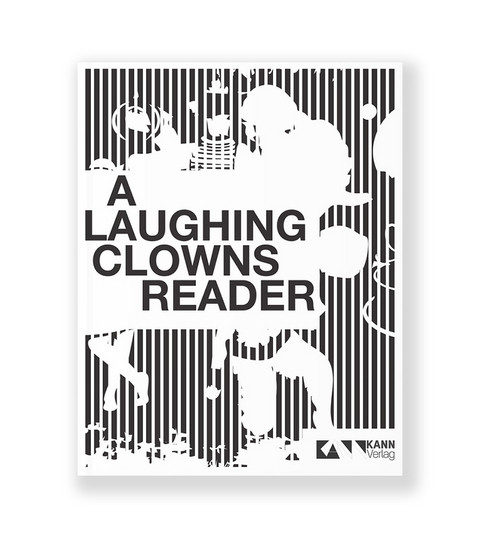
Produced especially for the exhibition is A Laughing Clowns Reader is a 100-page photo-collage of music newspaper clippings, two brief introductory texts, exhibition information, and a cover graphic by Liam Gillick, whose Brisbane Sound (2008) genealogy piece and Australian Fine Arts (2015) anagram piece are also on display.
Laughing Clowns' music was essentially song-based rock'n'roll, however, its unusual and complex arrangements, dramatic tempo changes, diminuendos and extended interludes with brass instrumentation prompted the tag "jazz-punk". In fact, powerful brass hooks were already there in Kuepper's 1977 songwriting for The Saints' second album, Eternally Yours, a title he would later give to a Laughing Clowns song with an indelible sax line, as if to remind his audience not only of his continued devotion but also where it all began.
In August 1979, after rehearsing for several months, Laughing Clowns announced their inaugural performances with a totemic poster created in collaboration with young artist/impresario Ken West, who would go on to make his name as co-founder of the Big Day Out music festival. Offset printed with a black ground out of which three distinct elements emerged: two yellow blocks of text in contrasting fonts on either side of a Ben-Day Dot image of Oskar Schlemmer's famous musical clown from his Bauhaus pantomime Staircase Wit (1927). Thus, from the get-go, Laughing Clowns positioned themselves in an indeterminate space somewhere between the music hall, the art gallery and the theatre, critically extrapolating to the rock context (where the rules tend to be firmly fixed and in place), Schlemmer’s ideas around transcending the individual and duo and emphasising the collective.
WHEN WHAT YOU SEE: The Art of Laughing Clowns presents key posters of the group alongside rarely seen photographs of them performing in Sydney, Melbourne and Brisbane between 1979–81, when their stage was at its most theatrical and polemic. There are also displays of Laughing Clowns' 12" vinyl releases on small cottage-industry record labels, including on their own Prince Melon Records. These reflexive objects compel physical engagement and are closer to artist's multiples than conventional music industry merchandise. The exhibition also includes a 1980 video and a Perth tour t-shirt from 1983, with both keeping the balls of the Bauhaus in the air and Schlemmer still very much a touchstone for the group.
Produced especially for the exhibition is A Laughing Clowns Reader is a 100-page photo-collage of music newspaper clippings, two brief introductory texts, exhibition information, and a cover graphic by Liam Gillick, whose Brisbane Sound (2008) genealogy piece and Australian Fine Arts (2015) anagram piece are also on display.
| Erscheinungsdatum | 27.11.2025 |
|---|---|
| Sprache | deutsch |
| Maße | 185 x 235 mm |
| Gewicht | 200 g |
| Themenwelt | Kunst / Musik / Theater ► Musik ► Musikgeschichte |
| Schlagworte | ART • Australien • David Pestorius • Donat Tahiraj • Ed Kuepper • Kunst • Laughing Clowns • Liam Gillick, • music • Musik • Post-Punk |
| ISBN-10 | 3-943619-19-2 / 3943619192 |
| ISBN-13 | 978-3-943619-19-5 / 9783943619195 |
| Zustand | Neuware |
| Informationen gemäß Produktsicherheitsverordnung (GPSR) | |
| Haben Sie eine Frage zum Produkt? |
Mehr entdecken
aus dem Bereich


aus dem Bereich
das Gesamtkunstwerk Kraftwerk
Buch | Softcover (2024)
C.W. Leske Verlag
CHF 29,90
Fakten, Mythen, Halbwahrheiten
Buch | Softcover (2024)
Anton Pustet (Verlag)
CHF 29,90


