


Hall & Oates (eBook)
144 Seiten
Sonicbond Publishing (Verlag)
978-1-78952-481-9 (ISBN)
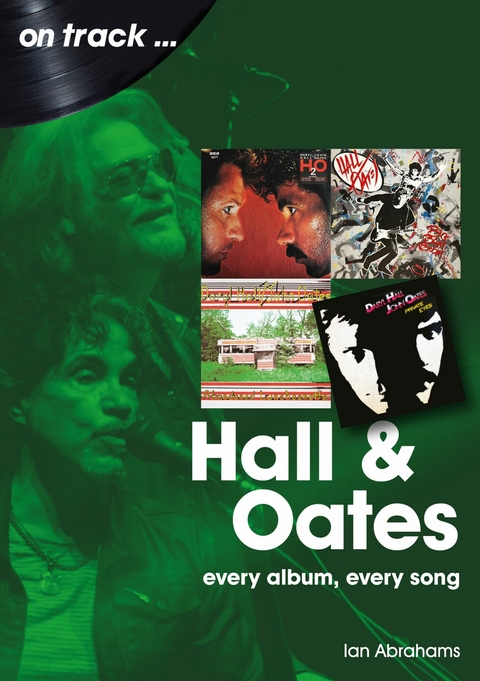
Best known for a string of 1980s pop soul classics such as 'Private Eyes', 'Maneater', and 'Out Of Touch', Daryl Hall & John Oates are far more than the much-caricatured image of the tall blonde one and the short one with the moustache. Through peaks and troughs of the preceding decade, their Philly soul sound twisted and turned, with forays into psychedelic rock with Todd Rundgren and an embracing of new wave-style tunes as the 1970s progressed. Their records are full of luscious harmonies and catchy melodies, but with an experimental side that has often been overlooked by those who know them principally from 'Rich Girl' or 'I Can't Go For That (No Can Do)'.
This book unpicks the multiple facets of the best-selling duo of all time, recounting the stories behind the songs and charting the myriad paths they've taken to reveal a very different Hall & Oates. This book is the first critical exploration of their work in book form for over thirty-five years and examines their entire output, from Whole Oats to their latter-day covers albums, taking in bonus tracks, compilations, solo and live albums, to provide a comprehensive overview of their fifty-year career.
Ian Abrahams first encountered the music of Daryl Hall & John Oates in the 1980s nightclubs of his youth; he soon backtracked through their 1970s catalogue and declares Along The Red Ledge as the best album they ever made. John Oates agrees. A contributor to Record Collector, R2/RnR, and Vive Le Rock, among others, he is the author of Hawkwind: Sonic Assassins, Strange Boat: Mike Scott & The Waterboys and co-wrote an oral history of the free festivals, Festivalized. He lives in Cornwall, UK, where his household includes two retired greyhounds who've never been to a muddy festival, tied on the end of a string.
The Atlantic Years
Whole Oats (1972)
Personnel:
Daryl Hall: vocals, keyboards, synthesizer, guitar, mandolin, vibraphone, cello
John Oates: vocals, guitar
Bill Keith: pedal steel guitar
Jim Helmer: drums
Arif Mardin: horns
Mike Patto: bass
Jerry Ricks: guitar
Recorded at Atlantic Recording Studios, New York
Producer: Arif Mardin
Release date: 12 November 1972
Label: Atlantic
Chart Placings: US: -, UK: -
Running Time: 38:08
At the start of the 1970s, though they’d been drawn together and Oates moved into Daryl and wife Bryna Lublin’s marital home, they were each trying to establish their own musical identity, with the idea of working as a duo being simply one of a number of possible angles. Hall, of course, had Gulliver, which today might be described as a manufactured band, put together as it was by Philly music entrepreneur John Madara (though the effective band leader was singer/songwriter Tim Moore, who also enjoyed the lion’s share of the writing credits). Gulliver wouldn’t see 1970 out, and though John Oates was recruited into the fold in the band’s dying days, he concedes this was only ‘briefly as back-up guitar player, and the band broke up pretty quickly thereafter’.
But there’s a sense that through 1970 – Gulliver notwithstanding – Daryl and John were starting to see their destinies as being wrapped up in each other. ‘We were hippies just scrounging around in Philadelphia’, Oates told Rolling Stone. ‘The whole thing was predicated on, ‘Hey man, I’ve got some songs. You’ve got some songs. I’m not happy with what I’m doing. You’re dissatisfied with what you’re doing. Why don’t we just do something together and just see what happens?’. It was that casual’. To Shindig magazine, he elaborated on how ‘Daryl would play a song and I would accompany him. I’d play a song on guitar and he would accompany me on piano. It was two guys who were independent, who just accompanied each other and little by little that became more of a collaboration, and that became more of a sound’.
Though they’ve both made it clear that their albums should always bear the names Daryl Hall & John Oates – despite a brief introductory foray using the band name Whole Oats – and would disparage its abbreviated Hall & Oates form, the simple starting point was, as Daryl says, that ‘we were living in an apartment in Philadelphia, and the mailbox said ‘Hall & Oates’. That’s how we got the name’. In his memoir, John tells this slightly differently, recalling that while he was still at Temple, he shared an apartment with Hall where the mailbox was labelled as ‘Hohl-Oates’, therefore being the later inspiration for their initial gigs as Whole Oats. But whatever the timings, as John continues, ‘If you look on every album we’ve ever made, it always has our full names. That was a conscious decision because we felt we were two very different individuals who had a lot in common musically, but who were very different personally’.
Playing as Whole Oats, on 5 December 1970 in the North Philadelphia art gallery Hecate’s Circle, they made their debut performance, bar those art gallery and coffee shop pop-ups where they’d started working out their style. This led to repeat appearances there into early-1971, after which they booked studio time to work up their initial ideas and to record covers of songs, such as Doc Watson’s ‘Deep River Blues’, which John describes as ‘always one of my favourite songs. It’s a classic, and everyone knows it’. Decades later, he based his own song ‘Deep River’ on it (for his Mississippi Mile solo album), ‘using the chords, but stretching them out to the new groove’.
Remaining a part of Daryl’s early career post-Gulliver, was John Madara, through John Madara Productions, where Hall was on the payroll as a songwriter. In an interview for the website Forgotten Hits, Madara recounted how ‘Gulliver was not going to be an ongoing act. Daryl really wanted to do his own thing’. Noting that John began sitting in on various sessions with Daryl and his Gulliver bandmate Tom Sellers, Madara said that when Daryl and John started working together, ‘I was really blown away by them. The two of them were sensational, writing great songs and performing’. In his extensive interview, Madara claims that Daryl and John – separately and together – cut ‘over 40 sides’, and positions himself as a key figure in their development through to signing with Atlantic Records: a deal he considers was done behind his back. Madara had a publishing arrangement with Chappell Music, and in 1970, ‘took Daryl and John to New York to perform live for Chappell with the sides I’d already recorded with them’.
However, in one of an increasing number of visits to Chappell, they encountered budding impresario Tommy Mottola, who became an ever- present figure as the duo began amassing showcase performances in New York. While they felt that in the hunt for a possible record deal, the wheels were turning slowly under Madara’s wing, Mottola seemed enthusiastic and dynamic, even though their contract with Madara was exclusive. In his book Change Of Seasons: A Memoir, Oates intimates that the industry feedback they eventually received, was that Madara was driving too hard a bargain for their services. Madara, naturally, had a different view: ‘A couple of months went by and I got a call from my attorney saying that they wanted out of their recording contract. Unbeknownst to me, one of their auditions was with Atlantic Records. [Mottola] had told them that he could get them a record deal, but they had to get out of their contract with me first’.
Classic music industry shenanigans one way or another you’d think, but the relationship with Madara irreparably broke down, and Madara settled for some percentage points on their first two Atlantic albums, co-publishing on some of the songs cut during his tenure with the duo, and a continuing interest in reissuing those 40-odd ‘sides’ cut at the start of their career.
But for Daryl and John, those Madara sessions with their mix of Hall’s charming folk and John’s clear love of blues and roots fingerpicking provided the blueprint and material that Atlantic, with producer, arranger and company- vice-President Arif Mardin at the helm, could reshape into the debut album Whole Oats.
‘I’m Sorry’ (Hall, Oates)
Though Daryl and John’s earliest demos have rebounded on them with notorious regularity, when we get to album one, track one, and compare and contrast against those demos, it’s totally clear how those days (of what one commentator succinctly described as ‘quivering coffeehouse folk’) informed their early official work. ‘I’m Sorry’ – later covered by Justin Hayward on his post-Moody-Blues 1980 Night Flight album – is a great example. It has the ambience and easygoing tone of those early demos, but with a light arrangement that leaves the song room to breathe. Hayward turned it into a steady mid-tempo soft rock number, but the Whole Oats version has a charm that repays unearthing this lesser-known corner of the catalogue.
Not that it received due acclaim back in the day. Promotion included a support slot for David Bowie on his US Ziggy Stardust tour in autumn 1972, which Oates remembered to Classic Pop as being ‘where the bar is set. At the time, David wasn’t a superstar – his management wanted him to be perceived as one. He wouldn’t speak to anyone, and we weren’t allowed backstage!’. Covering Bowie’s gig at Ellis Auditorium, Memphis on 24 September 1972, the reviewer, unimpressed with Bowie, saved even worse ire for the opening act: ‘At the least, Bowie’s show can objectively be called better than that of his warm-up group Whole Oats: a country-rock quartet. Playing all of their eight numbers in a simple 4/4 time, the group could not even keep the attention of the crowd, which spent much time milling up and down the aisles and tossing several plastic frisbees. One of the Whole Oats’ final numbers was titled ‘I’m Sorry’. It should have been dedicated to the audience’. Ouch.
‘All Our Love’ (Hall, Oates)
Still in their folk-rock hippie phase, this won’t be the last time they yearn for a life in the country in a bucolic daydream haze. It’s an inconsequential and laid-back fantasy of finding ‘the good life’ far away from the hustle of the city – ironic for a band that went on to embrace city life for the next couple of decades, but they had an initial theme and they were going to stick with it for the moment. It also seems that despite that Bowie support nonsense, Whole Oats were crowd-pleasers, according to an early review praising their ‘infectious rock and roll music and good vocal harmony’ and describing ‘a vitality not found in too many new groups. (They) appear to like what they’re doing and are not just going through the motions. Oates’ high tenor voice really stands out in the group’s harmonies’. We’ll assume the reviewer couldn’t identify his Hall from his Oates.
‘Georgie’...
| Erscheint lt. Verlag | 20.11.2025 |
|---|---|
| Reihe/Serie | On Track |
| Sprache | englisch |
| Themenwelt | Kunst / Musik / Theater ► Musik ► Musikgeschichte |
| Schlagworte | Abandoned Luncheonette • Darry Hall • John Oates • Maneater • One on One • Private Yes • She's Gone |
| ISBN-10 | 1-78952-481-4 / 1789524814 |
| ISBN-13 | 978-1-78952-481-9 / 9781789524819 |
| Informationen gemäß Produktsicherheitsverordnung (GPSR) | |
| Haben Sie eine Frage zum Produkt? |
 EPUB (Ohne DRM)
Digital Rights Management: ohne DRM
Dieses eBook enthält kein DRM oder Kopierschutz. Eine Weitergabe an Dritte ist jedoch rechtlich nicht zulässig, weil Sie beim Kauf nur die Rechte an der persönlichen Nutzung erwerben.
Dateiformat: EPUB (Electronic Publication)
EPUB ist ein offener Standard für eBooks und eignet sich besonders zur Darstellung von Belletristik und Sachbüchern. Der Fließtext wird dynamisch an die Display- und Schriftgröße angepasst. Auch für mobile Lesegeräte ist EPUB daher gut geeignet.
Systemvoraussetzungen:
PC/Mac: Mit einem PC oder Mac können Sie dieses eBook lesen. Sie benötigen dafür die kostenlose Software Adobe Digital Editions.
eReader: Dieses eBook kann mit (fast) allen eBook-Readern gelesen werden. Mit dem amazon-Kindle ist es aber nicht kompatibel.
Smartphone/Tablet: Egal ob Apple oder Android, dieses eBook können Sie lesen. Sie benötigen dafür eine kostenlose App.
Geräteliste und zusätzliche Hinweise
Buying eBooks from abroad
For tax law reasons we can sell eBooks just within Germany and Switzerland. Regrettably we cannot fulfill eBook-orders from other countries.
aus dem Bereich


