


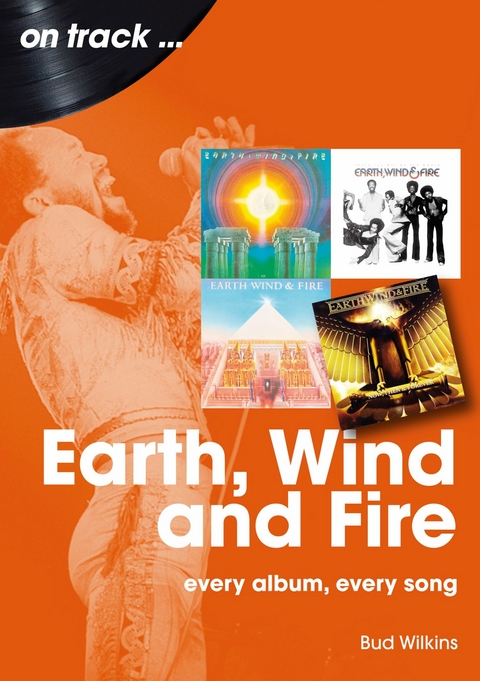
Earth, Wind and Fire (eBook)
160 Seiten
Publishdrive (Verlag)
978-1-78952-480-2 (ISBN)

Since their formation in the early 1970s, Earth, Wind & Fire have been at the forefront of popular music. Led by the fearless Maurice White, the band imprinted their funky style onto the world's psyche, with tracks like 'September', 'Let's Groove', 'That's The Way of The World' and 'Reasons' becoming instantly recognisable in the process, transforming the group into one of the biggest pop acts of all time. Walking the fine line between pop hits, jazz compositions and fusion playing, Maurice surrounded himself with some of the best players of the time in order to realise his vision. Al McKay, Verdine White, Larry Dunn, Andrew Woolfolk and vocalist extraordinaire Philip Bailey were players of the highest order, committing stunning performances to tape and becoming icons in the process.
Earth, Wind & Fire On Track gives a complete overview of the group's recorded output. From 1971's self-titled debut to 2014's Holiday, with smash hits like I Am, All 'N All and Spirit in between, here you will find every song delved into with facts and insightful analysis. No stone is left unturned in this career overview, giving both long-time fans and newcomers something fresh to discover about one of popular music's greatest acts.
The author
Born in Tasmania, Bud Wilkins is a musician, songwriter, producer and music educator based in Melbourne, Australia. Bud is an established jazz/rock guitarist, whose licks can often be found occupying the clubs of Australia. He moonlights as his alter ego, The Nightshift Cashier, and is the musical director/producer for funk/pop artist Leilani Le Fleur. His lifelong passion, expertise and work in the field have made him an expert in many genres of music, and his enthusiasm for sound is contagious.
Since their formation in the early 1970s, Earth, Wind & Fire have been at the forefront of popular music. Led by the fearless Maurice White, the band imprinted their funky style onto the world's psyche, with tracks like 'September', 'Let's Groove', 'That's The Way of The World' and 'Reasons' becoming instantly recognisable in the process, transforming the group into one of the biggest pop acts of all time. Walking the fine line between pop hits, jazz compositions and fusion playing, Maurice surrounded himself with some of the best players of the time in order to realise his vision. Al McKay, Verdine White, Larry Dunn, Andrew Woolfolk and vocalist extraordinaire Philip Bailey were players of the highest order, committing stunning performances to tape and becoming icons in the process. Earth, Wind & Fire On Track gives a complete overview of the group's recorded output. From 1971's self-titled debut to 2014's Holiday, with smash hits like I Am, All 'N All and Spirit in between, here you will find every song delved into with facts and insightful analysis. No stone is left unturned in this career overview, giving both long-time fans and newcomers something fresh to discover about one of popular music's greatest acts.The authorBorn in Tasmania, Bud Wilkins is a musician, songwriter, producer and music educator based in Melbourne, Australia. Bud is an established jazz/rock guitarist, whose licks can often be found occupying the clubs of Australia. He moonlights as his alter ego, The Nightshift Cashier, and is the musical director/producer for funk/pop artist Leilani Le Fleur. His lifelong passion, expertise and work in the field have made him an expert in many genres of music, and his enthusiasm for sound is contagious.
Earth, Wind And Fire (1971)
Personnel:
Maurice White: vocals, drums, electric kalimba
Verdine White: vocals, bass, percussion
Don Whitehead: vocals, piano
Yackov Ben Israel: percussion
Michael Beal: guitar
Sherry Scott: vocals
Wade Flemons: vocals, electric piano
Chester Washington: tenor saxophone
Alexander Thomas: trombone
Leslie Drayton: trumpet
Producer: Joe Wissert
Engineer: Bruce Botnick
Studio: Sunset Sound Recorders, Hollywood
Release date: February 1971
Chart positions: US soul: 24, UK: -
Running time: 28:34
The debut album shows the band in fine form but miles away from the pop/ funk phenomenon they were to become. Augmenting the band is Sherry Scott, whose bluesy vocal style sat well in the vocal section of Maurice, Verdine, Don Whitehead and Wade Flemons. With the lineup complete, the band constantly rehearsed, turning themselves into a tight funk machine.
Maurice remembered the early shows in his autobiography: ‘Since we rehearsed all the time, everything we did was tight. Verdine pranced around in a leotard and no shirt, giving a good show. Our driving, percussive sound created high energy and raw musical power’. Maurice had been networking and making friends in high places. Legendary NFL player Jim Browne organised a showcase for Warner Bros. and RCA Records atop his Hollywood Hills mansion. Overlooking the L.A. horizon, the group played their best. RCA turned them down, but Warner Bros. immediately saw potential and snatched up the group. To produce the first project, the label chose Joe Wissert, who was fresh from working with The Turtles and Gordon Lightfoot. Wissert went on to produce multiple EW&F albums, and worked with artists like Boz Scaggs, Helen Reddy and the J.Geils Band. The role of recording engineer fell to Bruce Botnick – most famous for his groundbreaking work with The Doors.
Sounding today like a lost garage-funk classic, due partly to its warm sound, the album is still looked upon favourably – none other than R&B artist Isaac Hayes having called it one of the group’s top five records.
‘Help Somebody’ (White, Flemons, Whitehead)
Straight away, the group placed themselves amongst the up-tempo funk of the day, and the opening track could be straight from an early-1970s car-chase scene. Beginning with Beal’s stabbing octave guitar line, the horn and rhythm sections join in, and before long, the song takes off. Beal’s locked-in rhythm- playing anchors the James Brown-style vamp heard in the verse, while Wade Flemons holds the distinction of being the first voice we hear on an EW&F album. At first, joined by Maurice, vocalist Sherry Scott’s appearance lifts the song, floating above a rhythm change that’s similar to a samba.
The first hearing of bassist Verdine White on an EW&F album is a treat, and over the course of the 1970s, listeners really got to hear the growth of an amazing musician. Here, his playing is rock solid, driving the track forward in a way similar to bassist Larry Graham. The wall of percussion that helped shape the group’s sound is present from the start, as are the complex vocal counter-melodies. This is evident in the layered vocal parts of the ‘Reach out your hand’ section. The lyric is fairly straightforward in its reinforcement of the title, urging the listener to ‘Go out and help somebody else’, reminding them to also ‘Let love prevail/Reach out your hand and help somebody’.
‘Moment Of Truth’ (White, Flemons, Whitehead)
This intro brings the group’s jazz influences to the fore. For a few moments, the horn section and drum rolls are reminiscent of a Duke Ellington intro (or ending, for that matter), and other big-band arrangers of the swing era. Verdine’s sliding bass line quickly interrupts this, followed by a driving groove that the band stays locked into – the old making way for the new, perhaps? Beal uses a wah pedal extensively on this track – sometimes creatively and sometimes locked into the drums. The wall of percussion continues, the listener is hit by interlocking rhythms.
The multiple vocalists in unison, in harmony or solo, is particularly reminiscent of legendary funk group Sly Stone and the Family Stone. Over in Detroit, similar vocal arrangements were popping up on albums by the emerging group Funkadelic. Led by the inimitable George Clinton, Funkadelic were up to album number three by this stage, but their ascent would mirror that of EW&F in many ways. The verse and chorus fly by, broken up with a small section featuring vocal scatting. Soon, a new vocal hook appears over a repeat of the intro groove, with Scott establishing a memorable vocal pattern that would fit well with EW&F’s future direction.
‘Love Is Life’ (White, Flemons, Whitehead)
This first EW&F soul ballad is possibly the album highlight. The late-1960s saw plenty of hits along these lines, but EW&F were eventually able to transcend what had come before and increase the complexity and sound for the 1970s and beyond – beginning right here.
‘Love Is Life’ was the album’s highest-charting single, reaching 43 R&B in Billboard. A slow rhythm, jazz chords, and a flute added to the horn section, provide a bed for Scott’s spoken intro. ‘Love, the light shines, and through its wisdom, the answers of the universe are carried’ are words that would today probably be described as being ‘of their time’, though they helped set the tone and were a precursor to the spiritual elements that would become an essential part of the EW&F image. The lyric itself is similar, with the horn section giving a melody preview before the unison vocals come in over the descending chords.
Have you ever seen a flower
Tryin’ to bloom in a dry, barren land?
But then comes a sweet, sweet shower
Just to lend a helpin’ hand
The verse’s restrained feel is blown away by the pre-chorus, as the band steps it up and the horn stabs give the swelling vocals energy. The sliding singing style of ‘all at once’ sounds not unlike something from a later EW&F record. A quick-but-rousing chorus proclaiming ‘You brought me love, and your love is life’, has baritone sax holding down the bottom end before a drum buildup ends the section with a rising burst of horns.
The post-second-chorus section is important, as it’s where the band begin to sound like themselves. The vocal and horn-section interaction is of particular interest. Bassists should note the section repeats as Verdine jumps high and applies a fast vibrato in a style that later became one of his signatures. We also hear guitarist Beal soloing, and as the song fades out, we are treated to what would become the tradition of impromptu talking between tracks, as an unknown voice (perhaps aware of the lyric’s flower-power elements) mentions ‘peace and love’.
‘Fan The Fire’ (White, Flemons, Whitehead)
The first track to include any social commentary is smouldering funk. The opening chant, ‘The flame of love is about to die/Somebody fan the fire’ sets the tone as horns creep in over the repetitive bass-and-drums rhythm. They soon give way to a strong mid-tempo groove, with great guitar work from Beal, whose intro solo immediately suggests he might attempt to steal the limelight. Maurice spoke of the lyric in his autobiography:
Don Whitehead’s vibe was a big part of these songs. ‘Head’ was more curious about world events than Wade and I – aware of what was going on with (Black Panther founding members) Bobby Seale, Huey Newton, and even the work of (poet/activist) Nikki Giovanni. Still, we all instinctively understood the black-power philosophy that had taken hold. People were standing up for themselves, no longer waiting for white folks to give us a piece of the American pie.
The band’s playing is fiery, and their restraint masterful, while the bridge is augmented by horns, adding to the song’s growing aura. Beal again plays some scorching guitar licks, here reminiscent of The Isley Brothers’ Ernie Isley. The song fades out as we hear more off-the-cuff fooling around and talking, bringing side one to a close.
‘C’mon Children (M. White, V. White, Beale, Whitehead, Flemons)
The album’s writing trio to this point, are joined by Verdine and Beal, on a workout for their rhythmic chops. The pair’s added input is immediately evident during the intro’s fuzz guitar riff, before Verdine takes off with a complex bass groove. Maurice’s vocal is mixed up-front in the verse, though we hear the other vocalists as they extol us to ‘Come on down and lend a hand’. The verse’s one-chord vamp is continued into the almost psychedelic B section, where trippy reverb and percussion are interrupted by the intro riff, launching straight into verse two.
Opening side two with the album’s most unmemorable moment yet, the lack of a true hook holds the song back, but the individual players coming to the fore is a treat.
...| Erscheint lt. Verlag | 19.11.2025 |
|---|---|
| Reihe/Serie | On Track |
| Sprache | englisch |
| Themenwelt | Kunst / Musik / Theater ► Musik ► Musikgeschichte |
| Kunst / Musik / Theater ► Musik ► Pop / Rock | |
| Schlagworte | Boogie Wonderland • Fantasy • I Am • Maurice White • Philip Bailey • September • System of Survival |
| ISBN-10 | 1-78952-480-6 / 1789524806 |
| ISBN-13 | 978-1-78952-480-2 / 9781789524802 |
| Informationen gemäß Produktsicherheitsverordnung (GPSR) | |
| Haben Sie eine Frage zum Produkt? |
 EPUB (Ohne DRM)
Digital Rights Management: ohne DRM
Dieses eBook enthält kein DRM oder Kopierschutz. Eine Weitergabe an Dritte ist jedoch rechtlich nicht zulässig, weil Sie beim Kauf nur die Rechte an der persönlichen Nutzung erwerben.
Dateiformat: EPUB (Electronic Publication)
EPUB ist ein offener Standard für eBooks und eignet sich besonders zur Darstellung von Belletristik und Sachbüchern. Der Fließtext wird dynamisch an die Display- und Schriftgröße angepasst. Auch für mobile Lesegeräte ist EPUB daher gut geeignet.
Systemvoraussetzungen:
PC/Mac: Mit einem PC oder Mac können Sie dieses eBook lesen. Sie benötigen dafür die kostenlose Software Adobe Digital Editions.
eReader: Dieses eBook kann mit (fast) allen eBook-Readern gelesen werden. Mit dem amazon-Kindle ist es aber nicht kompatibel.
Smartphone/Tablet: Egal ob Apple oder Android, dieses eBook können Sie lesen. Sie benötigen dafür eine kostenlose App.
Geräteliste und zusätzliche Hinweise
Buying eBooks from abroad
For tax law reasons we can sell eBooks just within Germany and Switzerland. Regrettably we cannot fulfill eBook-orders from other countries.
aus dem Bereich


