


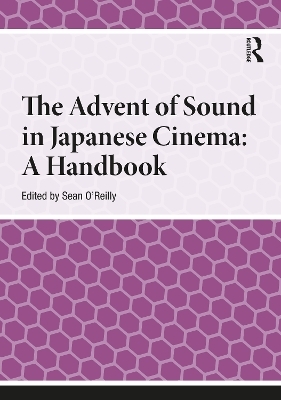
The Advent of Sound in Japanese Cinema
Pallas Publications (Verlag)
978-90-485-7244-1 (ISBN)
- Lieferbar (Termin unbekannt)
- Versandkostenfrei
- Auch auf Rechnung
- Artikel merken
Sean O’Reilly is Professor of Global Connectivity and Coordinator of the Japan Studies program at Akita International University. A graduate of Harvard University’s History and East Asian Languages doctoral program, he completed a secondary field in Film and Visual Studies. His research, which began with a Fulbright Scholarship to Japan, concerns the ways Japanese history has been reinvented in film and popular culture. Publications include Re-viewing the Past: The Uses of History in the Cinema of Imperial Japan (Bloomsbury, 2018) and “The Resurgent Right: The Secret of Japan’s Twenty-first Century Cinematic Success” (Journal of Japanese and Korean Cinema, 2023).
Introduction: The Advent of Sound in Japanese Cinema: Soundscapes of the 1930s Part 1: Talkies vs. Tradition: Japanese Movie Studios’ 1930s Experimentation 1. P.C.L. and the 1930s “Talkie” Films of Naruse Mikio 2. A Flexible Shochiku Realism: Shimazu Yasujirō and the Introduction of Sound 3. Reevaluating Nikkatsu Talkies: Dubbing During the Transition to Sound Cinema in Japan Part 2: Sounding Them Out: New Genres in 1930s Japan 4. Changing Lyrics, Changing Times: Kaeuta (Parody Song) Culture in Japanese Cinema of the 1930s 5. “Made in Japan”: The Birth of Tokusatsu 6. Sounding out Synchrony: Early Experiments with Manga Eiga and Sound Part 3: Finding Their Voice: The Woes and Wows of Great Directors in 1930s Japan 7. Japan’s “Best One” of 1939: Why Uchida Tomu’s Earth Won the Top Critics’ Prize in an Extraordinary Year 8. Restricting the Soundscape: Aural Minimalism in Tasaka Tomotaka’s War Films 9. Image-Grammar: Shimazu Yasujirō and Film Language Part 4: Speaking Up: Actors’ Struggles with the Silent-to-Sound Transition in 1930s Japan 10. Magnetic Nonchalance: Actor Saburi Shin’s Performances and Performativity in 1930s Shochiku Films 11. The Narutaki-Zenshin Collaboration: Creative Vanguards and Networks Advancing Period Film Conventions 12. Rhythms in Migration: Whispering Sidewalks and Japan’s Jazz Age Cinema Interlude. Acting out the Soundscape: Enoken Plays Kondō Isami Part 5: Movie Musicality: Soundscapes of the 1930s 13. From Silent to Talkie Soundscapes: Transforming Sounds and New Subjectivity 14. The Relationship between Ozu Yasujirō’s Signature Style and the Soundscape in The Only Son 15. Dreamworlds: The Cinema and the Department Store Appendix: The Advent of Sound: Timeline
| Erscheinungsdatum | 03.12.2025 |
|---|---|
| Reihe/Serie | Handbooks on Japanese Studies |
| Zusatzinfo | 4 Tables, black and white; 57 Line drawings, black and white; 9 Halftones, black and white; 66 Illustrations, black and white |
| Verlagsort | Amsterdam |
| Sprache | englisch |
| Maße | 174 x 246 mm |
| Themenwelt | Kunst / Musik / Theater ► Film / TV |
| Geisteswissenschaften ► Geschichte ► Regional- / Ländergeschichte | |
| Sozialwissenschaften ► Kommunikation / Medien ► Medienwissenschaft | |
| Sozialwissenschaften ► Soziologie ► Spezielle Soziologien | |
| ISBN-10 | 90-485-7244-4 / 9048572444 |
| ISBN-13 | 978-90-485-7244-1 / 9789048572441 |
| Zustand | Neuware |
| Informationen gemäß Produktsicherheitsverordnung (GPSR) | |
| Haben Sie eine Frage zum Produkt? |
aus dem Bereich


