


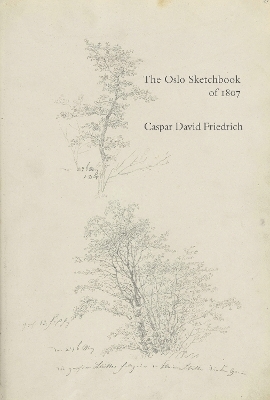
The Oslo Sketchbook of 1807
Seiten
2026
Pallas Athene Publishers (Verlag)
9781843682745 (ISBN)
Pallas Athene Publishers (Verlag)
9781843682745 (ISBN)
- Noch nicht erschienen (ca. März 2026)
- Portofrei ab CHF 40
- Auch auf Rechnung
- Artikel merken
On long hikes, Caspar David Friedrich compiled many sketchbooks. The ‘Oslo Sketchbook of 1807’ records trees he would use in many paintings.
The art of Caspar David Friedrich (1774-1840), mysterious and spiritual as it was, depended on an intense engagement with nature. On the long hikes that he took through his native north Germany, and further south in the Bohemian mountains, he drew landscapes, buildings, people and, most intently of all perhaps, trees. Half of Friedrich’s surviving drawings come from the sketchbooks that he compiled on his journeys and referred to during the whole of his career. A handful of these sketchbooks survive intact. The one known as The Oslo Sketchbook of 1807 was used for just two months, from April to June of that year. Its 23 pages of drawings record, with almost hallucinatory simplicity and clarity, trees that Friedrich would use in his paintings for years to come.
The art of Caspar David Friedrich (1774-1840), mysterious and spiritual as it was, depended on an intense engagement with nature. On the long hikes that he took through his native north Germany, and further south in the Bohemian mountains, he drew landscapes, buildings, people and, most intently of all perhaps, trees. Half of Friedrich’s surviving drawings come from the sketchbooks that he compiled on his journeys and referred to during the whole of his career. A handful of these sketchbooks survive intact. The one known as The Oslo Sketchbook of 1807 was used for just two months, from April to June of that year. Its 23 pages of drawings record, with almost hallucinatory simplicity and clarity, trees that Friedrich would use in his paintings for years to come.
Caspar David Friedrich (1774-1840), one of the great visionaries of European art, spent all his life in Northern Germany, apart from four years studying in Copenhagen, and his output appears to consist almost entirely of German landscapes. But far from being parochial, he was, in the words of the French sculptor David d’Angers, the artist who ‘discovered the tragic in landscape’. His paintings assemble minutely observed elements of nature into compositions that celebrate the riches and the melancholy of a cosmos fully imbued with the divine, while never losing an almost hallucinatory engagement with reality. For all their clarity, they are the quintessence of Romanticism.
| Erscheint lt. Verlag | 9.3.2026 |
|---|---|
| Zusatzinfo | 64 Illustrations, color |
| Verlagsort | London |
| Sprache | englisch |
| Maße | 197 x 297 mm |
| Themenwelt | Kunst / Musik / Theater ► Malerei / Plastik |
| ISBN-13 | 9781843682745 / 9781843682745 |
| Zustand | Neuware |
| Informationen gemäß Produktsicherheitsverordnung (GPSR) | |
| Haben Sie eine Frage zum Produkt? |
Mehr entdecken
aus dem Bereich

aus dem Bereich
die Entdeckung der Sächsischen Schweiz im 18./19. Jahrhundert
Buch | Softcover (2023)
Verlag der Kunst
CHF 23,90
die letzten Jahre : the weight of being : the final years
Buch | Softcover (2025)
Wienand (Verlag)
CHF 49,90


