Cantata profana
Oxford University Press Inc (Verlag)
978-0-19-008323-6 (ISBN)
- Lieferbar (Termin unbekannt)
- Versandkostenfrei
- Auch auf Rechnung
- Artikel merken
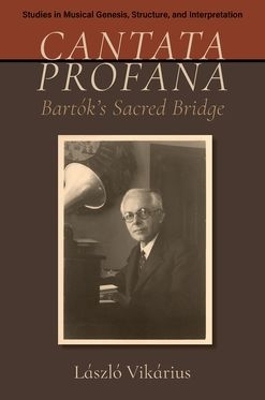
The work's libretto was based on a Romanian folk ballad from his collection, and the mystical story of a hunter's nine sons who turn into stags--never to return home--was close to the composer's heart. Vikárius analyzes the origins of the piece, rooted in one of Bartók's most intensive periods of collecting activities in Transylvania just before the outbreak of World War I. The multi-ethnic folkloric landscape of "historic" Hungary (part of Austro-Hungary at the time) is embodied by the source materials for Cantata profana that survive in full to be analyzed, from the sketches to the various translations of the libretto. As Vikárius demonstrates, the choice of a Romanian winter solstice ceremonial text as libretto for Cantata profana combines Bartók's folklorism with a markedly neoclassical allusion to J. S. Bach's St Matthew Passion and is necessarily underpinned by the severe criticism Bartók faced because of his interest in and work on Romanian folklore. Throughout the book, Vikárius reveals numerous hidden details that prove crucial to the concept of the work and explores how its ideologically charged text underlines the aesthetic concept behind the musical decisions.
László Vikárius is head of the Budapest Bartók Archives and Editor-in-Chief of the Béla Bartók Complete Critical Edition (G. Henle, Munich and Editio Musica Budapest). He is also Professor of Musicology at the Liszt Ferenc Academy of Music, where he himself also received a diploma in musicology (1984-89). On the staff of the Bartók Archives since 1988, he has published more than a hundred scholarly articles in English, German, or Hungarian, and organized conferences and exhibitions on Bartók.
Series Editor Foreword
Abbreviations
Acknowledgements
Prologue: Between Sacred and Profane
Chapter 1: Bartók the Folklorist
Chapter 2: Romanian Christmas Songs
Chapter 3: The Composition of Cantata profana: Covert Genesis
Chapter 4: Documents of an Overt Genesis
Chapter 5: An Analysis of Cantata profana
Chapter 6: The Reception of Cantata profana
Epilogue: An ars poetica
Appendices
Select Bibliography
Index
| Erscheinungsdatum | 11.12.2025 |
|---|---|
| Reihe/Serie | Studies in Musical Genesis, Structure, and Interpretation |
| Zusatzinfo | 91 b/w figures, 6 tables |
| Verlagsort | New York |
| Sprache | englisch |
| Maße | 168 x 241 mm |
| Gewicht | 640 g |
| Themenwelt | Kunst / Musik / Theater ► Musik ► Klassik / Oper / Musical |
| ISBN-10 | 0-19-008323-9 / 0190083239 |
| ISBN-13 | 978-0-19-008323-6 / 9780190083236 |
| Zustand | Neuware |
| Informationen gemäß Produktsicherheitsverordnung (GPSR) | |
| Haben Sie eine Frage zum Produkt? |
aus dem Bereich