


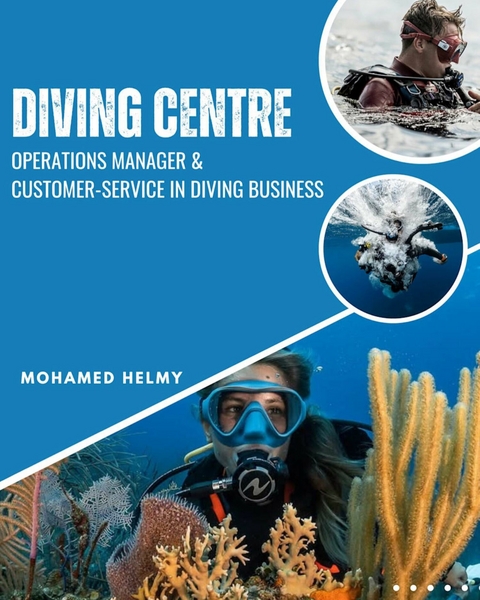
Dive Centre Operations Manager and Customer Service in Diving Business (eBook)
231 Seiten
Publishdrive (Verlag)
978-0-00-080683-3 (ISBN)
This book is a comprehensive professional manual designed to equip current and aspiring dive centre managers with the essential knowledge and operational skills required to successfully run a modern, safety-compliant, and customer-focused diving facility.
The content provides in-depth guidance on all aspects of dive centre operations, including:
Staff leadership and team coordination
Daily operations and logistics
Safety management and emergency preparedness
Compliance with international diving standards (e.g., PADI protocols)
Inventory and equipment control
Financial oversight and service quality management
Marketing, client relations, and handling customer feedback professionally
A major section of the book is dedicated to customer service in the diving business, highlighting effective communication techniques, personalized guest care, and how to build long-term client relationships in both recreational and professional diving sectors.
Introduction to Dive Operation Management
A- Explain the Global Diving Industry Overview?
T
he global diving industry encompasses both recreational scuba diving and commercial diving sectors. Here's a breakdown of some key aspects to understand:
Market Size and Growth:
• The recreational scuba diving market is experiencing steady growth. Estimates suggest a market size of around $4.4 billion in 2023, with a projected increase in the coming years.
• Factors like rising disposable income, the popularity of adventure tourism, and increased awareness of underwater ecosystems contribute to this growth.
Market Segmentation:
Recreational diving caters to various interests, with specialisation like:
• Reef diving: Exploring coral reefs teeming with marine life.
• Wreck diving: Investigating submerged shipwrecks and historical artefacts.
• Technical diving: Diving deeper with specialised equipment and training for experienced divers
Regional Focus:
Certain regions are popular diving destinations due to favourable weather conditions, diverse marine life, and historical significance:
• Southeast Asia (Great Barrier Reef, Indonesia)
• Caribbean Sea (Belize, Cayman Islands)
• Red Sea (Egypt)
• Indian Ocean (Maldives)
Trends and Developments:
• The industry is embracing sustainable practices like reef conservation initiatives and responsible diving techniques.
• Technological advancements like digital dive logs and underwater communication systems are enhancing the diving experience.
• Online platforms and travel agencies are making it easier for divers to discover and book diving trips globally.
Understanding these aspects of the global diving industry will provide valuable context when managing a dive centre. It helps you identify target markets, tailor your offerings, and stay updated on industry trends to ensure your business thrives.
B- How is a Dive centre's Management Structured?
A dive centre's structure can vary depending on its size and business model. However, some core roles are common across most operations. Here's a breakdown of these roles and their responsibilities:
Management:
• Dive Centre Manager:
This individual oversees the entire operation, including staff management, finances, marketing, customer service, and ensuring compliance with regulations.
• Assistant Manager (Optional):
In larger centres, an assistant manager may handle specific areas like staff scheduling or retail operations.
• Sales and Customer Service:
This includes Retail Staff: This team is responsible for equipment sales, rentals, and customer service interactions in the dive centre shop. They might handle gear maintenance, answer customer inquiries, and process bookings for courses and trips.
• Dive Operations:
This includes:
• Dive Instructors: Certified professionals who conduct training courses, lead guided dives, and ensure diver safety underwater.
• Divemasters: Assist instructors with courses and trips, manage logistics, and may lead dives for certified divers.
• Boat Captain/Crew (For Centres with Boats): Responsible for the safe operation of the dive boat, including navigation, maintenance, and assisting divers entering and exiting the water.
• Additional Roles (Depending on Size):
• Marketing Specialist: Develops and implements marketing strategies to attract new customers.
• Mechanic: Maintains and repairs dive equipment.
• Bookkeeper: Manages the dive centre's finances.
C- What is the definition or meaning of dive a center operations management?
Dive center operations management refers to the management and coordination of activities within a dive center to ensure its smooth and efficient operation. Dive centers are facilities that provide a range of services related to scuba diving, such as training, equipment rental, guided dives, and other diving-related activities. Effective operations management is essential for delivering high-quality services, maintaining customer satisfaction, and ensuring the safety of divers.
Here are some key aspects of dive center operations management:
1. Facility and Equipment Management: Dive centers need to maintain their facilities and diving equipment in good condition. This includes regular maintenance, repairs, and replacements as necessary. Equipment should be properly serviced and inspected to ensure its safety and reliability.
2. Staff Management: Dive centers employ a team of instructors, divemasters, boat captains, and support staff. Operations management involves recruiting, training, and scheduling staff members to meet the demands of the diving season. Staff should be adequately trained and certified to ensure they can provide safe and high-quality services to customers.
3. Customer Service: Providing excellent customer service is crucial for the success of a dive center. Operations management involves establishing efficient booking and reservation systems, managing customer inquiries and requests, and ensuring a positive customer experience throughout their interaction with the dive center.
4. Safety and Risk Management: Dive centers must prioritize safety to protect their customers and staff. Operations management includes implementing safety protocols, conducting regular safety briefings, maintaining emergency response plans, and ensuring that all equipment meets safety standards. Risk assessment and management should be an ongoing process to mitigate potential hazards associated with diving activities.
5. Inventory Management: Dive centers deal with a variety of equipment, including scuba gear, tanks, wetsuits, and accessories. Effective inventory management involves tracking stock levels, reordering supplies in a timely manner, and managing equipment rentals and sales. This helps to ensure that the center can meet the demand for equipment and minimize the risk of shortages.
6. Dive Trip Planning and Logistics: Dive centers often organize and coordinate dive trips to various locations. Operations management includes planning the itineraries, arranging transportation, coordinating with boat operators, and ensuring that all required permits and licenses are in place. Timely communication with customers regarding trip details is also essential.
7. Marketing and Promotion: Operations management includes developing marketing strategies to attract customers and promote the dive center's services. This may involve digital marketing, social media management, website development, and collaboration with travel agencies and other relevant partners.
By effectively managing these aspects, a dive center can create a positive and professional environment that attracts divers, enhances their experiences, and ensures the long-term success of the business.
D- What are the Leadership Styles and Chain of Command?
Effective dive centres establish a clear chain of command, outlining reporting structures and decision-making processes. Different leadership styles can be used:
• Authoritarian: Manager makes decisions with minimal input from staff.
• Democratic: Manager encourages staff participation in decision-making.
• Situational: Manager adapts their style based on the situation and staff capabilities.
The best leadership style will depend on the specific dive centre and its environment. However, it's crucial to choose one that fosters a positive work environment, promotes teamwork, and ensures clear communication for efficient operations and diver...
| Erscheint lt. Verlag | 22.5.2025 |
|---|---|
| Sprache | englisch |
| Themenwelt | Kunst / Musik / Theater ► Malerei / Plastik |
| ISBN-10 | 0-00-080683-8 / 0000806838 |
| ISBN-13 | 978-0-00-080683-3 / 9780000806833 |
| Informationen gemäß Produktsicherheitsverordnung (GPSR) | |
| Haben Sie eine Frage zum Produkt? |
 EPUB (Adobe DRM)
Größe: 2,2 MB
Kopierschutz: Adobe-DRM
Adobe-DRM ist ein Kopierschutz, der das eBook vor Mißbrauch schützen soll. Dabei wird das eBook bereits beim Download auf Ihre persönliche Adobe-ID autorisiert. Lesen können Sie das eBook dann nur auf den Geräten, welche ebenfalls auf Ihre Adobe-ID registriert sind.
Details zum Adobe-DRM
Dateiformat: EPUB (Electronic Publication)
EPUB ist ein offener Standard für eBooks und eignet sich besonders zur Darstellung von Belletristik und Sachbüchern. Der Fließtext wird dynamisch an die Display- und Schriftgröße angepasst. Auch für mobile Lesegeräte ist EPUB daher gut geeignet.
Systemvoraussetzungen:
PC/Mac: Mit einem PC oder Mac können Sie dieses eBook lesen. Sie benötigen eine
eReader: Dieses eBook kann mit (fast) allen eBook-Readern gelesen werden. Mit dem amazon-Kindle ist es aber nicht kompatibel.
Smartphone/Tablet: Egal ob Apple oder Android, dieses eBook können Sie lesen. Sie benötigen eine
Geräteliste und zusätzliche Hinweise
Buying eBooks from abroad
For tax law reasons we can sell eBooks just within Germany and Switzerland. Regrettably we cannot fulfill eBook-orders from other countries.
aus dem Bereich


