


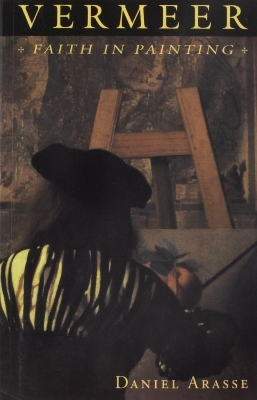
Vermeer
Faith in Painting
Seiten
1996
Princeton University Press (Verlag)
978-0-691-02930-6 (ISBN)
Princeton University Press (Verlag)
978-0-691-02930-6 (ISBN)
Using a historical analysis of Vermeer's method of production and a close reading of his art, this book explores the originality of Vermeer in the context of 17th-century Dutch painting. It suggests that his confrontation with painting represented a very personal effort to define a new pictorial practice within the classical tradition of his art.
Through a historical analysis of Vermeer's method of production and a close reading of his art, Daniel Arasse explores the originality of this artist in the context of seventeenth-century Dutch painting. Arguing that Vermeer was not a painter in the conventional, commercial sense of his Dutch colleagues, Arasse suggests that his confrontation with painting represented a very personal and ambitious effort to define a new pictorial practice within the classical tradition of his art. By examining Vermeer's approach to image-making, the author finds that his works demonstrate the concept of painting as a medium through which the viewer senses the ungraspable and mysterious presence of life. Not only does this concept of painting carry on the traditions of Classical Antiquity and the High Renaissance, but it also relates to Catholic ideas about spiritual meditation and the power of images. Arasse shows that although Vermeer usually uses secular subject matter commonplace among his contemporaries, his treatment of iconography, light, and line, for example, varies greatly from theirs.
Iconographical elements tend to hold meaning in suspense rather than to explicate; dazzling light emanates from interior objects; sfumato renders the presence of objects without depicting them. Discussing these and other aspects of Vermeer's art, Arasse locates the painter's genius in the reflexive, meditative nature of his works, each of which seems to be a painting about painting.
Through a historical analysis of Vermeer's method of production and a close reading of his art, Daniel Arasse explores the originality of this artist in the context of seventeenth-century Dutch painting. Arguing that Vermeer was not a painter in the conventional, commercial sense of his Dutch colleagues, Arasse suggests that his confrontation with painting represented a very personal and ambitious effort to define a new pictorial practice within the classical tradition of his art. By examining Vermeer's approach to image-making, the author finds that his works demonstrate the concept of painting as a medium through which the viewer senses the ungraspable and mysterious presence of life. Not only does this concept of painting carry on the traditions of Classical Antiquity and the High Renaissance, but it also relates to Catholic ideas about spiritual meditation and the power of images. Arasse shows that although Vermeer usually uses secular subject matter commonplace among his contemporaries, his treatment of iconography, light, and line, for example, varies greatly from theirs.
Iconographical elements tend to hold meaning in suspense rather than to explicate; dazzling light emanates from interior objects; sfumato renders the presence of objects without depicting them. Discussing these and other aspects of Vermeer's art, Arasse locates the painter's genius in the reflexive, meditative nature of his works, each of which seems to be a painting about painting.
Daniel Arrase is Director of Studies of Art History and Theory at the Ecole des Haute Etudes in Paris. Among his works is The Guillotine and the Terror.
List of IllustrationsCh. 1"The Mysterious Vermeer"3Ch. 2The Professional Context9Vermeer's Reputation9Vermeer and Money13Vermeer and Painting15Ch. 3The-Picture-within-the-Picture22False Citations23The Suspension of Meaning26The Mirror of Art33Ch. 4The Art of Painting40A Personal Allegory41The Painter's Double Horizon44"Nova Descriptio"48A Painter's Position54Ch. 5The Place Within59Surface Space59The Figure and Its Locus63Precision and Blur69Ch. 6Vermeer's Religion76Appendix 1: "The Mysterious Vermeer"87Appendix 2: About the Girl in a Red Hat99Notes103Bibliography127Index133
| Erscheint lt. Verlag | 20.10.1996 |
|---|---|
| Übersetzer | Terry Grabar |
| Zusatzinfo | 14 color plates 45 halftones |
| Verlagsort | New Jersey |
| Sprache | englisch |
| Maße | 197 x 254 mm |
| Gewicht | 340 g |
| Themenwelt | Kunst / Musik / Theater ► Kunstgeschichte / Kunststile |
| Kunst / Musik / Theater ► Malerei / Plastik | |
| ISBN-10 | 0-691-02930-X / 069102930X |
| ISBN-13 | 978-0-691-02930-6 / 9780691029306 |
| Zustand | Neuware |
| Informationen gemäß Produktsicherheitsverordnung (GPSR) | |
| Haben Sie eine Frage zum Produkt? |
Mehr entdecken
aus dem Bereich

aus dem Bereich
kleine Kulturgeschichte einer brillanten Allianz
Buch | Softcover (2025)
Iudicium (Verlag)
CHF 33,90


