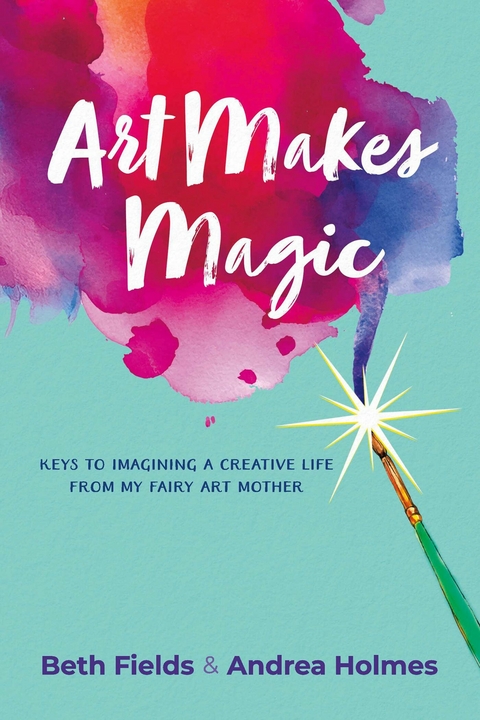
Art Makes Magic (eBook)
236 Seiten
Bookbaby (Verlag)
979-8-3509-8043-1 (ISBN)
Andrea Holmes is a Texas-based mural artist and painter located in downtown McKinney, Texas. Andrea's painting journey started in 2010 when she took a night class at the local community college, and she hasn't put her paint brush down since. Andrea has a BA in Arts and Technology from University of Texas at Dallas. She started selling her paintings in 2013 and continues creating, selling, and teaching classes to this day. She is known as the 'bird lady' for her vast series of bird paintings and murals. Andrea is the host of Birdtober, a daily creative challenge in the month of October that attracts artists across the globe. She is currently working on a project to paint 100 bird murals all over the world.
"e;Art Makes Magic: Keys to Imagining a Creative Life from My Fairy Art Mother"e; is a powerful guide to the many ways that creativity takes shape. The unique collaborative format, combined with the strength of Andrea Holmes and Beth Field's personal perspectives as working artists, makes "e;Art Makes Magic"e; an indispensable guide for those who long to launch as artists but lack the confidence to heed that call. Andrea and Beth offer real life experience with much needed encouragement and affirmation to artists and creatives at every point in their path. This book amplifies the voice of two artists currently in the trenches, reporting with clarity a wealth of practical information that is currently missing from the marketplace. "e;Art Makes Magic"e; tackles common topics of consideration like getting started as a working artist, studio spaces, materials, mentorship, learning, collaboration, and conquering fear. The format allows Andrea and Beth to combine their voices to offer concrete advice and inspiring reflections followed by their individual experiences that help creatives see the widely varying paths for those who choose to launch their creative efforts into the larger world. "e;Art Makes Magic"e; includes both practical advice and inspiring perspectives on why a commitment to artistic expression is worth the risks that come with taking the flying leap and landing in a place of creative freedom.
Art is a Highway
(Did you sing that in your head as you read?)
For every painting you admire, there’s an artist behind it who has likely experimented with several other mediums and likely has several other mediums beckoning to them from the horizon, still waiting to be explored. In this chapter, Andrea and Beth will talk about various materials and mediums you are likely to encounter and share with you the ones that inspire them the most. The common thread of both their stories is how non-linear their experiences were when encountering new ways of expressing their creativity.
When navigating the creative highway, you don’t have to stay in your lane. It’s normal to want to try out different mediums and styles as an artist. You can easily get bored sticking with the same stuff all the time. Repetitive action creates a rut.
A big part of creativity is problem solving - figuring out how to make a material work or discovering what happens when you make unique combinations, mad scientist-style. Art supplies can seem daunting when you aren’t familiar with how to use them, but being open to experimentation is one of the most powerful ways to learn (remember that Growth Mindset we were talking about?).
Sometimes it’s good to look back and rip off your own work. Go back to the works you’ve created and find the things you like that you used to do that you have moved away from. Get inspired by the elements you explored in the past that brought you joy and bring them into your present work.
Taking the time to explore other mediums puts your current patterns of work on the back burner and allows things to simmer a bit. Exploring a new medium may not become your new primary way of making art, but the concepts you learn from your explorations will extend and deepen your art practice, even in your original medium of choice.
You don’t have to be pigeonholed by the materials you choose either. Staying open to opportunities that new mediums bring will keep you and your growing audience on their toes. Be ready to surprise yourself and others with what you explore. No other artist is going to make the decisions you make. So no matter how many people are working in the medium you are interested in trying, no one else has the unique combination of past experiences and present perspectives that brings those materials to life.
Before Andrea and Beth share with you about how they found the paths that bring them the most creative joy, here’s a quick guide to getting started in the mediums that inspire them the most. We will reference specific tools and techniques in this section but be sure and check out our website at www.myfairyartmother.com for links that provide even more information and guidance.
Painting with Acrylic:
Supplies:
- Paint
- Palette
- Painting Surface
- Paint brushes or other tools
- Paper towels or rags
- Aprons
- Water cups
- Easel
Types of Acrylic Paint
- Heavy Body - thicker consistency, maintains peaks and volume. Great for texture.
- Soft Body - large flat areas, not a lot of brush marks. Smooth and level application. Not great for texture.
- Fluid Acrylic - pen ink, washes, watercolor-like, glazing, and airbrushing. Doesn’t lift.
- Student Grade or Economy Paints - less pigment.
Pro Tip: Use heavy body acrylics with paints that usually have less pigment like reds and yellows.
Painting surfaces
- Canvas
- Wood
- Panels
- Paper
- Glass
- Ceramics
- Fabric
- All the things
Pro Tip: You can put oil paints on top of acrylic paint, but you CANNOT put acrylic paint over oil paint.
Pro Tip: Use gesso to help prime a surface. Most canvases come pre-gessoed. Without gesso, the paint would soak into the weave of the canvas or grain of the wood. Gesso comes in white or clear and can be tinted with paint. Do not use the cheap brands on this, they will crack.
Mediums
- Gel medium. Helps dilute the paint and give it more viscosity. Great for glazes.
- Texture mediums. Texture mediums are used to modify the texture of acrylic paint. Great for adding texture.
- Flow increase medium. You can buy medium that will increase the flow of acrylic paint. Great for glazes.
- Slow drying medium. Increases dry time.
Palette
- Glass
- Palette Paper
- Paper Plates
- Freezer Paper
- Plastic
HOW TO MAKE A PAINTING
Sketching
Thumbnail sketches in a sketchbook can be a great way to lay out a few ideas. We like to sketch using paint, but you can also use pencil or acrylic markers to lay out your design. Starting with a colored background makes it easier to avoid white spots in your painting!
Pro Tip: You can also use a projector to take a smaller drawing or photo and apply it to a surface. It’s OK. It’s not cheating!
Color Blocking
Filling in shapes with the general color. Don’t worry about details yet, just get paint on the canvas. This is also known as the “ugly duckling” stage. Work back to front - what would be the farthest away from you in the painting to the thing that would be the closest.
Highlights & Details
Adding shadows and highlights. Try to work with your biggest brushes first to fill in large areas and then work down to your small brushes last.
Varnish - protects the painting from dust, UV rays, and yellowing. Varnish once the painting is dry and finished. You can use liquid or spray in a variety of finishes: matte, satin, or gloss.
Cleaning
- Palette - Clean with water, soap, and paper towel or rag. You can also let it dry and peel or scrape excess paint off.
- Brushes - Wash your brushes with warm soapy water right after your painting session ends, rubbing it in circles on the palm of your hand. Make sure you clean between the bristles too, especially the area close to the ferrule. Rinse well, squeeze it dry, and then re-shape the brush. Let your brush dry horizontally.
How to get acrylic paint out of clothes
Step 1: Gather Your Materials. You will need rubbing alcohol (the higher the concentration, the better) and a butter knife or old toothbrush.
Step 2: Soak the Dried Acrylic With Rubbing Alcohol.
Step 3: Scrape off the Paint.
Step 4: Repeat.
Oil and Cold Wax:
Supplies:
- Oil Paint
- Cold wax
- Palette
- Wood Panel or Canvas
- Paint Brushes
- Palette Knives
- Cake Piping Kit
- Paper towels, rags, baby wipes
- Aprons
- Turpentine
- Easel
Not all paints are created equal
When shopping for your oil paints you will notice that there are different grades of paint; student and artist/professional. Student grade oil paints will be less expensive, with less pigment and more fillers. Artist/professional oil paints are going to be a higher quality paint with more pigment. The viscosity is also thick and creamy. It’s a little stiffer as you apply it to your canvas. When creating oil and cold wax paintings, we like to use the artist/professional paints for a thicker, more vibrant effect.
HOW TO MAKE AN OIL AND COLD WAX PAINTING
There are many ways to use oil paint, but for this example we will talk about creating oil and cold wax flowers.
Prime
We like to paint a solid color background with either acrylic paints or house paint, but you can use oil too. Oil just takes a while to dry!
Plan Out Your Design
Like with an acrylic painting, you want to sketch out your design on your canvas.
Pro Tip: You can start this process in acrylic or pencil, but once you lay down oil paint you can no longer use acrylic. Oil always wants to be on top! We would even complete most of the painting in acrylic first, especially if we were painting birds.
Mix
On your palette, mix your oil paint and cold wax together using a palette knife. These knives come in all different shapes and sizes. When mixing oil and cold wax, use a ratio of ⅓ cold wax to ⅔ oil paint. You will want to mix all of your colors ahead of time! For instance, if we were creating flowers, we would make a dark, medium, and light mixture of the flower petal color we wanted.
Create Flowers
To create the flowers in our paintings, we would use oil and cold wax mixture and either use a palette knife to create the flower petal by...
| Erscheint lt. Verlag | 8.3.2025 |
|---|---|
| Sprache | englisch |
| Themenwelt | Kunst / Musik / Theater ► Malerei / Plastik |
| ISBN-13 | 979-8-3509-8043-1 / 9798350980431 |
| Informationen gemäß Produktsicherheitsverordnung (GPSR) | |
| Haben Sie eine Frage zum Produkt? |
 EPUB (Ohne DRM)
Größe: 646 KB
Digital Rights Management: ohne DRM
Dieses eBook enthält kein DRM oder Kopierschutz. Eine Weitergabe an Dritte ist jedoch rechtlich nicht zulässig, weil Sie beim Kauf nur die Rechte an der persönlichen Nutzung erwerben.
Dateiformat: EPUB (Electronic Publication)
EPUB ist ein offener Standard für eBooks und eignet sich besonders zur Darstellung von Belletristik und Sachbüchern. Der Fließtext wird dynamisch an die Display- und Schriftgröße angepasst. Auch für mobile Lesegeräte ist EPUB daher gut geeignet.
Systemvoraussetzungen:
PC/Mac: Mit einem PC oder Mac können Sie dieses eBook lesen. Sie benötigen dafür die kostenlose Software Adobe Digital Editions.
eReader: Dieses eBook kann mit (fast) allen eBook-Readern gelesen werden. Mit dem amazon-Kindle ist es aber nicht kompatibel.
Smartphone/Tablet: Egal ob Apple oder Android, dieses eBook können Sie lesen. Sie benötigen dafür eine kostenlose App.
Geräteliste und zusätzliche Hinweise
Buying eBooks from abroad
For tax law reasons we can sell eBooks just within Germany and Switzerland. Regrettably we cannot fulfill eBook-orders from other countries.
aus dem Bereich