


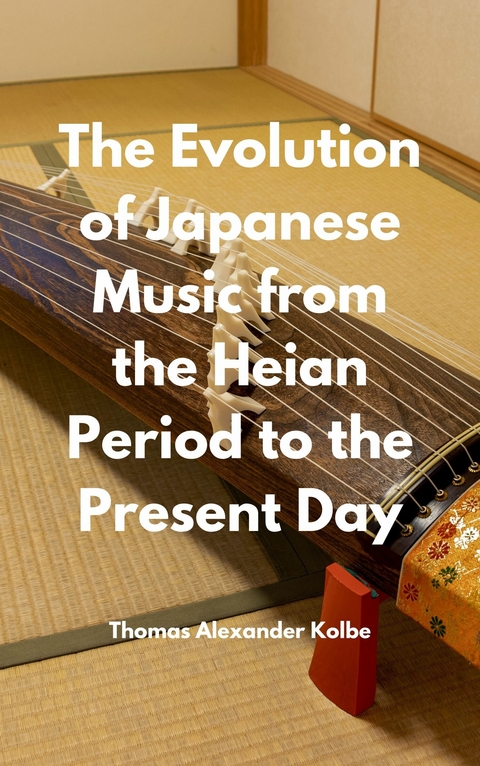
The Evolution of Japanese Music from the Heian Period to the Present Day (eBook)
20 Seiten
ah15 Publishing (Verlag)
9783689954727 (ISBN)

Thomas Alexander Kolbe is a German musician, composer, and producer focused on electronic music. Born in 1967 in Potsdam, he now resides in Japan, where he draws inspiration from Japanese culture. Kolbe is part of the duo *Club of Tone*, releases music under the name *Topazz*, and also works as a solo artist.In addition to his work as a producer and keyboardist, Kolbe is an active author and researcher. He deeply explores the history of Japanese music and its cultural contexts. Since 2024, he has also been examining the relationship between music, neurology, and psychology.Kolbe is a newcomer among authors, having made his publishing debut in 2024.
Thomas Alexander Kolbe is a German musician, composer, and producer focused on electronic music. Born in 1967 in Potsdam, he now resides in Japan, where he draws inspiration from Japanese culture. Kolbe is part of the duo *Club of Tone*, releases music under the name *Topazz*, and also works as a solo artist.In addition to his work as a producer and keyboardist, Kolbe is an active author and researcher. He deeply explores the history of Japanese music and its cultural contexts. Since 2024, he has also been examining the relationship between music, neurology, and psychology.Kolbe is a newcomer among authors, having made his publishing debut in 2024.
| Erscheint lt. Verlag | 9.1.2025 |
|---|---|
| Verlagsort | Vachendorf |
| Sprache | englisch |
| Themenwelt | Kunst / Musik / Theater ► Musik ► Musikgeschichte |
| Schlagworte | Biwa • Bugaku • bunraku • dengaku • enka • Gagaku • Japan • Kabuki • musicology • NOH • Shakuhachi • shamisen |
| ISBN-13 | 9783689954727 / 9783689954727 |
| Informationen gemäß Produktsicherheitsverordnung (GPSR) | |
| Haben Sie eine Frage zum Produkt? |
 EPUB (Wasserzeichen)
DRM: Digitales Wasserzeichen
Dieses eBook enthält ein digitales Wasserzeichen und ist damit für Sie personalisiert. Bei einer missbräuchlichen Weitergabe des eBooks an Dritte ist eine Rückverfolgung an die Quelle möglich.
Dateiformat: EPUB (Electronic Publication)
EPUB ist ein offener Standard für eBooks und eignet sich besonders zur Darstellung von Belletristik und Sachbüchern. Der Fließtext wird dynamisch an die Display- und Schriftgröße angepasst. Auch für mobile Lesegeräte ist EPUB daher gut geeignet.
Systemvoraussetzungen:
PC/Mac: Mit einem PC oder Mac können Sie dieses eBook lesen. Sie benötigen dafür die kostenlose Software Adobe Digital Editions.
eReader: Dieses eBook kann mit (fast) allen eBook-Readern gelesen werden. Mit dem amazon-Kindle ist es aber nicht kompatibel.
Smartphone/Tablet: Egal ob Apple oder Android, dieses eBook können Sie lesen. Sie benötigen dafür eine kostenlose App.
Geräteliste und zusätzliche Hinweise
Buying eBooks from abroad
For tax law reasons we can sell eBooks just within Germany and Switzerland. Regrettably we cannot fulfill eBook-orders from other countries.
aus dem Bereich


