


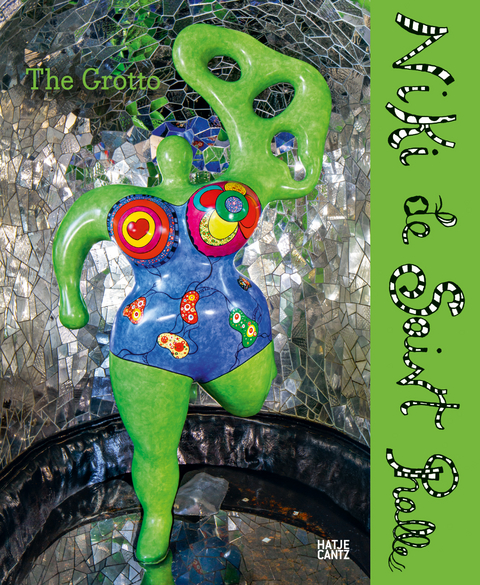
Niki de Saint Phalle. The Grotto
Seiten
2026
Hatje Cantz Verlag
978-3-7757-5865-9 (ISBN)
Hatje Cantz Verlag
978-3-7757-5865-9 (ISBN)
- Noch nicht erschienen (ca. Februar 2026)
- Portofrei ab CHF 40
- Auch auf Rechnung
- Artikel merken
• The last completed large-scale project by the great artist
• A walk-in work of art full of positive energy and imagination
• Revised and redesigned new edition
The Herrenhäuser Gärten in Hanover belongs among the most beautiful parks in Germany. Its Grosser Garten was begun in 1666 and constitutes one of the most important baroque grounds in Europe. The north-western part of this treasure houses the grotto, built in 1676. The three rooms, originally decorated with mussels, crystals, glass and minerals, served as a place of enchantment and as a cool retreat on hot days. The decorations were removed as early as the eighteenth century, however, and afterwards the building was used as a permanent storeroom. After its restoration for EXPO 2000, the inside of the grotto was newly designed according to plans by Niki de Saint Phalle, a project which was to become the last work in an unusual Oeuvre, since the artist died in the spring of 2002. The octagonal middle room and those to its left and right were splendidly decorated with mosaics made from colored glass and mirrors, with pebbles and numerous painted sculptures made of fibreglass. The spiral- shaped arrangement of the ornaments around the column in the entrance hall symbolizes spirituality, with the western mirrored room signifying day and life and the eastern blue room night and the cosmos. (English edition ISBN 978-3-7757-1276-7)
• A walk-in work of art full of positive energy and imagination
• Revised and redesigned new edition
The Herrenhäuser Gärten in Hanover belongs among the most beautiful parks in Germany. Its Grosser Garten was begun in 1666 and constitutes one of the most important baroque grounds in Europe. The north-western part of this treasure houses the grotto, built in 1676. The three rooms, originally decorated with mussels, crystals, glass and minerals, served as a place of enchantment and as a cool retreat on hot days. The decorations were removed as early as the eighteenth century, however, and afterwards the building was used as a permanent storeroom. After its restoration for EXPO 2000, the inside of the grotto was newly designed according to plans by Niki de Saint Phalle, a project which was to become the last work in an unusual Oeuvre, since the artist died in the spring of 2002. The octagonal middle room and those to its left and right were splendidly decorated with mosaics made from colored glass and mirrors, with pebbles and numerous painted sculptures made of fibreglass. The spiral- shaped arrangement of the ornaments around the column in the entrance hall symbolizes spirituality, with the western mirrored room signifying day and life and the eastern blue room night and the cosmos. (English edition ISBN 978-3-7757-1276-7)
| Erscheint lt. Verlag | 4.2.2026 |
|---|---|
| Mitarbeit |
Designer: Kerstin Riedel |
| Sprache | englisch |
| Maße | 190 x 230 mm |
| Themenwelt | Kunst / Musik / Theater ► Malerei / Plastik |
| Schlagworte | 1960 • Ab • Gartenkunst • Kulturgeschichte • Kunst • Skulptur |
| ISBN-10 | 3-7757-5865-8 / 3775758658 |
| ISBN-13 | 978-3-7757-5865-9 / 9783775758659 |
| Zustand | Neuware |
| Informationen gemäß Produktsicherheitsverordnung (GPSR) | |
| Haben Sie eine Frage zum Produkt? |
Mehr entdecken
aus dem Bereich



aus dem Bereich


