


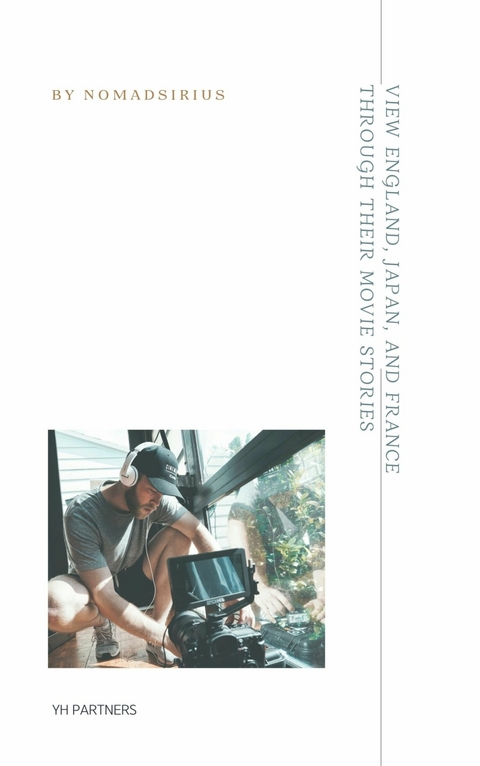
View England, Japan, and France through their movie stories (eBook)
142 Seiten
YH Partners (Verlag)
9791192838410 (ISBN)
Prologue.
Romanticism despaired over the destructive and dark aspects of reason that became evident after the French Revolution of 1789. When radical and cruel reason shattered and collapsed all principles and orders, it bred a deep distrust and skepticism toward reason. Amid the ruins of the mind, Romanticism turned inward, seeking individuality and emotion based on self-confirmation and human instinctive desires.
While Romanticism clearly emerged as a reaction against Enlightenment and Neoclassicism, it neither ignored nor rejected reason. Instead, it viewed absolute and universal reason as something that evolves with historical flow, perceiving society as an organism undergoing birth, growth, decline, and extinction. Just as Romanticism rebelled against the norms of the Age of Reason, scientific rationalism, and the Industrial Revolution, Realism opposed the exaggerated emotionalism and subjectivism of Romanticism.
Focusing on the unpleasant and ugly realities revealed by the February Revolution of 1848, Realism aimed to objectify the lives of the middle and lower classes. It posited that uncomfortable truths are inherent in human conceptual systems and linguistic practices. Realism concerned itself with how things appear in order to view unidealized subjects and events. Thus, it attempted to depict and faithfully express facts existing in third-person objective reality according to secular and empirical rules, without embellishment or interpretation.
This book approaches 15 films from the UK, Japan, and France through the intersection of emotion and thought. It contemplates the universal human emotions and experiences contained within the precarious spectacles of these three nations/' histories. By breaking free from prescribed emotional lines and the uncomfortable framework of fixed thought, this book reads the UK, Japan, and France through their cinematic narratives. Even when the film ends, it remains an unsettling stimulus with an unknown conclusion.
Prologue.Romanticism despaired over the destructive and dark aspects of reason that became evident after the French Revolution of 1789. When radical and cruel reason shattered and collapsed all principles and orders, it bred a deep distrust and skepticism toward reason. Amid the ruins of the mind, Romanticism turned inward, seeking individuality and emotion based on self-confirmation and human instinctive desires.While Romanticism clearly emerged as a reaction against Enlightenment and Neoclassicism, it neither ignored nor rejected reason. Instead, it viewed absolute and universal reason as something that evolves with historical flow, perceiving society as an organism undergoing birth, growth, decline, and extinction. Just as Romanticism rebelled against the norms of the Age of Reason, scientific rationalism, and the Industrial Revolution, Realism opposed the exaggerated emotionalism and subjectivism of Romanticism.Focusing on the unpleasant and ugly realities revealed by the February Revolution of 1848, Realism aimed to objectify the lives of the middle and lower classes. It posited that uncomfortable truths are inherent in human conceptual systems and linguistic practices. Realism concerned itself with how things appear in order to view unidealized subjects and events. Thus, it attempted to depict and faithfully express facts existing in third-person objective reality according to secular and empirical rules, without embellishment or interpretation.This book approaches 15 films from the UK, Japan, and France through the intersection of emotion and thought. It contemplates the universal human emotions and experiences contained within the precarious spectacles of these three nations/' histories. By breaking free from prescribed emotional lines and the uncomfortable framework of fixed thought, this book reads the UK, Japan, and France through their cinematic narratives. Even when the film ends, it remains an unsettling stimulus with an unknown conclusion.
| Erscheint lt. Verlag | 31.7.2024 |
|---|---|
| Sprache | englisch |
| Themenwelt | Kunst / Musik / Theater ► Malerei / Plastik |
| Schlagworte | 교양 • 역사 • 영화 • 인문학 |
| ISBN-13 | 9791192838410 / 9791192838410 |
| Informationen gemäß Produktsicherheitsverordnung (GPSR) | |
| Haben Sie eine Frage zum Produkt? |
 EPUB (Ohne DRM)
Digital Rights Management: ohne DRM
Dieses eBook enthält kein DRM oder Kopierschutz. Eine Weitergabe an Dritte ist jedoch rechtlich nicht zulässig, weil Sie beim Kauf nur die Rechte an der persönlichen Nutzung erwerben.
Dateiformat: EPUB (Electronic Publication)
EPUB ist ein offener Standard für eBooks und eignet sich besonders zur Darstellung von Belletristik und Sachbüchern. Der Fließtext wird dynamisch an die Display- und Schriftgröße angepasst. Auch für mobile Lesegeräte ist EPUB daher gut geeignet.
Systemvoraussetzungen:
PC/Mac: Mit einem PC oder Mac können Sie dieses eBook lesen. Sie benötigen dafür die kostenlose Software Adobe Digital Editions.
eReader: Dieses eBook kann mit (fast) allen eBook-Readern gelesen werden. Mit dem amazon-Kindle ist es aber nicht kompatibel.
Smartphone/Tablet: Egal ob Apple oder Android, dieses eBook können Sie lesen. Sie benötigen dafür eine kostenlose App.
Geräteliste und zusätzliche Hinweise
Buying eBooks from abroad
For tax law reasons we can sell eBooks just within Germany and Switzerland. Regrettably we cannot fulfill eBook-orders from other countries.
aus dem Bereich


