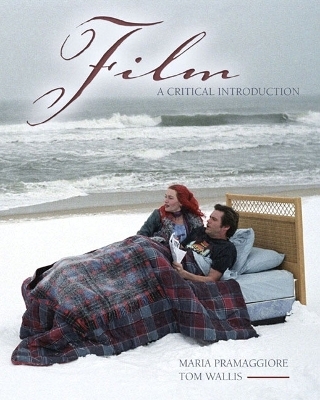
Film
Pearson (Verlag)
978-0-205-43348-3 (ISBN)
- Titel erscheint in neuer Auflage
- Artikel merken
Preface.
I. INTRODUCTION TO FILM ANALYSIS.
1. Introduction.
How This Book Is Organized.
Technical Tips.
2. An Approach to Film Analysis.
Understanding Audience Expectations.
The Orchestration of Detail.
Creating Meaning through the World Beyond Film.
The Goal of Film Analysis: Articulating Meaning.
The Importance of Developing Interpretive Claims.
Summary.
Film Analysis: Reading Significant Details—Historical References in Devil in a Blue Dress.
II. FILM ANALYSIS.
3. Narrative Form.
Defining Narrative.
Narrative Structure.
Techniques in Practice: Narrative Structure in Stagecoach.
Variations on Narrative Conventions: Beyond Structure .
Perspective and Meaning.
Techniques in Practice: Noticing Shifts in Perspective.
Summary.
Film Analysis: Analyzing Narrative Structure—The Narrative Complexity of Rashomon.
4. Mise en Scène.
Setting.
Techniques in Practice: Same Film, Different Settings.
Techniques in Practice: Same Setting, Different films.
The Human Figure.
Techniques in Practice: Figure Placement in Citizen Kane.
Techniques in Practice: Physicality in Raging Bull and Ali.
Lighting.
Composition.
Two Approaches to Mise en Scène.
Summary.
Film Analysis: The Functions of Space—Spatial Oppositions in Thelma and Louise.
5. Cinematography.
Film and Video: A Comparison.
Camerawork: The Camera in Time and Space.
Techniques in Practice: Patterns of Camera Placement and Movement.
Lenses and Filters: The Frame in Depth.
Techniques in Practice: Lenses and the Creation of Space.
Film Stock.
Special Visual Effects.
Digital Cinema: Post-Production.
Digital Cinematography and Film Style.
Summary.
Film Analysis: Cinematography in Documentary Films—Cinematography in Two Documentaries.
6. Editing.
The Attributes of Editing: Creating Meaning through Collage, Tempo, and Timing.
Techniques in Practice: Using Contrasting Imagery and Timing to Romanticize the Outlaws in Bonnie and Clyde.
Story-Centered Editing and the Construction of Meaning.
Beyond Narrative: Creating Meaning Outside the Story.
Techniques in Practice: Soviet Montage Aesthetic in The Godfather.
Summary.
Film Analysis: Editing in Meshes of the Afternoon.
7. Sound.
Film Sound: A Brief History.
Freeing Sound from Image.
The Relationship Between Sound and Image.
Three Components of Film Sound.
Techniques in Practice: Sound Effects and the Construction of Class in Days of Heaven.
Music.
Techniques in Practice: Bernard Herrman’s Score and Travis Bickle’s Troubled Masculinity in Taxi Driver.
Summary.
Film Analysis: Language, Nationality, and Class in The Grand Illusion.
8. Alternatives to Narrative Fiction Film: Documentary and Avant-garde Films.
Three Modes of Filmmaking: A Comparison.
Documentary Film: “The Creative Treatment of Actuality.”
Documentary Form.
Ethics and Ethnography.
Avant-garde Film.
Conducting Research on Documentary and Avant-garde Films: Locating Sources.
Summary.
Film Analysis: Interpreting Abstract Films—Brakhage’s Black Ice and Dark Tower.
9. Writing About Film.
Getting Started.
Four Types of Writing About Film.
The Scene Analysis Paper -- “The Divided Human Spirit in Fritz Lang’s The Big Heat.”
The Film Analysis -- “The Anxieties of Modernity in Steamboat Bill Jr.”
The Research Paper -- “The Evolution of an Idea: The Changing Hollywood Aesthetic in The Conversation, and Enemy of the State.” The Popular Review.
III. CINEMA AND CULTURE.
10. Social Context and Film Style.
Hollywood ’s Industrial Context: The Studio System as Dream Factory.
International Art Cinema.
Italian Neorealism.
Third Cinema.
11. Film and Ideology.
Ideologies of Racial Difference.
Ideologies of Gender.
Ideologies of Sexuality.
Ideologies of Class.
Ideologies of National Identity.
12. Film Stardom as a Cultural Phenomenon.
Stars and the Movie Industry.
The Dynamics of Performance.
The Star Persona.
Stardom and Ideology.
Stars and Subcultures.
13. Genre.
What Makes a Genre?
Major American Genres.
Genre, Film Production, and Audiences.
14. Film Authorship.
The Idea of the Auteur: From Cahiers du Cinéma to the Sarris-Kael Debate.
Auteur as Marketing Strategy: Old and New Hollywood .
Using the Auteur Approach to Interpret and Evaluate Films.
Readings in Auteur Criticism.
15. Cinema as Industry: Economics and Technology.
The Changing Structure of the Film Industry.
Films as Products.
Film and the New Technology.
Glossary.
Index.
| Erscheint lt. Verlag | 3.3.2005 |
|---|---|
| Sprache | englisch |
| Gewicht | 1058 g |
| Themenwelt | Kunst / Musik / Theater ► Film / TV |
| ISBN-10 | 0-205-43348-0 / 0205433480 |
| ISBN-13 | 978-0-205-43348-3 / 9780205433483 |
| Zustand | Neuware |
| Informationen gemäß Produktsicherheitsverordnung (GPSR) | |
| Haben Sie eine Frage zum Produkt? |
aus dem Bereich