


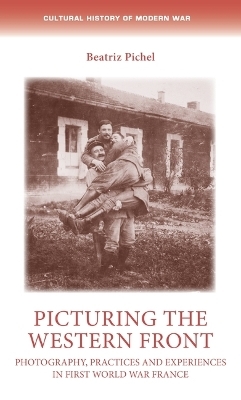
Picturing the Western Front
Photography, Practices and Experiences in First World War France
Seiten
2023
Manchester University Press (Verlag)
978-1-5261-7200-6 (ISBN)
Manchester University Press (Verlag)
978-1-5261-7200-6 (ISBN)
Between 1914 and 1918, military, press and amateur photographers produced thousands of pictures. Classified in archives, collected in personal albums and circulated in illustrated magazines, photographs were supposed to tell the story of the war. This book argues that photographic practices also shaped combatants and civilians’ war experiences. -- .
Between 1914 and 1918, military, press and amateur photographers produced thousands of pictures. Either classified in military archives specially created with this purpose in 1915, collected in personal albums or circulated in illustrated magazines, photographs were supposed to tell the story of the war. Picturing the Western Front argues that photographic practices also shaped combatants and civilians’ war experiences. Doing photography (taking pictures, posing for them, exhibiting, cataloguing and looking at them) allowed combatants and civilians to make sense of what they were living through. Photography mattered because it enabled combatants and civilians to record events, establish or reinforce bonds with one another, represent bodies, place people and events in imaginative geographies and making things visible, while making others, such as suicide, invisible. Photographic practices became, thus, frames of experience. -- .
Between 1914 and 1918, military, press and amateur photographers produced thousands of pictures. Either classified in military archives specially created with this purpose in 1915, collected in personal albums or circulated in illustrated magazines, photographs were supposed to tell the story of the war. Picturing the Western Front argues that photographic practices also shaped combatants and civilians’ war experiences. Doing photography (taking pictures, posing for them, exhibiting, cataloguing and looking at them) allowed combatants and civilians to make sense of what they were living through. Photography mattered because it enabled combatants and civilians to record events, establish or reinforce bonds with one another, represent bodies, place people and events in imaginative geographies and making things visible, while making others, such as suicide, invisible. Photographic practices became, thus, frames of experience. -- .
Beatriz Pichel is Associate Professor in Photographic History at De Montfort University -- .
Introduction
1. Recording. The photographic archive of the war
2. Feeling. Private, Official and Press Photography as Emotional Practices
3. Embodying. The multiple meanings of the body of the combatant, the mutilated and the dead
4. Placing. Imaginative geographies, photography and the sense of place
5. Making visible and invisible
Conclusions
Bibliography
List of primary sources
Index -- .
| Erscheinungsdatum | 01.08.2023 |
|---|---|
| Reihe/Serie | Cultural History of Modern War |
| Zusatzinfo | 45 black & white illustrations |
| Verlagsort | Manchester |
| Sprache | englisch |
| Maße | 138 x 216 mm |
| Gewicht | 322 g |
| Themenwelt | Kunst / Musik / Theater ► Fotokunst |
| Geschichte ► Allgemeine Geschichte ► Neuzeit (bis 1918) | |
| Geschichte ► Teilgebiete der Geschichte ► Kulturgeschichte | |
| ISBN-10 | 1-5261-7200-3 / 1526172003 |
| ISBN-13 | 978-1-5261-7200-6 / 9781526172006 |
| Zustand | Neuware |
| Informationen gemäß Produktsicherheitsverordnung (GPSR) | |
| Haben Sie eine Frage zum Produkt? |
Mehr entdecken
aus dem Bereich


aus dem Bereich
Geschichte einer wilden Handlung
Buch | Hardcover (2024)
C.H.Beck (Verlag)
CHF 47,60


