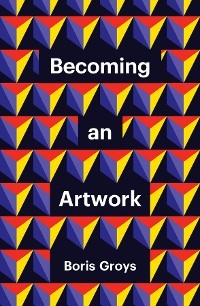
Becoming an Artwork (eBook)
John Wiley & Sons (Verlag)
978-1-5095-5198-9 (ISBN)

Modern history is a history of aesthetizations – and every aesthetization raises a claim of protection. We aestheticize and want to protect almost everything, including Earth, oceans, the atmosphere, rare animal species and exotic plants. Humans are no exception. They also present themselves as objects of contemplation that deserve admiration and care. For some time, artists and intellectuals struggled for the sovereign right to present themselves to society in their own way – to become self-created works of art. Today everybody has not only a right but also an obligation to practice self-design. We are responsible for the way we present ourselves to others – and we cannot get rid of this aesthetic responsibility.
However, we are not able to produce our own bodies. Before we begin to practice self-design, we find ourselves already designed by the gaze of others. That is why the practice of self-design mostly takes a critical and confrontational turn. We want to bring others to see us in the way we want to be seen – not only during our earthly life but also after our death. This is a complicated struggle, and the aim of this book is to describe and analyze it.
Boris Groys is Global Distinguished Professor in the Faculty of Arts and Science at New York University.
Modern history is a history of aesthetizations and every aesthetization raises a claim of protection. We aestheticize and want to protect almost everything, including Earth, oceans, the atmosphere, rare animal species and exotic plants. Humans are no exception. They also present themselves as objects of contemplation that deserve admiration and care. For some time, artists and intellectuals struggled for the sovereign right to present themselves to society in their own way to become self-created works of art. Today everybody has not only a right but also an obligation to practice self-design. We are responsible for the way we present ourselves to others and we cannot get rid of this aesthetic responsibility. However, we are not able to produce our own bodies. Before we begin to practice self-design, we find ourselves already designed by the gaze of others. That is why the practice of self-design mostly takes a critical and confrontational turn. We want to bring others to see us in the way we want to be seen not only during our earthly life but also after our death. This is a complicated struggle, and the aim of this book is to describe and analyze it.
Boris Groys is Global Distinguished Professor in the Faculty of Arts and Science at New York University.
"Boris Groys's Becoming an Artwork is distinguished by its originality, intelligence, economy, and vividness. Anyone can understand his arguments, which is why he has become the key art theorist of our time."
Matthew Jesse Jackson, The University of Chicago
2
The narcissistic struggle for recognition is not only a struggle against social conventions but also a struggle against the desires of the flesh. The public image is recognized if it presents itself as a pure form – if it does not suggest a dark space of private interests, needs, and desires behind its surface. Otherwise the public image is perceived as being merely a camouflage – a means for achieving the hidden private goals.
In his essay on the notion of the gift, Marcel Mauss develops a theory of the symbolic exchange.1 According to this theory, individuals acquire social recognition not because of their wealth, but because of their readiness to lose what they have – through gifts, charity, and, more generally, sacrifices for the common good as well as wasteful consumption, excessive festivals, and wars. To acquire a symbolic value, one has to demonstrate that one does not want anything beyond social recognition and prestige. One can say that narcissism is irrational because it contradicts the rational strategies of self-preservation and success that we associate with reasonable behavior. Indeed, reason is nothing other than manifestation of the fear of death. In our eyes, individuals are reasonable when they avoid risky situations that could lead to death and when they take decisions that improve their chances of survival. In Phenomenology of the Spirit, Hegel writes that, at the end of history – which he associated with the French Revolution – humans recognized death as humanity’s only and absolute Master.2 Thus, after the French Revolution, Europeans became reasonable – engaged in accumulating capital and building administrative careers.
Seen from this perspective Narcissus is unreasonable: he is so immersed in contemplation of his image in the lake that he loses the self-sentiment of which Kojève has spoken and dies of exhaustion. When we speak about the irrational, we mostly mean drives and desires that move people toward adventures, conflicts, and confrontations. We speak about energy and speed, about élan vital, about Nietzsche, Freud, and Bataille. But contemplation is no less dangerous and in this sense irrational. When I contemplate, I forget my needs, disregard my environment, and my body becomes unprotected. Reading a book or contemplating an image, I lose opportunities and overlook the dangers. The same is true when I am “thinking” about something that has no direct relationship to the goal of self-protection. In this case, reason is not transgressed but simply ignored. Contemplation is immersion into an object of contemplation that leads to self-oblivion. This object can be platonic eternal ideas. It can be God. But it can also be a beautiful image on the surface of a lake.
We tend to speak about Narcissus as being fascinated by his own image. But did he really know that this image was his own image and not just an image forming part of the surface of this particular lake? We don’t know. We can imagine that he did not know that it was his own image and that he discovered the beauty of this image just as we discover the beauty of a sunset or a flower. Maybe Narcissus did not want to interrupt his contemplation because he thought that when he came to this lake again the image would disappear – as a sunset or a flower disappear after a while. Or maybe he noted that the image disappears when he moves away – and protecting this image was more important to him than protecting his own life. We cannot know that. When we say that Narcissus loved himself, we should also add that he loved himself not in a way that one usually has in mind – because self-love is generally understood as egoistical self-preservation. Narcissus loved himself not as we love ourselves, but as others admired and loved him – from a distance, as a body in space, as a beautiful form.
It seems that this metanoia – the substitution of one’s own gaze directed toward the other by the gaze of the other directed toward oneself – is impossible. But Narcissus’ discovery of his image in the lake was the discovery of the mediation between my own gaze and the gaze of others. If somebody were to see the image of Narcissus in the lake, that somebody had to see the same image as Narcissus saw. The same can be said about the reflection of a face in the mirror. The same can be said about a photograph, and so on. The possibility of pictorial representation of the human form creates a zone of mediation between my gaze and the gaze of the other. It is precisely this common zone in which the struggle for my image, my identity, and my status becomes not only possible but, rather, necessary. And it is not merely a fight against the social conventions concerning beauty and public admiration.
Here Narcissus starts a more radical fight – a fight against death as Absolute Master. When the form of my body is transposed from its organic bearer to a different bearer, it begins to circulate beyond the circle of my immediate presence in the eyes of others – and thus also beyond the time of my life. My image belongs to my afterlife because its further existence is independent of my presence. The production of the images is the production of afterlife. Of course, when I die my inner world disappears. But if I have already emptied this world in the name of my public image, then my death loses its edge. And the exposure of one’s own body to the gaze of others requires the same degree of kenosis as the contemplation of an image. Narcissus practices both types of kenosis: he is immersed in the presentation of his own image and in contemplating this image at the same time. In this sense, Narcissus is already dead – or at least prepared for death – as he looks into the lake: his flesh is as dead as the water of the lake. Of course, Narcissus has mediated his image only partially, for a relatively small circle of contemporaries and for a relatively short time. Today’s Narcissus makes selfies and distributes them through Facebook and Instagram. But here the following question arises: to what degree can a photograph really identify a person?
Of course, nowadays one uses photography as the main tool of identification. All important documents, including the passport, contain a photograph of the person that they are supposed to identify. However, can we say that our ID answers the question of personal identification? The answer to this question depends on our understanding of personhood. Usually, when we say that we know and can identify somebody, we mean not only that we can recognize his or her face, but also that we more or less know how this particular person will act, what can be expected from him or her. When someone breaks these expectations, we say that we do not recognize that person any more. That means that the word identity has two interconnected but different meanings: it means the identity of face and body, but also identity of a certain character, a certain pattern of behavior that is characteristic of a particular person. We know that one should not draw any conclusions about the character of a person based on their appearance. As Hegel argues in Phenomenology of the Spirit, an individual cannot reveal the truth of their character through introspection, through the examination of their own soul: such introspection ends in uncertainties and conjectures. But this truth also cannot be drawn from the investigation of this individual’s appearance. The human body offers only an image of possibilities that this body can eventually realize.3 The truth of a person manifests itself only in action that demonstrates which possibilities were realized – and which were not realized. In other words, Hegel believes that individuals can and should be identified not only by an image of their face and body but also by an image of their actions. The medium of this public image of the individual in action is historical documentation. But here the following question emerges: what are we ready to consider as an action? For Hegel, an action means, of course, a political action – war, revolution, introduction of a new law. Through their history, individuals objectify themselves, make their dark inner space visible, by realizing the possibilities that, as Hegel argues, remain hidden as long as the individual remains passive. However, even if an individual is in control of his or her actions, the question remains: who is in control of the presentation of these actions? According to Hegel, presentation is controlled by the spectator, the historian, the philosopher. It is they who create an image of an action – and place this image in an historical context.
But to achieve public visibility, an individual does not necessarily need to take action. Let us imagine a photograph of Narcissus looking into the lake. Such a photograph would document a seemingly passive state of prolonged, immersive contemplation. However, as it was shown before, in the case of Narcissus we have to deal strictly with the simultaneous act of self-contemplation and the offering of his own image to the gaze of the other. In other words, the state of passivity can also be interpreted as an action – as an act of self-exposure. And such an act of self-exposure puts the individual in control of its image. Here, the individual does not need a historian or a philosopher, who, at some point in the future, will form and interpret his or her image. On the contrary, precisely in the state of alleged passivity, the individual can dictate his or her...
| Erscheint lt. Verlag | 28.9.2022 |
|---|---|
| Reihe/Serie | Theory Redux |
| Theory Redux | Theory Redux |
| Sprache | englisch |
| Themenwelt | Kunst / Musik / Theater ► Kunstgeschichte / Kunststile |
| Kunst / Musik / Theater ► Malerei / Plastik | |
| Schlagworte | aesthetic responsibility • Aesthetics • anesthetization • ART • Art & Applied Arts • Art History • Art History & Theory • artists • Artwork • Ästhetik • contemporary Art • Cultural Studies • Kulturwissenschaften • Kunstgeschichte • Kunstgeschichte u. -theorie • Kunst u. Angewandte Kunst • objects • Philosophie • Philosophy • self • self-created • Self-design • self presentation • works of art |
| ISBN-10 | 1-5095-5198-0 / 1509551980 |
| ISBN-13 | 978-1-5095-5198-9 / 9781509551989 |
| Informationen gemäß Produktsicherheitsverordnung (GPSR) | |
| Haben Sie eine Frage zum Produkt? |
 EPUB (Adobe DRM)
Kopierschutz: Adobe-DRM
Adobe-DRM ist ein Kopierschutz, der das eBook vor Mißbrauch schützen soll. Dabei wird das eBook bereits beim Download auf Ihre persönliche Adobe-ID autorisiert. Lesen können Sie das eBook dann nur auf den Geräten, welche ebenfalls auf Ihre Adobe-ID registriert sind.
Details zum Adobe-DRM
Dateiformat: EPUB (Electronic Publication)
EPUB ist ein offener Standard für eBooks und eignet sich besonders zur Darstellung von Belletristik und Sachbüchern. Der Fließtext wird dynamisch an die Display- und Schriftgröße angepasst. Auch für mobile Lesegeräte ist EPUB daher gut geeignet.
Systemvoraussetzungen:
PC/Mac: Mit einem PC oder Mac können Sie dieses eBook lesen. Sie benötigen eine
eReader: Dieses eBook kann mit (fast) allen eBook-Readern gelesen werden. Mit dem amazon-Kindle ist es aber nicht kompatibel.
Smartphone/Tablet: Egal ob Apple oder Android, dieses eBook können Sie lesen. Sie benötigen eine
Geräteliste und zusätzliche Hinweise
Buying eBooks from abroad
For tax law reasons we can sell eBooks just within Germany and Switzerland. Regrettably we cannot fulfill eBook-orders from other countries.
aus dem Bereich