


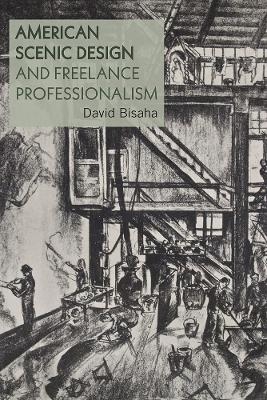
American Scenic Design and Freelance Professionalism
Seiten
2022
Southern Illinois University Press (Verlag)
978-0-8093-3874-0 (ISBN)
Southern Illinois University Press (Verlag)
978-0-8093-3874-0 (ISBN)
The figure of the American theatrical scenic designer first emerged in the early twentieth century. This book tells the history of the field through the figures, institutions, and movements that helped create and shape the profession.
An inclusive history of the professionalization of American scenic design
The figure of the American theatrical scenic designer first emerged in the early twentieth century. As productions moved away from standardized, painted scenery and toward individualized scenic design, the demand for talented new designers grew. Within decades, scenic designers reinvented themselves as professional artists. They ran their own studios, proudly displayed their names on Broadway playbills, and even appeared in magazine and television profiles.
American Scenic Design and Freelance Professionalism tells the history of the field through the figures, institutions, and movements that helped create and shape the profession. Taking a unique sociological approach, theatre scholar David Bisaha examines the work that designers performed outside of theatrical productions. He shows how figures such as Lee Simonson, Norman Bel Geddes, Jo Mielziner, and Donald Oenslager constructed a freelance, professional identity for scenic designers by working within their labor union (United Scenic Artists Local 829), generating self-promotional press, building university curricula, and volunteering in wartime service.
However, while new institutions provided autonomy and intellectual property rights for many, women, queer, and Black designers were not always welcome to join the organizations that protected freelance designers’ interests. Among others, Aline Bernstein, Emeline Roche, Perry Watkins, Peggy Clark, and James Reynolds were excluded from professional groups because of their identities. They nonetheless established themselves among the most successful designers of their time. Their stories expand the history of American scenic design by showing how professionalism won designers substantial benefits, yet also created legacies of exclusion with which American theatre is still reckoning.
An inclusive history of the professionalization of American scenic design
The figure of the American theatrical scenic designer first emerged in the early twentieth century. As productions moved away from standardized, painted scenery and toward individualized scenic design, the demand for talented new designers grew. Within decades, scenic designers reinvented themselves as professional artists. They ran their own studios, proudly displayed their names on Broadway playbills, and even appeared in magazine and television profiles.
American Scenic Design and Freelance Professionalism tells the history of the field through the figures, institutions, and movements that helped create and shape the profession. Taking a unique sociological approach, theatre scholar David Bisaha examines the work that designers performed outside of theatrical productions. He shows how figures such as Lee Simonson, Norman Bel Geddes, Jo Mielziner, and Donald Oenslager constructed a freelance, professional identity for scenic designers by working within their labor union (United Scenic Artists Local 829), generating self-promotional press, building university curricula, and volunteering in wartime service.
However, while new institutions provided autonomy and intellectual property rights for many, women, queer, and Black designers were not always welcome to join the organizations that protected freelance designers’ interests. Among others, Aline Bernstein, Emeline Roche, Perry Watkins, Peggy Clark, and James Reynolds were excluded from professional groups because of their identities. They nonetheless established themselves among the most successful designers of their time. Their stories expand the history of American scenic design by showing how professionalism won designers substantial benefits, yet also created legacies of exclusion with which American theatre is still reckoning.
David Bisaha is an assistant professor of theatre history at Binghamton University, State University of New York. His scholarship has been published in Theatre & Performance Design, Theatre Survey, Theatre Journal, Theatre History Studies, and in the edited collections The Routledge Companion to Scenography and Theatre and the Macabre.
List of Figures
Acknowledgments
Preface
Introduction: Design Labor and Freelance Professionalism
1. The Unionized Artist: Organizing the Profession
2. The Celebrity Artist: Promoting the Designer
3. The Teaching Artist: Building University Curricula
4. The Consulting Artist: Serving the Needs of Others
Conclusion: Legacies of Professionalism
Bibliography
Author Biography
| Erscheinungsdatum | 19.10.2022 |
|---|---|
| Reihe/Serie | Theater in the Americas |
| Zusatzinfo | 27 illustrations |
| Verlagsort | Carbondale |
| Sprache | englisch |
| Maße | 149 x 226 mm |
| Gewicht | 431 g |
| Themenwelt | Kunst / Musik / Theater ► Film / TV |
| Kunst / Musik / Theater ► Theater / Ballett | |
| ISBN-10 | 0-8093-3874-2 / 0809338742 |
| ISBN-13 | 978-0-8093-3874-0 / 9780809338740 |
| Zustand | Neuware |
| Informationen gemäß Produktsicherheitsverordnung (GPSR) | |
| Haben Sie eine Frage zum Produkt? |
Mehr entdecken
aus dem Bereich



aus dem Bereich
Buch | Hardcover (2025)
MACK and Important Flowers (Verlag)
CHF 43,60


