Jumping the Color Line (eBook)
256 Seiten
John Libbey Publishing (Verlag)
978-0-86196-978-4 (ISBN)
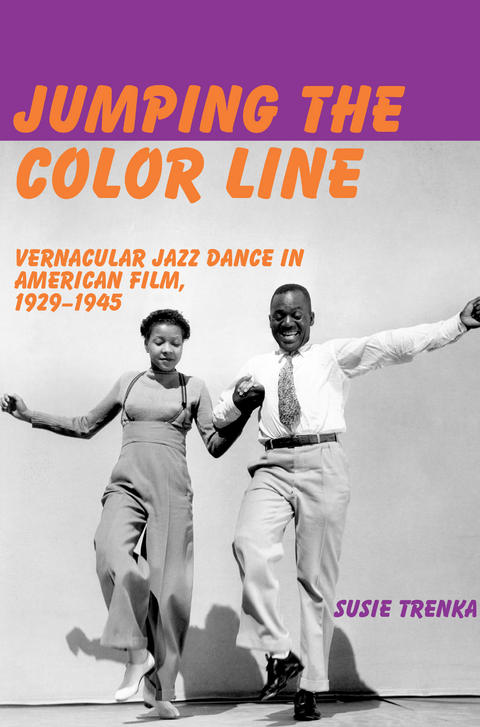
From the first synchronized sound films of the late 1920s through the end of World War II, African American music and dance styles were ubiquitous in films. Black performers, however, were marginalized, mostly limited to appearing in "specialty acts" and various types of short films, whereas stardom was reserved for Whites. Jumping the Color Line discusses vernacular jazz dance in film as a focal point of American race relations. Looking at intersections of race, gender, and class, the book examines how the racialized and gendered body in film performs, challenges, and negotiates identities and stereotypes. Arguing for the transformative and subversive potential of jazz dance performance onscreen, the six chapters address a variety of films and performers, including many that have received little attention to date. Topics include Hollywood's first Black female star (Nina Mae McKinney), male tap dance "class acts" in Black-cast short films of the early 1930s, the film career of Black tap soloist Jeni LeGon, the role of dance in the Soundies jukebox shorts of the 1940s, cinematic images of the Lindy hop, and a series of teen films from the early 1940s that appealed primarily to young White fans of swing culture. With a majority of examples taken from marginal film forms, such as shorts and B movies, the book highlights their role in disseminating alternative images of racial and gender identities as embodied by dancers – images that were at least partly at odds with those typically found in major Hollywood productions.
Susie Trenka holds an MA in English and film studies and a PhD in film studies from the University of Zurich, Switzerland. Alongside her academic endeavours, she spent many years learning and teaching vernacular dance styles from the swing era, especially the Lindy hop. She now works as a translator, editor, and museum educator in New Orleans, where she is immersed in jazz culture and continues to learn about America's complex issues of race
Contents A Note on "Black" and "White" Introduction - Jazz Dance on the Silver Screen: Race, Gender, Genre Chapter 1 - Doomed Divas: Black Dancing Women in Early Sound Film Chapter 2 - Kids and Class Acts: Male Dancers in Black-Cast Music Shorts Chapter 3 - Potential Pioneer: The Film Career of Black Tap Dancer Jeni LeGon Chapter 4 - Jumpin' at the Jukebox, Dancin' in the Street: Dance, Race, and Space in 1940s Soundies Chapter 5 - Harlem to Hollywood: Whitey's Lindy Hoppers and the Crossover Success of a Black Dance Chapter 6 - "A Savage Exhibition"? Swing and White Youth Culture in B Movies Conclusion - Dance History, the Swing Dance Revival, and Vintage Movies in the Digital Age Filmography / Bibliography / Index
| Erscheint lt. Verlag | 2.2.2021 |
|---|---|
| Zusatzinfo | 48 b&w illus. |
| Verlagsort | Bloomington |
| Sprache | englisch |
| Maße | 150 x 150 mm |
| Themenwelt | Kunst / Musik / Theater ► Theater / Ballett |
| Schlagworte | American film • History • Hollywood • Jazz • Jazz Dance • Nina Mae NcKinney • Performance • Race relations • race relations, jazz dance, Hollywood, Nina Mae NcKinney, jazz, American film, history, performance, Soundies • soundies |
| ISBN-10 | 0-86196-978-2 / 0861969782 |
| ISBN-13 | 978-0-86196-978-4 / 9780861969784 |
| Informationen gemäß Produktsicherheitsverordnung (GPSR) | |
| Haben Sie eine Frage zum Produkt? |
 PDF (Adobe DRM)
Kopierschutz: Adobe-DRM
Adobe-DRM ist ein Kopierschutz, der das eBook vor Mißbrauch schützen soll. Dabei wird das eBook bereits beim Download auf Ihre persönliche Adobe-ID autorisiert. Lesen können Sie das eBook dann nur auf den Geräten, welche ebenfalls auf Ihre Adobe-ID registriert sind.
Details zum Adobe-DRM
Dateiformat: PDF (Portable Document Format)
Mit einem festen Seitenlayout eignet sich die PDF besonders für Fachbücher mit Spalten, Tabellen und Abbildungen. Eine PDF kann auf fast allen Geräten angezeigt werden, ist aber für kleine Displays (Smartphone, eReader) nur eingeschränkt geeignet.
Systemvoraussetzungen:
PC/Mac: Mit einem PC oder Mac können Sie dieses eBook lesen. Sie benötigen eine
eReader: Dieses eBook kann mit (fast) allen eBook-Readern gelesen werden. Mit dem amazon-Kindle ist es aber nicht kompatibel.
Smartphone/Tablet: Egal ob Apple oder Android, dieses eBook können Sie lesen. Sie benötigen eine
Geräteliste und zusätzliche Hinweise
Buying eBooks from abroad
For tax law reasons we can sell eBooks just within Germany and Switzerland. Regrettably we cannot fulfill eBook-orders from other countries.
aus dem Bereich