


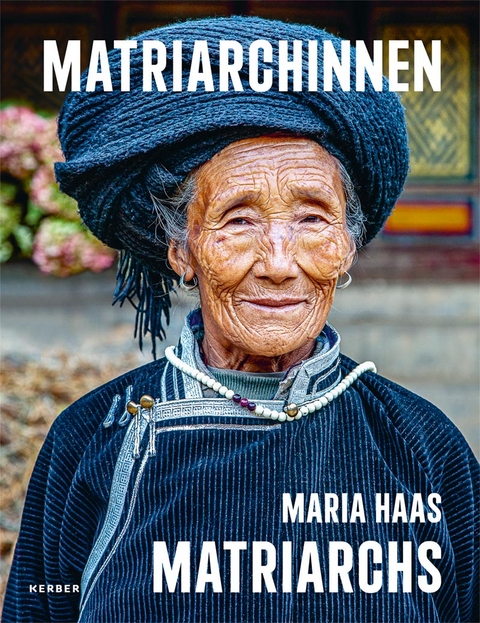
Matriarchale Gesellschaften sind egalitär und zeichnen sich durch nicht-hierarchische Sozialstrukturen aus. Ihre wirtschaftlichen Werte basieren auf Ausgleich und Solidarität, private sowie politische Entscheidungen werden stets im Konsens getroffen. Somit ist das Matriarchat alles andere als die bloße Umkehrung des Patriarchats. Die Matriarchin als Oberhaupt der Familie gibt Anweisung und Rat. Dabei hat sie keine Befehlsmacht inne, sondern genießt vielmehr eine natu¨rliche Autorität. Fu¨r diese Rolle benötigt sie Intelligenz, Fu¨hrungstalent, integrative Fähigkeiten sowie ökonomische, politische, familiäre und spirituelle Kompetenzen.
Die Fotografin Maria Haas versammelt Fotodokumentationen aus China, Indien und Indonesien in dem eindru¨cklichen Bildband Matriarchinnen. Matriarchal societies are basically egalitarian and are characterized by non-hierarchical social structures. Their economic values ??are based on balance and solidarity, private and political decisions are always made by consensus. Thus matriarchy is anything but the mere reversal of patriarchy. The matriarch, the head of the family, gives direction and advice. In doing so, it has no command, but rather enjoys a natural authority. For this role, she needs intelligence, leadership, integrative skills as well as economic, political, family and spiritual skills.
Photographer Maria Haas is particularly interested in unique cultures, peoples and societal structures. "In my research, I discovered that apparently there are a few remaining societies on the planet where matriarchal structures still prevail. Very intrigued by this, I decided to visit and document the people who live this uncommon form of society. Over the past three years I have traveled to China, India and Indonesia and have created several photo documentaries of matriarchal societies."
Die Fotografin Maria Haas versammelt Fotodokumentationen aus China, Indien und Indonesien in dem eindru¨cklichen Bildband Matriarchinnen. Matriarchal societies are basically egalitarian and are characterized by non-hierarchical social structures. Their economic values ??are based on balance and solidarity, private and political decisions are always made by consensus. Thus matriarchy is anything but the mere reversal of patriarchy. The matriarch, the head of the family, gives direction and advice. In doing so, it has no command, but rather enjoys a natural authority. For this role, she needs intelligence, leadership, integrative skills as well as economic, political, family and spiritual skills.
Photographer Maria Haas is particularly interested in unique cultures, peoples and societal structures. "In my research, I discovered that apparently there are a few remaining societies on the planet where matriarchal structures still prevail. Very intrigued by this, I decided to visit and document the people who live this uncommon form of society. Over the past three years I have traveled to China, India and Indonesia and have created several photo documentaries of matriarchal societies."
| Erscheinungsdatum | 24.12.2020 |
|---|---|
| Verlagsort | Bielefeld |
| Sprache | englisch; deutsch |
| Maße | 230 x 300 mm |
| Gewicht | 1150 g |
| Themenwelt | Kunst / Musik / Theater ► Fotokunst |
| Schlagworte | Andere Gesellschaftsformen • Matriarchat • Matriarchinnen |
| ISBN-10 | 3-7356-0704-7 / 3735607047 |
| ISBN-13 | 978-3-7356-0704-1 / 9783735607041 |
| Zustand | Neuware |
| Informationen gemäß Produktsicherheitsverordnung (GPSR) | |
| Haben Sie eine Frage zum Produkt? |
Mehr entdecken
aus dem Bereich



aus dem Bereich
die Geheimnisse der weltbesten Fotografen
Buch | Softcover (2024)
Midas Collection (Verlag)
CHF 37,90
Fotos aus den 1980er Jahren von Mahmoud Dabdoub
Buch | Hardcover (2024)
Passage-Verlag
CHF 37,90


