


Winslow Homer and His Cullercoats Paintings
An American Artist in England's North East
Seiten
2021
Syracuse University Press (Verlag)
978-0-8156-3700-4 (ISBN)
Syracuse University Press (Verlag)
978-0-8156-3700-4 (ISBN)
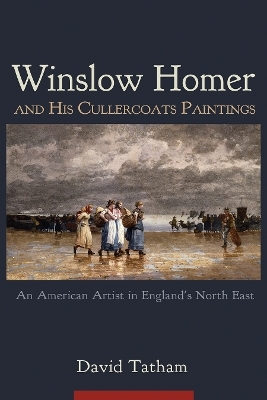
In his Cullercoats paintings, Winslow Homer took as his main subject the lives and labours of the village's women and their strong sense of community. These paintings display his masterly uses of watercolor. The Cullercoats paintings show Homer in a new light, and Tatham's revelatory account provides the long-overdue attention they deserve.
When Winslow Homer sailed to England in March of 1881, he was already well established as a leading member of his generation of American artists. Critics often referred to him as the "most American of American artists", combining praise with the implication that his work was provincial compared to that of his more European-trained American contemporaries. However, upon his return, after a year and a half spent in the seaside village of Cullercoats, Homer's work garnered rave reviews and gained a new appreciation among art dealers. In this book, Tatham's detailed account of Homer's time in Cullercoats offers a perceptive reappraisal of both the village's influence on his work and the paintings themselves.
In his Cullercoats paintings, Homer took as his main subject the lives and labors of the village's women and
their strong sense of community. In many ways, these paintings stand among Homer's most original and perceptive depictions of women, but they also display his masterly uses of watercolor. The Cullercoats paintings show Homer in a new light, and Tatham's revelatory account provides the long-overdue attention they deserve.
When Winslow Homer sailed to England in March of 1881, he was already well established as a leading member of his generation of American artists. Critics often referred to him as the "most American of American artists", combining praise with the implication that his work was provincial compared to that of his more European-trained American contemporaries. However, upon his return, after a year and a half spent in the seaside village of Cullercoats, Homer's work garnered rave reviews and gained a new appreciation among art dealers. In this book, Tatham's detailed account of Homer's time in Cullercoats offers a perceptive reappraisal of both the village's influence on his work and the paintings themselves.
In his Cullercoats paintings, Homer took as his main subject the lives and labors of the village's women and
their strong sense of community. In many ways, these paintings stand among Homer's most original and perceptive depictions of women, but they also display his masterly uses of watercolor. The Cullercoats paintings show Homer in a new light, and Tatham's revelatory account provides the long-overdue attention they deserve.
David Tatham is professor emeritus of fine arts at Syracuse University. His books on nineteenth-century art include Winslow Homer and the Pictorial Press (winner of the Ewell L. Newman award), Winslow Homer and the Illustrated Book, and Winslow Homer in London.
| Erscheinungsdatum | 02.11.2020 |
|---|---|
| Zusatzinfo | 20 colour illustrations, 1 black & white illustration |
| Verlagsort | New York |
| Sprache | englisch |
| Maße | 200 x 261 mm |
| Gewicht | 333 g |
| Themenwelt | Kunst / Musik / Theater ► Kunstgeschichte / Kunststile |
| Kunst / Musik / Theater ► Malerei / Plastik | |
| ISBN-10 | 0-8156-3700-4 / 0815637004 |
| ISBN-13 | 978-0-8156-3700-4 / 9780815637004 |
| Zustand | Neuware |
| Informationen gemäß Produktsicherheitsverordnung (GPSR) | |
| Haben Sie eine Frage zum Produkt? |
Mehr entdecken
aus dem Bereich


aus dem Bereich
kleine Kulturgeschichte einer brillanten Allianz
Buch | Softcover (2025)
Iudicium (Verlag)
CHF 33,90


