


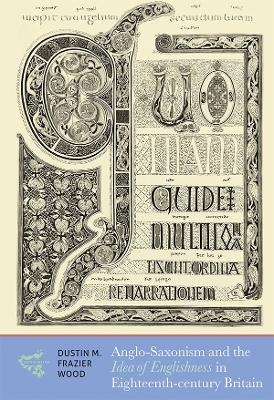
Anglo-Saxonism and the Idea of Englishness in Eighteenth-Century Britain
Seiten
2020
The Boydell Press (Verlag)
978-1-78327-501-4 (ISBN)
The Boydell Press (Verlag)
978-1-78327-501-4 (ISBN)
The importance of the Anglo-Saxon past to England in the eighteenth century, politically and culturally, is here brought out.
A valuable addition to both our understanding of Anglo-Saxonism, and of eighteenth-century culture. Eloquently written, the book will be the key reference for any future understanding of the way in which eighteenth-century culture received the Anglo-Saxon period. David Matthews, Professor of Medieval and Medievalism Studies, University of Manchester.
Long before they appeared in the pages of Ivanhoe and nineteenth-century Old English scholarship, the Anglo-Saxons had become commonplace in Georgian Britain. The eighteenth century - closely associated with Neoclassicism and the Gothic and Celtic revivals - also witnessed the emergence of intertwined scholarly and popular Anglo-Saxonisms that helped to define what it meant to be English.
This book explores scholarly Anglo-Saxon studies and imaginative Anglo-Saxonism during a century not normally associated with either. Early in the century, scholars and politicians devised a rhetoric of Anglo-Saxon inheritance in response to the Hanoverian succession, and participants in Britain's burgeoning antiquarian culture adopted simultaneously affective and scientific approaches to Anglo-Saxon remains. Patriotism, imagination and scholarship informed the writing of Enlightenment histories that presented England, its counties and its towns as Anglo-Saxon landscapes. Those same histories encouraged English readers to imagine themselves as the descendants of Anglo-Saxon ancestors - as did history paintings, book illustrations, poetry and drama that brought the Anglo-Saxon past to life. Drawing together these strands of scholarly and popular medievalism, this book identifies Anglo-Saxonism as a multifaceted, celebratory and inclusive idea of Englishness at work in eighteenth-century Britain.
A valuable addition to both our understanding of Anglo-Saxonism, and of eighteenth-century culture. Eloquently written, the book will be the key reference for any future understanding of the way in which eighteenth-century culture received the Anglo-Saxon period. David Matthews, Professor of Medieval and Medievalism Studies, University of Manchester.
Long before they appeared in the pages of Ivanhoe and nineteenth-century Old English scholarship, the Anglo-Saxons had become commonplace in Georgian Britain. The eighteenth century - closely associated with Neoclassicism and the Gothic and Celtic revivals - also witnessed the emergence of intertwined scholarly and popular Anglo-Saxonisms that helped to define what it meant to be English.
This book explores scholarly Anglo-Saxon studies and imaginative Anglo-Saxonism during a century not normally associated with either. Early in the century, scholars and politicians devised a rhetoric of Anglo-Saxon inheritance in response to the Hanoverian succession, and participants in Britain's burgeoning antiquarian culture adopted simultaneously affective and scientific approaches to Anglo-Saxon remains. Patriotism, imagination and scholarship informed the writing of Enlightenment histories that presented England, its counties and its towns as Anglo-Saxon landscapes. Those same histories encouraged English readers to imagine themselves as the descendants of Anglo-Saxon ancestors - as did history paintings, book illustrations, poetry and drama that brought the Anglo-Saxon past to life. Drawing together these strands of scholarly and popular medievalism, this book identifies Anglo-Saxonism as a multifaceted, celebratory and inclusive idea of Englishness at work in eighteenth-century Britain.
DUSTIN M. FRAZIER WOOD is a Lecturer in Englishat the University of Roehampton.
Introduction: Anglo-Saxonism, Medievalism and the Eighteenth Century
Chapter 1: Anglo-Saxonisms of the Early Eighteenth Century
Chapter 2: Antiquaries and Anglo-Saxons
Chapter 3: Anglo-Saxon History and the English Landscape
Chapter 4: Imaging and Imagining Anglo-Saxonness
Chapter 5: Anglo-Saxonist Politics and Posterity
Conclusion: Sharon Turner's History of the Anglo-Saxons
Bibliography
| Erscheinungsdatum | 13.03.2020 |
|---|---|
| Reihe/Serie | Medievalism |
| Zusatzinfo | 22 b/w illus. |
| Verlagsort | Woodbridge |
| Sprache | englisch |
| Maße | 156 x 234 mm |
| Gewicht | 548 g |
| Themenwelt | Kunst / Musik / Theater ► Kunstgeschichte / Kunststile |
| Geschichte ► Allgemeine Geschichte ► Neuzeit (bis 1918) | |
| Sozialwissenschaften | |
| ISBN-10 | 1-78327-501-4 / 1783275014 |
| ISBN-13 | 978-1-78327-501-4 / 9781783275014 |
| Zustand | Neuware |
| Informationen gemäß Produktsicherheitsverordnung (GPSR) | |
| Haben Sie eine Frage zum Produkt? |
Mehr entdecken
aus dem Bereich
aus dem Bereich
Geschichte einer wilden Handlung
Buch | Hardcover (2024)
C.H.Beck (Verlag)
CHF 47,60


