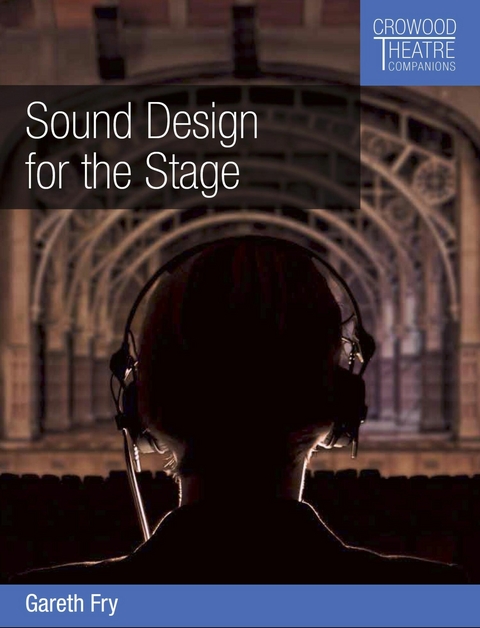
Sound Design for the Stage (eBook)
428 Seiten
Faber & Faber (Verlag)
978-1-78500-554-1 (ISBN)
Gareth Fry is an Olivier and Tony award-winning sound designer. His recent designs include Harry Potter and the Cursed Child and Complicite's The Encounter, building on years of experience designing plays, musicals, dance and opera productions worldwide, including over 20 productions at the National Theatre. He has also created work for exhibitions and events, from the V&A's David Bowie Is exhibition, to the Opening Ceremony of the 2012 Olympic Games. He holds three Olivier Awards, two Tony Awards, two Drama Desks Awards, two Helpmann Awards and an Evening Standard Award. Gareth is an honorary fellow of the Royal Central School of Speech and Drama.
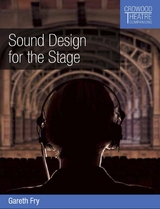
Sound Design for the Stage is a practical guide to designing, creating and developing the sound for a live performance. Based on the author's extensive industry experience, it takes the reader through the process of creating a show, from first contact to press night, with numerous examples from high-profile productions. Written in a detailed but accessible approach, this comprehensive book offers key insights into a fast-moving industry. Topics covered include: how to analyze a script to develop ideas and concepts; how to discuss your work with a director; telling the emotional story; working with recorded and live music; how to record, create, process and abstract sound; designing for devised work; key aspects of acoustics and vocal intelligibility; the politics of radio mics and vocal foldback; how to design a sound system and, finally, what to do when things go wrong. With helpful advice on finding work and negotiating contracts, this guide will be especially useful for emergent sound designers and directors, focusing on the creative and collaborative process between sound designer, director, performer and writer.
Gareth Fry is an Olivier and Tony award-winning sound designer. His recent designs include Harry Potter and the Cursed Child and Complicite's The Encounter, building on years of experience designing plays, musicals, dance and opera productions worldwide, including over 20 productions at the National Theatre. He has also created work for exhibitions and events, from the V&A's David Bowie Is exhibition, to the Opening Ceremony of the 2012 Olympic Games. He holds three Olivier Awards, two Tony Awards, two Drama Desks Awards, two Helpmann Awards and an Evening Standard Award. Gareth is an honorary fellow of the Royal Central School of Speech and Drama.
1
HOW TO BECOME A SOUND DESIGNER
WHAT IS A SOUND DESIGNER?
The job title ‘sound designer’ means different things in different industries. In theatre it is an all-encompassing role, which essentially means you are responsible for all audible aspects of a production. That is, of course, incredibly vague, and deliberately so, because what those ‘aspects’ are varies massively from show to show, depending on the story you’re telling (if there is one), the venue, the budget available, and a huge number of other factors.
It can involve sound effects recording, music production, sound system design, live music reinforcement and amplification, vocal reinforcement and amplification, room acoustics, creating multi-channel sound effects and soundscapes, amongst other things. Each of these is a huge topics in itself, so we’ll touch on them briefly and pragmatically, so we don’t get weighed down by an excess of information.
On some shows you may do only a couple of those elements, on others you may be involved in all of them. Of course, no one is an expert in all those fields. Many of us have specialisms in certain aspects, and we often work with others to bolster any skills gaps we might have. Sound design involves working in a creative team, with directors, writers, designers, performers and musicians, collaborating together to make something hopefully awesome!
One of the lovely aspects about theatre sound design is that often we have complete control of the end-to-end process. That is to say, we control the recording process, the mixing process, the sound system it is played back over, and the venue it is played back in. This is in contrast to, for example, sound design for cinema, where you have control over the recording and mix of the sound design, but you have no control on how good the cinema sound system is, or indeed whether an audience member will hear it in a cinema or through a tiny speaker on their mobile phone.
Theatre is reasonably unique in giving us this end-to-end control, which opens up a lot of creative possibilities. For example, we can, if we want, put lots of sub-bass speakers underneath the audience’s seating. Or we can pan sounds around hundreds of different speakers in the auditorium. The limits tend to come from the architecture, the budget or our imagination!
THE SOUND DESIGNER’S PATH TO EMPLOYMENT
It is difficult to look at becoming a sound designer in terms similar to traditional careers, which may offer formal career paths with structured opportunities for professional development and advancement, and regular hours.
Like many careers in the arts, and increasingly in many industries, there isn’t an official path into it or through it. Everyone is making it up as they go along, and basically it’s up to you. This can be either terrifying or liberating, depending on your perspective. This lack of structure makes many ‘arts’ jobs feel like an insecure choice of career, but many people make a living doing good, interesting work. Like many freelance careers, the early years trying to get a footing can be challenging.
Sound design jobs are very rarely advertised, and this is down to two factors: how sound designers are employed, and how the creative team for a show is assembled. The ‘creative team’ typically refers to the director, the set, costume, lighting, sound and video designers, the composer, the movement director and suchlike. Each person is typically the creative lead for their department, with the director at the top.
For a good part of the twentieth century the sound design for a show was done by a combination of the director, stage manager and a member of the electrics (lighting) department – there simply weren’t sound engineers working in theatre, or anywhere else for that matter. As technology advanced, expectations rose, and the role grew more complex, and so sound departments started to appear. The sound design was created by a member of the sound department, alongside their other duties.
This was quite typical until the mid-1990s: by then, directors increasingly wanted to work with specific sound designers rather than whoever was available in the venue. Many sound designers responded to this by going freelance, and so in-house designers are much less common in the UK and USA now than they used to be. If you are interested in a more complete history, David Collison’s The Sound of Theatre is a great resource.
While in the UK most full-time sound designers are freelance, there are also those who work for a venue and may perform a range of duties as well as sound design. Many people like the variety of different job roles that working in-house brings, and obviously a guaranteed regular wage can suit some people’s personal circumstances more than the variable income typical of freelance employment. In the Appendix you can read an interview with the Royal Court’s Head of Sound, David Mc-Seveney, talking about why he enjoys working this way, amongst other topics. When an in-house person designs a show for their venue they will often, though not always, be paid an extra fee, and someone may be brought in to cover their normal duties if they are not able to do both.
Some other sound designers work for companies, most often sound equipment hire companies, who might offer a complete package: all the sound equipment and all the staff necessary for a show, including the sound designer. These companies may also do dry hire, where they just supply the equipment without staff.
The designer benefits from a guaranteed income, and will be able to specify and budget for equipment from a stock they are very familiar with, plus have the full support of that companies infrastructure at their disposal. You can read an interview in the Appendix with Ian Dickinson, who talks about the benefits of working for Autograph Sound, a UK based company.
Also featured in the Appendix are interviews with Melanie Wilson, a freelance sound designer and composer, and Gareth Owen, who runs his own company, Gareth Owen Sound Ltd, talking about what works and their own experiences of sound design.
The USA is similar to the UK in terms of how sound designers are employed. In Europe, larger arts subsidies means there are more subsidized producing houses, many of which perform shows in repertoire (where two or three different shows might perform in the same theatre space each week). This means that the technical rehearsals for a show are typically much longer because they only happen in the mornings and early afternoons around the performance schedule. The longer duration of creating work is less compatible with a freelance existence, so in-house designers are still common.
ASSEMBLING A CREATIVE TEAM
The way creative teams are assembled is a big factor in why it can be difficult to get work as a sound designer. To explain this, it is necessary to explain briefly how a typical show might be produced.
Typically, an artistic director or a producer (the two people who choose what a theatre or theatre company will perform) will have an idea of a show that they want to put on in a certain slot in their calendar. Maybe that will be a specific play or a piece they have in mind, or an author they have commissioned. Perhaps there is a particular theme they want to explore, or a certain director or choreographer whom they want to come and make a show of their own choosing, or an actor whom they want to star in a show. Maybe they aim to programme a certain number of different types of show in each season.
They might then look for a director to develop and direct that show (though sometimes a director will come to a producer with a play they want to direct). In the dance world, it may be the choreographer who is the creative lead on the project, and it is likely they will do many of the things I shall discuss when referring to the director, going forward from here.
The director will often then develop a concept for that show. They may have creative team members with whom they work regularly, and with whom they want to work again. Or they may have someone new whose work they’ve seen or heard, with whom they’d like to work. Failing that, the producer or venue may have a list of creative team members they’ve worked with before to recommend to the director. Once the director and producer have identified the individuals they’d like to have on the creative team, those designers are contacted by the producer’s staff to see if they are free to work on the show: this is known as the availability checking period.
An availability check may happen long in advance of a show starting rehearsals – for example, an opera availability check might be anywhere between a year to three years before it is due to open. Plays typically are not scheduled as far in advance, so ‘AV’ checks may happen six to nine months before rehearsals begin, though it’s not unusual to get an enquiry just before rehearsals begin. The latter can often happen when the director is closer to the start of the project and identifies more specific needs that perhaps hadn’t been apparent in the planning stages – for instance, they hadn’t been planning to employ a sound designer but now they need one! However, the latter scenario is increasingly rare as sound designers are becoming a standard part of the creative team.
Some theatres and producers run planning – or ‘parameters’ – meetings far in advance of rehearsals beginning, to ascertain what resources, scheduling and budget a show will need. All these timelines can be...
| Erscheint lt. Verlag | 31.5.2019 |
|---|---|
| Verlagsort | London |
| Sprache | englisch |
| Themenwelt | Kunst / Musik / Theater ► Theater / Ballett |
| Schlagworte | abstract sound • acoustics • amplificatio • amplification • Artist • Budgeting • Complicité The Encounter • Contracts • Creative • Dance • Design • devised work • Director • Drama • Drama Desks Award • Evening Standard Award • harry potter and the cursed child • Helpmann Award • live music • live music reinforcement • live performance • multi-channel sound effects • music • Musical • music production • National Theatre • olivier award • Opening Ceremony of the 2012 Olympic Games • Opera • Performer • Play • press night • Production • radio mics • recorded music • Rehearsals • Room Acoustics • Royal Central School of Speech and Drama • scrip • SET • Sound • sound check • sound design books • Sound Designer • sound effects • sound recording • Soundscapes • sound system • sound system design • stage • Studio • technical theatre books • Tony Award • vocal foldback • vocal intelligibility • Writer |
| ISBN-10 | 1-78500-554-5 / 1785005545 |
| ISBN-13 | 978-1-78500-554-1 / 9781785005541 |
| Informationen gemäß Produktsicherheitsverordnung (GPSR) | |
| Haben Sie eine Frage zum Produkt? |
 EPUB (Adobe DRM)
Kopierschutz: Adobe-DRM
Adobe-DRM ist ein Kopierschutz, der das eBook vor Mißbrauch schützen soll. Dabei wird das eBook bereits beim Download auf Ihre persönliche Adobe-ID autorisiert. Lesen können Sie das eBook dann nur auf den Geräten, welche ebenfalls auf Ihre Adobe-ID registriert sind.
Details zum Adobe-DRM
Dateiformat: EPUB (Electronic Publication)
EPUB ist ein offener Standard für eBooks und eignet sich besonders zur Darstellung von Belletristik und Sachbüchern. Der Fließtext wird dynamisch an die Display- und Schriftgröße angepasst. Auch für mobile Lesegeräte ist EPUB daher gut geeignet.
Systemvoraussetzungen:
PC/Mac: Mit einem PC oder Mac können Sie dieses eBook lesen. Sie benötigen eine
eReader: Dieses eBook kann mit (fast) allen eBook-Readern gelesen werden. Mit dem amazon-Kindle ist es aber nicht kompatibel.
Smartphone/Tablet: Egal ob Apple oder Android, dieses eBook können Sie lesen. Sie benötigen eine
Geräteliste und zusätzliche Hinweise
Buying eBooks from abroad
For tax law reasons we can sell eBooks just within Germany and Switzerland. Regrettably we cannot fulfill eBook-orders from other countries.
aus dem Bereich