


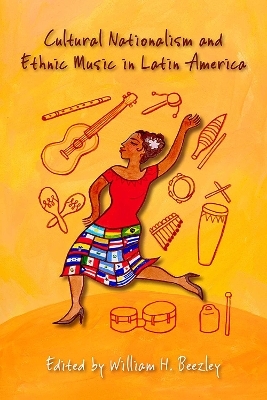
Cultural Nationalism and Ethnic Music in Latin America
Seiten
2018
University of New Mexico Press (Verlag)
978-0-8263-5975-9 (ISBN)
University of New Mexico Press (Verlag)
978-0-8263-5975-9 (ISBN)
- Titel z.Zt. nicht lieferbar
- Portofrei ab CHF 40
- Auch auf Rechnung
- Artikel merken
Offers a useful introduction to the twin themes of music and national identity and melodies and ethnic identification. The contributors examine a variety of countries where powerful historical movements were shaped intentionally by music.
Music has been critical to national identity in Latin America, especially since the worldwide emphasis on nations and cultural identity that followed World War I. Unlike European countries with unified ethnic populations, Latin American nations claimed blended ethnicities-indigenous, Caucasian, African, and Asian-and the process of national stereotyping that began in the 1920s drew on the themes of indigenous and African cultures. Composers and performers drew on the folklore and heritage of ethnic and immigrant groups in different nations to produce what became the music representative of different countries. Mexico became the nation of mariachi bands, Argentina the land of the tango, Brazil the country of Samba, and Cuba the island of Afro-Cuban rhythms, including the rhumba. The essays collected here offer a useful introduction to the twin themes of music and national identity and melodies and ethnic identification. The contributors examine a variety of countries where powerful historical movements were shaped intentionally by music.
Music has been critical to national identity in Latin America, especially since the worldwide emphasis on nations and cultural identity that followed World War I. Unlike European countries with unified ethnic populations, Latin American nations claimed blended ethnicities-indigenous, Caucasian, African, and Asian-and the process of national stereotyping that began in the 1920s drew on the themes of indigenous and African cultures. Composers and performers drew on the folklore and heritage of ethnic and immigrant groups in different nations to produce what became the music representative of different countries. Mexico became the nation of mariachi bands, Argentina the land of the tango, Brazil the country of Samba, and Cuba the island of Afro-Cuban rhythms, including the rhumba. The essays collected here offer a useful introduction to the twin themes of music and national identity and melodies and ethnic identification. The contributors examine a variety of countries where powerful historical movements were shaped intentionally by music.
William H. Beezley is a professor of history at the University of Arizona. He is the author and editor of dozens of books and articles, most notably Judas at the Jockey Club and Other Episodes of Porfirian Mexico, and he is the editor-in-chief of the Oxford Research Encyclopedia of Latin American History.
| Erscheinungsdatum | 19.10.2018 |
|---|---|
| Verlagsort | Albuquerque, NM |
| Sprache | englisch |
| Maße | 233 x 195 mm |
| Gewicht | 462 g |
| Themenwelt | Kunst / Musik / Theater ► Musik |
| Sachbuch/Ratgeber ► Geschichte / Politik ► Allgemeines / Lexika | |
| Geisteswissenschaften ► Geschichte ► Regional- / Ländergeschichte | |
| Geschichte ► Teilgebiete der Geschichte ► Kulturgeschichte | |
| Sozialwissenschaften ► Politik / Verwaltung ► Politische Systeme | |
| Sozialwissenschaften ► Politik / Verwaltung ► Politische Theorie | |
| ISBN-10 | 0-8263-5975-2 / 0826359752 |
| ISBN-13 | 978-0-8263-5975-9 / 9780826359759 |
| Zustand | Neuware |
| Informationen gemäß Produktsicherheitsverordnung (GPSR) | |
| Haben Sie eine Frage zum Produkt? |
Mehr entdecken
aus dem Bereich



aus dem Bereich
Die Revolution des Gemeinen Mannes
Buch | Softcover (2024)
C.H.Beck (Verlag)
CHF 16,80
vom Mittelalter bis zur Gegenwart
Buch | Softcover (2024)
C.H.Beck (Verlag)
CHF 16,80
Eine Geschichte des Geschmacks
Buch | Hardcover (2025)
C.H.Beck (Verlag)
CHF 49,95


