


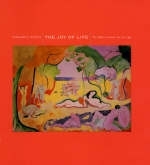
The Joy of Life
The Idyllic in French Art, circa 1900
Seiten
2002
University of California Press (Verlag)
978-0-520-22182-6 (ISBN)
University of California Press (Verlag)
978-0-520-22182-6 (ISBN)
- Titel ist leider vergriffen;
keine Neuauflage - Artikel merken
Investigates the significance of the idyllic in French painting from the early 1890s to WW I, considering a series of pastoral, mythic, and utopian landscapes. Integrating art history and visual analysis with literary and social history and psychoanalytic interpretation, this work contributes to our understanding of modernism 100 years ago.
"The Joy of Life" investigates the significance of the idyllic in French painting from the early 1890s to World War I, considering a fascinating series of pastoral, mythic, and utopian landscapes. Responding to rapid artistic and social shifts in this period, French artists shaped a dreamlike imagery of mythic community, individual fantasy, and sensual joie de vivre in the midst of mass society. This beautifully illustrated study focuses on three exemplary imaginings of idyll: Puvis de Chavannes' decoration for the Paris Hotel de Ville, L'ete, of 1891, Paul Signac's anarchist Au temps d'harmonie of 1895, and Henri Matisse's fauve Bonheur de vivre of 1905-6, each a monumental and ambitious work exhibited publicly in Paris. Werth weaves together complex analyses of these paintings and others by Manet, Gauguin, Seurat, Cezanne, and less well known artists with a consideration of their critical reception, literary parallels, and the social and cultural milieu.She moves deftly from artistic concerns with tradition and avant-gardism, decoration and social art, composition and figuration to contemporary debates over human origins and social organization, collective consciousness and individual subjectivity, the fragmentation of history and anticipations of the future.
Exploring the preoccupation of the turn-of-the-century imagination with time and memory, nationalism and colonialism, and competing constructions of national, racial, and gender identity, Werth analyzes the contributions of writers as diverse as Baudelaire, Durkheim, Bergson, Kropotkin, Morris, Nietzsche, Mallarme, and Freud. Successfully integrating art history and close visual analysis with literary and social history and psychoanalytic interpretation, "The Joy of Life" is a rich interdisciplinary work that makes a remarkable contribution to our understanding of modernism one hundred years ago.
"The Joy of Life" investigates the significance of the idyllic in French painting from the early 1890s to World War I, considering a fascinating series of pastoral, mythic, and utopian landscapes. Responding to rapid artistic and social shifts in this period, French artists shaped a dreamlike imagery of mythic community, individual fantasy, and sensual joie de vivre in the midst of mass society. This beautifully illustrated study focuses on three exemplary imaginings of idyll: Puvis de Chavannes' decoration for the Paris Hotel de Ville, L'ete, of 1891, Paul Signac's anarchist Au temps d'harmonie of 1895, and Henri Matisse's fauve Bonheur de vivre of 1905-6, each a monumental and ambitious work exhibited publicly in Paris. Werth weaves together complex analyses of these paintings and others by Manet, Gauguin, Seurat, Cezanne, and less well known artists with a consideration of their critical reception, literary parallels, and the social and cultural milieu.She moves deftly from artistic concerns with tradition and avant-gardism, decoration and social art, composition and figuration to contemporary debates over human origins and social organization, collective consciousness and individual subjectivity, the fragmentation of history and anticipations of the future.
Exploring the preoccupation of the turn-of-the-century imagination with time and memory, nationalism and colonialism, and competing constructions of national, racial, and gender identity, Werth analyzes the contributions of writers as diverse as Baudelaire, Durkheim, Bergson, Kropotkin, Morris, Nietzsche, Mallarme, and Freud. Successfully integrating art history and close visual analysis with literary and social history and psychoanalytic interpretation, "The Joy of Life" is a rich interdisciplinary work that makes a remarkable contribution to our understanding of modernism one hundred years ago.
Margaret Werth is Assistant Professor of Art History at the University of Delaware.
List of Illustrations Acknowledgments Introduction: Modern Idyll 1. Idyll of the Living Dead: Puvis de Chavannes 2. "The Golden Age Is Not in the Past, It Is in the Future" 3. Le Bonheur de vivre Epilogue Notes Selected Bibliography Index
| Erscheint lt. Verlag | 5.11.2002 |
|---|---|
| Zusatzinfo | 14 color illustrations, 108 b-w photographs |
| Verlagsort | Berkerley |
| Sprache | englisch |
| Maße | 203 x 254 mm |
| Gewicht | 1406 g |
| Themenwelt | Kunst / Musik / Theater ► Kunstgeschichte / Kunststile |
| Kunst / Musik / Theater ► Malerei / Plastik | |
| ISBN-10 | 0-520-22182-6 / 0520221826 |
| ISBN-13 | 978-0-520-22182-6 / 9780520221826 |
| Zustand | Neuware |
| Informationen gemäß Produktsicherheitsverordnung (GPSR) | |
| Haben Sie eine Frage zum Produkt? |
Mehr entdecken
aus dem Bereich

aus dem Bereich
kleine Kulturgeschichte einer brillanten Allianz
Buch | Softcover (2025)
Iudicium (Verlag)
CHF 33,90


