
Rise, The Fall, and The Rise (eBook)
400 Seiten
Faber & Faber (Verlag)
978-0-571-32507-8 (ISBN)
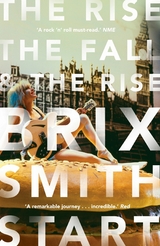
From a childhood in the celebrity-filled canyons of California to living in squalor in Manchester while playing in cult band, the Fall, to sitting front row in fashion shows as buyer for her own fashion store, to presenting prime-time television; Brix's journey has been one that required a fearlessness few women have and has brought inspiration to many. A pioneering musical icon, she is one of the few successful female guitarists and songwriters, working not just with the Fall but with her solo band Adult Net and her current band, Brix and the Extricated. She currently lives in Shoreditch, London, with her husband, Philip and her two pugs, Gladys and Pixie.
The Rise, The Fall, and The Rise is the extraordinary story, in her own words, of Brix Smith Start. Best known for her work in The Fall at the time when they were perhaps the most powerful and influential anti-authoritarian postpunk band in the world -- This Nation's Saving Grace, The Weird and Frightening World Of ... -- Brix spent ten years in the band before a violent disintegration led to her exit and the end of her marriage with Mark E Smith. But Brix's story is much more than rock n roll highs and lows in one of the most radically dysfunctional bands around. Growing up in the Hollywood Hills in the '60s in a dilapadated pink mansion her life has taken her from luxury to destitution, from the cover of the NME to waitressing in California, via the industrial wasteland of Manchester in the 1980s. What emerges is a story of constant reinvention, jubilant highs and depressive ebbs; a singular journey of a teenage American girl on a collision course with English radicalism on her way to mid-life success on tv and in fashion. Too bizarre, extreme and unlikely to exist in the pages of fiction, The Rise, The Fall and The Rise could only exist in the pages of a memoir.
Brix Smith Start is a songwriter and guitarist best known for her work with The Fall and The Adult Net. In recent years she has worked as a tv presenter and in fashion as the owner of a string of boutiques with her husband, Philip Start.
Brix Smith-Start's new memoir charts a remarkable journey [...] While her incredible story of career and life highs and lows beggars belief, it's also universal - this is a woman who's lived a full life, grown from her mistakes and learned to trust her gut. That's a lesson all of us can learn from,
She's one of those people who knows everyone and tells you everything - which makes for a vibrant, entertaining read, even when peppered with darker moments.
Smith-Start's hard-won account of the best and worst [indie] has to offer
The Rise, the Fall, and the Rise has satisfying quantities of rock 'n' roll filth but also a remarkably unspoilt sweetness of spirit. [The] book is lively, fresh and funny.
Brix's book is a complex, emotional rush - full of rock n roll, broken hearts and spectral madness. It's also a fantastically written tale of another life on the rock n roll rollercoaster with a pithy humour and great turn of phrase and looks set to be one of the music books of the year.
My face stung as my long hair whipped it repeatedly. The top was down on my grandmother’s sporty convertible Mustang. Her tiny size 3 foot slammed the pedal to the metal as we bombed down the San Diego Freeway heading south. The metallic-green car was a slice of Americana and my grandmother loved it. It made her feel young again and sassy. It was just another textbook LA day. Grandmother and granddaughter breezing along on an adventure. The age gap between us evaporated. The temperature outside, a perfect 75 degrees Fahrenheit. Our lungs expanding like bellows, sucking in California smog, orange blossom and exhaust.
My grandmother rarely called me by my birth name, Laura. She called me ‘Dolly’. I often wondered why. I guessed it was because she loved to dress me up.
Every weekend she would take me shopping to Saks or Neiman Marcus and buy me adorable outfits. Sometimes we’d get matching tops. This seemed to give her great pleasure, as it did me. My grandmother loved groovy clothes. Her favourite sweater was emblazoned with the words ‘Rich Bitch’ written across the front. Her own children had been boys. Three of them. Steve, the eldest, was my father. Then came his brothers, Gary and Fred. I suspect my grandmother longed for a little girl. When her first grandchild was born – me, a girl – she was thrilled. I was doted on and spoiled by both my wealthy Jewish grandparents, living the dream in the opulent splendour of Beverly Hills. I feel now, they spoiled me as a reaction to the guilt they felt about my father.
Steve Salenger had always been a difficult child and had now become a problematic, troubled adult. I was foisted on my doting grandparents weekend after weekend, as my father shirked his divorced-dad duties. The fact that he was eccentric, explosively angry and undependable did not go unnoticed by his parents. In old childhood photographs of me, I have a sad, haunted look.
My grandparents forever thought of excursions and ways to take me out of my obvious misery. I depended on them for everything emotional and, though I wasn’t yet aware of it, they were also supporting me financially.
We turned off the freeway at Harbor Boulevard and took the side roads, passed seedy motor lodges and bad Mexican restaurants. Then we saw it. The Gateway to Happiness – Disneyland. My heart soared as it always did, beating a little faster with anticipation. We drove through the entry gates and, as we did so, I saw the teenage parking attendant with bad acne waving his arms frantically.
‘Grandma, I think he wants you to park over there,’ I said.
She ignored me and kept driving. I guess she knew where she wanted to park.
On we drove through the vast parking lot. Slower now, 5 or 10 mph, meandering deftly around pedestrians. She drove directly towards the front entrance. This wasn’t our usual route into Disneyland. We had a routine. We either parked under a letter/character sign, like D for Dopey or P for Pinocchio, in the main parking lot, then walked to the tram, which circled the lot and deposited us at the main entrance. Or sometimes we employed my grandfather’s tactic of parking at the Disneyland Hotel and taking the monorail straight into the park, bypassing the lines of tourists. We never needed to buy tickets anyway. My grandparents seemed to have bags and bags of them. I used to reach in and pull out fistfuls. Every one of them was an ‘E’ ticket. As many as I wanted. I never had to slum it on ‘A’ or ‘B’ rides such as the Main Street Trolley or the Swiss Family Robinson tree house. It seemed to me then, metaphorically, my whole life was an ‘E’ ticket ride.
On this day, my grandmother had a strangely determined look on her face. A look I had never seen before. She looked hard, almost angry. This was out of character. She was normally so placid and easy-going. She never ever raised her voice at me like my father did. She was the only grown-up I could truly count on. Grandma was my safe haven, my one constant amidst the acutely neurotic behaviour of both my parents.
But, even as a small child, I knew that some of Grandma’s actions were ‘off’. I became uneasy. Her eyes were focused straight ahead, her hands white-knuckled the steering wheel.
A mini-wave of anxiety coursed through my body. My stomach tightened. ‘Grandma, what are you doing? You’ve missed all the parking spaces.’ My voice was higher in pitch than usual. My larynx was beginning to constrict with fear.
She drove right up to the entrance, and through it. Fear swept over me.
Grandma continued on her course. She drove past the topiary – hedges painstakingly clipped into Disney cartoon characters – and past the giant circular flower bed where the flowers were groomed to create the shape of Mickey Mouse’s head. She drove through the tunnel under the Disneyland railroad. My hands gripped the dashboard. We passed the Disneyland fire station where Walt Disney had his private apartment. The private residence was decorated like a garish brothel. It was from this vantage point that Walt Disney would stand and oversee the kingdom he’d created on the nights he stayed over.
We passed the town hall, where the Disneyland jail was located. The jail cells were discreetly hidden from public view, housing all manner of riff-raff including hippies, troublemakers, bad eggs and unhappy campers who misbehaved and broke the law of the mouse. We passed Great Moments with Mr Lincoln, where an audio-animatronic Abraham Lincoln would rise in his herky-jerky waxwork glory to recite the Gettysburg Address. (That was my grandfather’s favourite.) We carried on driving, careening down Main Street, USA.
At this point I started to scream. ‘GRANDMA WHAT ARE YOU DOING? You can’t drive down Main Street! You are breaking the rules! Turn around! YOU ARE SCARING ME!’
People scattered on both sides of us. Children dropped bags of candy, which rolled into the gutters as mothers hurled their toddlers to the safety of the kerb. Baby strollers, pushed at lightning speed, were rammed up the side of the sidewalk, out of harm’s way. Shocked little fists un-clutched helium balloons. I watched them rise up on the Anaheim jet streams, escaping the chaos below. Mickey Mouse ear-hats littered the cobbles. Tourists stared open-mouthed as angry fathers shook their fists at us. I watched all of this unfold in slow motion. Embarrassment turned to panic as she drove on.
‘Maybe Grandma got a special pass?’ I prayed to myself. After all, she knew the Disneys personally. My father dated one of their daughters. I used to imagine what would have happened if they had gotten married, Sharon Disney and my father. We passed the Candy Palace and left behind the jolly strains of music coming from the Dixieland jazz band. Tomorrowland blurred on the right while Adventureland disappeared on the left. Now we were on a collision course with Sleeping Beauty’s castle. I tried to scream, but nothing came out. We circumnavigated the landmark hub of Sleeping Beauty’s castle. I only just caught the briefest glimpse of the moat and drawbridge at the foot of the castle. I could barely glance up at the iconic spire, the one Tinker Bell flies from.
On hot summer nights, Disneyland puts on a firework display of some magnitude. Children and adults alike watch in awe as Tinker Bell flies from the summit of Matterhorn mountain to the golden spire atop Sleeping Beauty’s castle. As she does this she is lit from behind by a backdrop of fireworks set to theme music from Disney movies. Both the castle and Matterhorn are aglow. The collective visual cortex of the crowd is imprinted with this ‘picture postcard’ memory, in memoriam. Matterhorn mountain is an actual 1/100th scale copy of the real thing. It’s a snow-covered bobsled ride on which you are catapulted through internal tunnels blasted out of rock at 60 mph. It’s Alpine/Bavarian-themed, and so large you can see it from the freeway. Every kid I ever knew growing up in Southern California used the ‘sighting’ of Matterhorn mountain to gauge the distance left to travel to the Magic Kingdom. The Matterhorn is an ‘E’ ticket ride. Four people share a bobsled: two in the front and two in the back. You sit on each others’ laps. This is extra exciting when you are a teenager and you get to sit on the lap of your boyfriend or girlfriend, or someone you might have a crush on. As you wait in line, standing and inching along, you are housed in a Swiss-style wooden hut. The Matterhorn attendants are young adults, dressed appropriately in lederhosen. As you shuffle along the waiting line, yodelling music is piped through the rocks to ‘get you in the mood’. In the background you can hear the blood-curdling screams of people already on the ride, hurtling through the tunnels and tipping over the precipices. At this point, as you are waiting, your heart is pumping with anticipation and your anxiety levels are amped. Some people get so anxious they panic and take the chicken exit, but the Matterhorn is a mega-popular ride
My grandmother swerved to the right and headed towards Fantasyland. I could hardly bear to watch any more. My hands were clapped over my eyes and I was peeking through my fingers. A rational thought flickered through my brain. ‘The brakes, the brakes don’t work! She can’t stop the car!’ But as I looked down at her tiny feet I saw this was not so. Even though I was way too young to drive, I at least knew, on some simple level, how cars worked. Grandma was not pumping the brake pedal to get the...
| Erscheint lt. Verlag | 3.5.2016 |
|---|---|
| Verlagsort | London |
| Sprache | englisch |
| Maße | 150 x 150 mm |
| Themenwelt | Literatur ► Biografien / Erfahrungsberichte |
| Kunst / Musik / Theater ► Musik ► Pop / Rock | |
| Schlagworte | Extricated • Manchester • Mark e Smith • Post Punk • The Fall |
| ISBN-10 | 0-571-32507-6 / 0571325076 |
| ISBN-13 | 978-0-571-32507-8 / 9780571325078 |
| Informationen gemäß Produktsicherheitsverordnung (GPSR) | |
| Haben Sie eine Frage zum Produkt? |
 EPUB (Adobe DRM)
Kopierschutz: Adobe-DRM
Adobe-DRM ist ein Kopierschutz, der das eBook vor Mißbrauch schützen soll. Dabei wird das eBook bereits beim Download auf Ihre persönliche Adobe-ID autorisiert. Lesen können Sie das eBook dann nur auf den Geräten, welche ebenfalls auf Ihre Adobe-ID registriert sind.
Details zum Adobe-DRM
Dateiformat: EPUB (Electronic Publication)
EPUB ist ein offener Standard für eBooks und eignet sich besonders zur Darstellung von Belletristik und Sachbüchern. Der Fließtext wird dynamisch an die Display- und Schriftgröße angepasst. Auch für mobile Lesegeräte ist EPUB daher gut geeignet.
Systemvoraussetzungen:
PC/Mac: Mit einem PC oder Mac können Sie dieses eBook lesen. Sie benötigen eine
eReader: Dieses eBook kann mit (fast) allen eBook-Readern gelesen werden. Mit dem amazon-Kindle ist es aber nicht kompatibel.
Smartphone/Tablet: Egal ob Apple oder Android, dieses eBook können Sie lesen. Sie benötigen eine
Geräteliste und zusätzliche Hinweise
Buying eBooks from abroad
For tax law reasons we can sell eBooks just within Germany and Switzerland. Regrettably we cannot fulfill eBook-orders from other countries.
aus dem Bereich