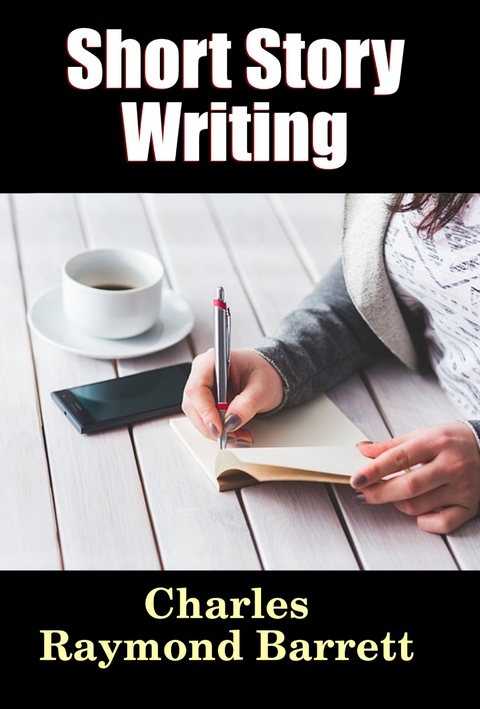
Short Story Writing (eBook)
188 Seiten
Lulu.com (Verlag)
978-1-329-17675-1 (ISBN)
A practical treatise on the art of the short story, designed to present concretely the rules of the art. It is a working manual, not a collection of untried theories. It tells how to write a story with reference to the requirements of contemporary editors.
'Both an interesting and useful book. While it is concerned with the special application of rhetorical principles to a particular department of literary art, it carries a general application that all literary workers may profit by, as in its chapters on Titles, Style, and the Labor of Authorship. Perusal of it is likely also to promote among readers a desirable repugnance to the inferior stuff which wastes time that might be better employed. Mr. Barrett's purpose is in the interest of novices who would learn the art of telling a short story as it should be told. His precepts are pointed with numerous critiques upon specimens of poor work, and enriched by references to various books and articles on the subject which amplify and re-enforce his presentation of principles and rules.' -Outlook
'Based upon deductions made by the author in the course of work as student, writer and critic of short stories. Specially brings out the requirements of contemporary editors. Principles laid down are illustrated by extracts from actual short stories, both good and bad.' -The Book News Monthly
'If the countless thousands of would-be authors who are writing or who contemplate writing a short story would diligently study 'Short Story Writing,' by Charles Raymond Barrett, Ph.B., many an over-worked editor would find his burdens lightened. For the would-be author will realize, after he has read Mr. Barrett's book, that to write a successful short story is an achievement beyond the power of ninety-nine men out of a hundred. The book is no mere presentation of theories on the part of the author. It is the result of careful analysis of the great short stories of the English language. Not only does the author show the inherent qualities of greatness which some of these stories possess, he also gives extracts from various amateur and unsuccessful stories, by which he shows plainly what a writer of short stories must not do. This treatment is one of the most helpful characteristics of his book. Mr. Barrett has treated the subject with admirable fullness....Readers of short stories as well as would-be authors will find the book interesting.' -Public Opinion
'Aims to give directions on all phases of the subject.' -Printer's Ink
'Competent young writers who seriously desire to do something worthwhile along the line of hte short story will do well to read Charles Raymond Barrett's 'Short Story Writing.' The author makes some very wise and remarkably practical suggestions. He defines the curious limitations and canons of this peculiar art form, the short story, in a clear and discriminating way. He classifies short stories, speaks helpfully of the selection of plots, talks judiciously of good and bad titles, of the use of facts, of character painting, of methods of narration, and of style. In the last chapter he gives sound advice on the quest of a market. Neither Mr. Barrett nor anyone else could turn the average man or woman into a successful short story writer, but Mr. Barrett can give a lot of good pointers.' -The Chautauquan
'A volume of definition, criticism and instruction. Sensible and based upon careful and intelligent study. Young writers will do wisely to read it and heed it.' -Congregationalist
'The book can hardly fail to be of much practical assistance to the novice in short-story writing.' -Review of Reviews
**
This
book is an attempt to put into definite form the principles observed
by the masters of the short story in the practice of their art. It is
the result of a careful study of their work, of some indifferent
attempts to imitate them, and of the critical examination of several
thousands of short stories written by amateurs. It is designed to be
of practical assistance to the novice in short story writing, from
the moment the tale is dimly conceived until it is completed and
ready for the editor's judgment.
The
rules and principles here presented embody not what I conceive to be
right, but what the great masters of the short story have thought to
be right, and what they have proved to be at least successful. I
speak only as a delver into the secrets of other men; and if I seem
arrogant, it is due to the influence of the company I keep. My
deductions are made not only from the artifices and triumphs of the
successful, but from the struggles and failures of the unfortunate as
well; and I have endeavored to make clear both the philosophy and the
application of all the principles so deduced. Though in theory these
rules are obligatory on all who essay the short story, they are
frequently and knowingly evaded or violated by the masters of the
art, whose genius is great enough to excuse their disregard of the
conventions, or whose skill is sufficient to smooth over their
technical lapses; but for the novice the only safe course is a
careful observance of all conventions.
To
the aspiring writer this book may seem to be merely a catalogue of
'Don'ts', the gist of which is, 'Don't write';
but that is to misread me. Short story writing is not easy, and I
cannot make it so, even if I would; but it is far from my purpose to
discourage any person who feels the Heaven-sent call to write, and
who has the will and ability to respond to it. But that call is but a
summons to labor-and to labor the severest and most persistent. To
one who comes to it but half-heartedly, illy prepared, shirking its
requirements, I can predict certain failure; but to the earnest,
serious, conscientious worker, I would say a word of hope. The
promotion from the rank of amateur to the dignity of authorship may
be long in coming, but it will come at last. Fame, like all else that
this world has to give, depends largely upon downright hard work; and
he who has the courage to strive in the face of disappointments will
achieve success in the end.
(From the Preface)
A practical treatise on the art of the short story, designed to present concretely the rules of the art. It is a working manual, not a collection of untried theories. It tells how to write a story with reference to the requirements of contemporary editors."e;Both an interesting and useful book. While it is concerned with the special application of rhetorical principles to a particular department of literary art, it carries a general application that all literary workers may profit by, as in its chapters on Titles, Style, and the Labor of Authorship. Perusal of it is likely also to promote among readers a desirable repugnance to the inferior stuff which wastes time that might be better employed. Mr. Barrett's purpose is in the interest of novices who would learn the art of telling a short story as it should be told. His precepts are pointed with numerous critiques upon specimens of poor work, and enriched by references to various books and articles on the subject which amplify and re-enforce his presentation of principles and rules."e; -Outlook "e;Based upon deductions made by the author in the course of work as student, writer and critic of short stories. Specially brings out the requirements of contemporary editors. Principles laid down are illustrated by extracts from actual short stories, both good and bad."e; -The Book News Monthly "e;If the countless thousands of would-be authors who are writing or who contemplate writing a short story would diligently study 'Short Story Writing,' by Charles Raymond Barrett, Ph.B., many an over-worked editor would find his burdens lightened. For the would-be author will realize, after he has read Mr. Barrett's book, that to write a successful short story is an achievement beyond the power of ninety-nine men out of a hundred. The book is no mere presentation of theories on the part of the author. It is the result of careful analysis of the great short stories of the English language. Not only does the author show the inherent qualities of greatness which some of these stories possess, he also gives extracts from various amateur and unsuccessful stories, by which he shows plainly what a writer of short stories must not do. This treatment is one of the most helpful characteristics of his book. Mr. Barrett has treated the subject with admirable fullness....Readers of short stories as well as would-be authors will find the book interesting."e; -Public Opinion"e;Aims to give directions on all phases of the subject."e; -Printer's Ink "e;Competent young writers who seriously desire to do something worthwhile along the line of hte short story will do well to read Charles Raymond Barrett's 'Short Story Writing.' The author makes some very wise and remarkably practical suggestions. He defines the curious limitations and canons of this peculiar art form, the short story, in a clear and discriminating way. He classifies short stories, speaks helpfully of the selection of plots, talks judiciously of good and bad titles, of the use of facts, of character painting, of methods of narration, and of style. In the last chapter he gives sound advice on the quest of a market. Neither Mr. Barrett nor anyone else could turn the average man or woman into a successful short story writer, but Mr. Barrett can give a lot of good pointers."e; -The Chautauquan"e;A volume of definition, criticism and instruction. Sensible and based upon careful and intelligent study. Young writers will do wisely to read it and heed it."e; -Congregationalist "e;The book can hardly fail to be of much practical assistance to the novice in short-story writing."e; -Review of Reviews **Thisbook is an attempt to put into definite form the principles observedby the masters of the short story in the practice of their art. It isthe result of a careful study of their work, of some indifferentattempts to imitate them, and of the critical examination of severalthousands of short stories written by amateurs. It is designed to beof practical assistance to the novice in short story writing, fromthe moment the tale is dimly conceived until it is completed andready for the editor's judgment.Therules and principles here presented embody not what I conceive to beright, but what the great masters of the short story have thought tobe right, and what they have proved to be at least successful. Ispeak only as a delver into the secrets of other men; and if I seemarrogant, it is due to the influence of the company I keep. Mydeductions are made not only from the artifices and triumphs of thesuccessful, but from the struggles and failures of the unfortunate aswell; and I have endeavored to make clear both the philosophy and theapplication of all the principles so deduced. Though in theory theserules are obligatory on all who essay the short story, they arefrequently and knowingly evaded or violated by the masters of theart, whose genius is great enough to excuse their disregard of theconventions, or whose skill is sufficient to smooth over theirtechnical lapses; but for the novice the only safe course is acareful observance of all conventions.Tothe aspiring writer this book may seem to be merely a catalogue of"e;Don'ts"e;, the gist of which is, "e;Don't write"e;;but that is to misread me. Short story writing is not easy, and Icannot make it so, even if I would; but it is far from my purpose todiscourage any person who feels the Heaven-sent call to write, andwho has the will and ability to respond to it. But that call is but asummons to labor and to labor the severest and most persistent. Toone who comes to it but half-heartedly, illy prepared, shirking itsrequirements, I can predict certain failure; but to the earnest,serious, conscientious worker, I would say a word of hope. Thepromotion from the rank of amateur to the dignity of authorship maybe long in coming, but it will come at last. Fame, like all else thatthis world has to give, depends largely upon downright hard work; andhe who has the courage to strive in the face of disappointments willachieve success in the end.(From the Preface)
| Erscheint lt. Verlag | 21.8.2017 |
|---|---|
| Reihe/Serie | Writing & Publishing References | Writing & Publishing References |
| Sprache | englisch |
| Themenwelt | Kunst / Musik / Theater ► Allgemeines / Lexika |
| Geisteswissenschaften ► Sprach- / Literaturwissenschaft | |
| Schlagworte | copywriting • grammar • rhetoric • Short story writing • Style • Usage • Writing |
| ISBN-10 | 1-329-17675-8 / 1329176758 |
| ISBN-13 | 978-1-329-17675-1 / 9781329176751 |
| Informationen gemäß Produktsicherheitsverordnung (GPSR) | |
| Haben Sie eine Frage zum Produkt? |
 EPUB (Adobe DRM)
Größe: 481 KB
Kopierschutz: Adobe-DRM
Adobe-DRM ist ein Kopierschutz, der das eBook vor Mißbrauch schützen soll. Dabei wird das eBook bereits beim Download auf Ihre persönliche Adobe-ID autorisiert. Lesen können Sie das eBook dann nur auf den Geräten, welche ebenfalls auf Ihre Adobe-ID registriert sind.
Details zum Adobe-DRM
Dateiformat: EPUB (Electronic Publication)
EPUB ist ein offener Standard für eBooks und eignet sich besonders zur Darstellung von Belletristik und Sachbüchern. Der Fließtext wird dynamisch an die Display- und Schriftgröße angepasst. Auch für mobile Lesegeräte ist EPUB daher gut geeignet.
Systemvoraussetzungen:
PC/Mac: Mit einem PC oder Mac können Sie dieses eBook lesen. Sie benötigen eine
eReader: Dieses eBook kann mit (fast) allen eBook-Readern gelesen werden. Mit dem amazon-Kindle ist es aber nicht kompatibel.
Smartphone/Tablet: Egal ob Apple oder Android, dieses eBook können Sie lesen. Sie benötigen eine
Geräteliste und zusätzliche Hinweise
Buying eBooks from abroad
For tax law reasons we can sell eBooks just within Germany and Switzerland. Regrettably we cannot fulfill eBook-orders from other countries.
EPUB (Ohne DRM)Digital Rights Management: ohne DRM
Dieses eBook enthält kein DRM oder Kopierschutz. Eine Weitergabe an Dritte ist jedoch rechtlich nicht zulässig, weil Sie beim Kauf nur die Rechte an der persönlichen Nutzung erwerben.
Dateiformat: EPUB (Electronic Publication)
EPUB ist ein offener Standard für eBooks und eignet sich besonders zur Darstellung von Belletristik und Sachbüchern. Der Fließtext wird dynamisch an die Display- und Schriftgröße angepasst. Auch für mobile Lesegeräte ist EPUB daher gut geeignet.
Systemvoraussetzungen:
PC/Mac: Mit einem PC oder Mac können Sie dieses eBook lesen. Sie benötigen dafür die kostenlose Software Adobe Digital Editions.
eReader: Dieses eBook kann mit (fast) allen eBook-Readern gelesen werden. Mit dem amazon-Kindle ist es aber nicht kompatibel.
Smartphone/Tablet: Egal ob Apple oder Android, dieses eBook können Sie lesen. Sie benötigen dafür eine kostenlose App.
Geräteliste und zusätzliche Hinweise
Buying eBooks from abroad
For tax law reasons we can sell eBooks just within Germany and Switzerland. Regrettably we cannot fulfill eBook-orders from other countries.
aus dem Bereich