Myth and Philosophy in Platonic Dialogues (eBook)
250 Seiten
Palgrave Macmillan UK (Verlag)
978-1-137-58044-3 (ISBN)
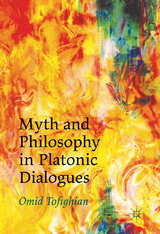
This book rethinks Plato's creation and use of myth by drawing on theories and methods from myth studies, religious studies, literary theory and related fields. Individual myths function differently depending on cultural practice, religious context or literary tradition, and this interdisciplinary study merges new perspectives in Plato studies with recent scholarship and theories pertaining to myth. Significant overlaps exist between prominent modern theories of myth and attitudes and approaches in studies of Plato's myths. Considering recent developments in myth studies, this book asks new questions about the evaluation of myth in Plato. Its appreciation of the historical conditions shaping and directing the study of Plato's myths opens deeper philosophical questions about the relationship between philosophy and myth and the relevance of myth studies to philosophical debates. It also extends the discussion to address philosophical questions and perspectives on the distinction between argument and narrative.
Omid Tofighian is Lecturer in Rhetoric and Composition in the School of Literature, Art, and Media and Honorary Research Associate in the School of Philosophical and Historical Inquiry at the University of Sydney, Australia. He has also lectured and conducted research in the UAE, Belgium, Netherlands and intermittent periods in Iran. His research combines philosophy with rhetoric, religion, popular culture, transnationalism, displacement and discrimination.
This book rethinks Plato's creation and use of myth by drawing on theories and methods from myth studies, religious studies, literary theory and related fields. Individual myths function differently depending on cultural practice, religious context or literary tradition, and this interdisciplinary study merges new perspectives in Plato studies with recent scholarship and theories pertaining to myth. Significant overlaps exist between prominent modern theories of myth and attitudes and approaches in studies of Plato's myths. Considering recent developments in myth studies, this book asks new questions about the evaluation of myth in Plato. Its appreciation of the historical conditions shaping and directing the study of Plato's myths opens deeper philosophical questions about the relationship between philosophy and myth and the relevance of myth studies to philosophical debates. It also extends the discussion to address philosophical questions and perspectives on the distinctionbetween argument and narrative.
Omid Tofighian is Lecturer in Rhetoric and Composition in the School of Literature, Art, and Media and Honorary Research Associate in the School of Philosophical and Historical Inquiry at the University of Sydney, Australia. He has also lectured and conducted research in the UAE, Belgium, Netherlands and intermittent periods in Iran. His research combines philosophy with rhetoric, religion, popular culture, transnationalism, displacement and discrimination.
1. Introduction: Myth and Philosophy on Stage – Connections, Divisions and Interdependence.- 2. Mutual Scaffolding: Unifying Myth and Philosophy.- 3. Dialogue Analysis.- 4. Conclusion: Where Does Myth Belong?.
| Informationen gemäß Produktsicherheitsverordnung (GPSR) | |
| Haben Sie eine Frage zum Produkt? |
 PDF (Wasserzeichen)
DRM: Digitales Wasserzeichen
Dieses eBook enthält ein digitales Wasserzeichen und ist damit für Sie personalisiert. Bei einer missbräuchlichen Weitergabe des eBooks an Dritte ist eine Rückverfolgung an die Quelle möglich.
Dateiformat: PDF (Portable Document Format)
Mit einem festen Seitenlayout eignet sich die PDF besonders für Fachbücher mit Spalten, Tabellen und Abbildungen. Eine PDF kann auf fast allen Geräten angezeigt werden, ist aber für kleine Displays (Smartphone, eReader) nur eingeschränkt geeignet.
Systemvoraussetzungen:
PC/Mac: Mit einem PC oder Mac können Sie dieses eBook lesen. Sie benötigen dafür einen PDF-Viewer - z.B. den Adobe Reader oder Adobe Digital Editions.
eReader: Dieses eBook kann mit (fast) allen eBook-Readern gelesen werden. Mit dem amazon-Kindle ist es aber nicht kompatibel.
Smartphone/Tablet: Egal ob Apple oder Android, dieses eBook können Sie lesen. Sie benötigen dafür einen PDF-Viewer - z.B. die kostenlose Adobe Digital Editions-App.
Buying eBooks from abroad
For tax law reasons we can sell eBooks just within Germany and Switzerland. Regrettably we cannot fulfill eBook-orders from other countries.
aus dem Bereich