


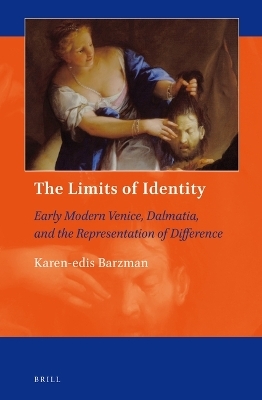
The Limits of Identity: Early Modern Venice, Dalmatia, and the Representation of Difference
Seiten
2017
Brill (Verlag)
978-90-04-33150-1 (ISBN)
Brill (Verlag)
978-90-04-33150-1 (ISBN)
This book examines the production of collective “Venetian-ness” in early modern representation before turning to the portrayal of populations in Venetian Dalmatia’s borderlands, where those in metropolitan Venice began to perceive difference and imaginings of belonging began to break down.
This book considers the production of collective identity in Venice (Christian, civic-minded, anti-tyrannical), which turned on distinctions drawn in various fields of representation from painting, sculpture, print, and performance to classified correspondence. Dismemberment and decapitation bore a heavy burden in this regard, given as indices of an arbitrary violence ascribed to Venice’s long-time adversary, “the infidel Turk.” The book also addresses the recuperation of violence in Venetian discourse about maintaining civic order and waging crusade. Finally, it examines mobile populations operating in the porous limits between Venetian Dalmatia and Ottoman Bosnia and the distinctions they disrupted between “Venetian” and “Turk” until their settlement on farmland of the Venetian state. This occurred in the eighteenth century with the closing of the borderlands, thresholds of difference against which early modern “Venetian-ness” was repeatedly measured and affirmed.
This book considers the production of collective identity in Venice (Christian, civic-minded, anti-tyrannical), which turned on distinctions drawn in various fields of representation from painting, sculpture, print, and performance to classified correspondence. Dismemberment and decapitation bore a heavy burden in this regard, given as indices of an arbitrary violence ascribed to Venice’s long-time adversary, “the infidel Turk.” The book also addresses the recuperation of violence in Venetian discourse about maintaining civic order and waging crusade. Finally, it examines mobile populations operating in the porous limits between Venetian Dalmatia and Ottoman Bosnia and the distinctions they disrupted between “Venetian” and “Turk” until their settlement on farmland of the Venetian state. This occurred in the eighteenth century with the closing of the borderlands, thresholds of difference against which early modern “Venetian-ness” was repeatedly measured and affirmed.
Karen-edis Barzman, Ph.D. (Johns Hopkins University, 1986), is Associate Professor of Art History at Binghamton University. Her work addresses the way subjects are caught in fields of linguistic, visual, and spatial culture by the performative aspects of self and community.
| Erscheinungsdatum | 14.05.2017 |
|---|---|
| Reihe/Serie | Art and Material Culture in Medieval and Renaissance Europe ; 7 |
| Verlagsort | Leiden |
| Sprache | englisch |
| Maße | 155 x 235 mm |
| Gewicht | 765 g |
| Themenwelt | Kunst / Musik / Theater ► Kunstgeschichte / Kunststile |
| Geschichte ► Allgemeine Geschichte ► Neuzeit (bis 1918) | |
| Geisteswissenschaften ► Geschichte ► Regional- / Ländergeschichte | |
| Geschichte ► Teilgebiete der Geschichte ► Kulturgeschichte | |
| ISBN-10 | 90-04-33150-6 / 9004331506 |
| ISBN-13 | 978-90-04-33150-1 / 9789004331501 |
| Zustand | Neuware |
| Informationen gemäß Produktsicherheitsverordnung (GPSR) | |
| Haben Sie eine Frage zum Produkt? |
Mehr entdecken
aus dem Bereich


aus dem Bereich
Geschichte einer wilden Handlung
Buch | Hardcover (2024)
C.H.Beck (Verlag)
CHF 47,60


