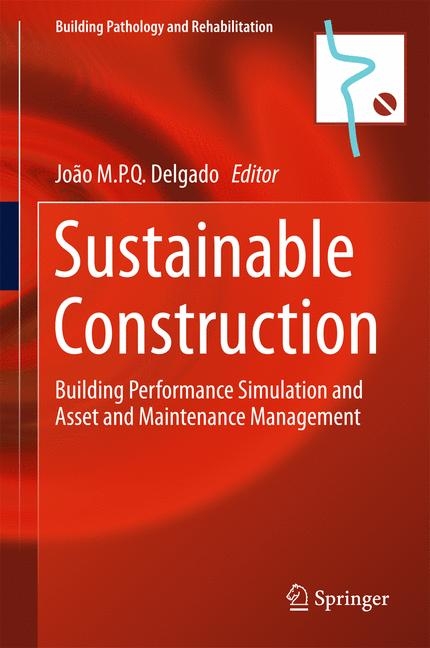
Sustainable Construction (eBook)
228 Seiten
Springer Singapore (Verlag)
978-981-10-0651-7 (ISBN)
This book presents a collection of recent research works that highlight best practice solutions, case studies and practical advice on the implementation of sustainable construction techniques. It includes a set of new developments in the field of building performance simulation, building sustainability assessment, sustainable management, asset and maintenance management and service-life prediction. Accordingly, the book will appeal to a broad readership of professionals, scientists, students, practitioners, lecturers and other interested parties.
This book presents acollection of recent research works that highlight best practice solutions,case studies and practical advice on the implementation of sustainableconstruction techniques. It includes a set of new developments in the field ofbuilding performance simulation, building sustainability assessment,sustainable management, asset and maintenance management and service-life prediction. Accordingly, the book will appeal to a broad readership of professionals,scientists, students, practitioners, lecturers and other interested parties.
Preface 6
Contents 7
1 Fibre Reinforced Polymers in the Rehabilitation of Damaged Masonry 9
Abstract 9
1 Introduction 9
2 Masonry Strengthening Techniques and Rehabilitation 11
2.1 Conventional Strengthening Techniques 12
2.2 Polymeric Composite Materials 13
3 Experimental Program for Rehabilitation of Damaged Masonry 15
3.1 Characteristics and Mechanical Properties of the Specimens 15
3.2 Characteristics and Mechanical Properties of the Strengthening System 17
3.3 Mechanical Properties of the Reference Wallettes 17
3.4 Preparation of the Substrate and Application of the Reinforcement Over the Damaged Wallettes 17
3.5 Experiments with the Damaged/Reinforced Wallettes 20
4 Analyses and Considerations About the Experimental Results 20
4.1 Mechanical Strength to Axial Compression 20
4.2 Young’s Modulus 22
4.3 Failure Mode 23
5 Final Considerations 26
Acknowledgments 27
References 27
2 Energy Cost-Efficient Rehabilitation Measures for the Portuguese Residential Buildings Constructed in the 1960–1990 Period 30
Abstract 30
1 Introduction 31
2 Cost-Optimal Methodology: Application to a Portuguese Reference Building 32
2.1 Phase 1: Definition of the Reference Building 32
2.2 Phase 2: Identification of Energy Efficiency Rehabilitation Measures for the Reference Building 35
2.3 Phase 3: Calculation of the Primary Energy Demand Resulting from the Application of Measures to the Reference Building 37
2.4 Phase 4: Calculation of the Global Costs for the Reference Building 39
2.4.1 Financial Perspective 39
2.4.2 Macroeconomic Perspective 40
2.4.3 Cost Calculation 41
2.5 Phase 5—Determination of the Cost-Optimal Level of Energy Performance 41
3 Discussion of Results 43
4 Conclusions 46
References 47
3 Ventilation System for Drying Out Buildings After a Flood 50
Abstract 50
1 Introduction 50
2 Ventilation System for Drying Out Buildings After a Flood 53
3 Numerical Simulation 56
3.1 Calculation Software Used 56
3.2 Analysed Parameters 57
4 Results 59
4.1 Influence of the Air Change (ACH) Rate in the Channels 59
4.2 Influence of the Thickness of the Wall 62
4.3 Influence of the Building Material 65
4.4 Influence of the Depth of the Phreatic Level 69
5 Conclusions 73
Acknowledgments 75
References 75
4 Risk Assessment of Urban Fire—Method for the Analysis and Management of Existing Buildings 77
Abstract 77
1 Introduction 77
2 CHICHOrRO Method 78
2.1 Introduction 78
2.2 Principles of Development of the CHICHOrRO Method 79
2.3 How CHICHOrRO Method Works 79
3 Proposal Building Classification According to Fire Risk 82
4 Interventions in the Process of Rehabilitation 83
5 CHICHOrRO Method—Sensitivity Analysis 85
5.1 Implementation 85
5.2 Buildings Standards 85
5.3 Sensitivity Analysis in Standard Uses of Buildings 87
6 Case Study—Risk Assessment in Porto Urban Area 88
6.1 Historical Background of Old Porto Center 88
6.2 Buildings Analysis of Ribeira/Barredo Block 90
6.2.1 Uses Type of Buildings 90
6.2.2 Risk Category of Buildings 91
6.2.3 State of Preservation of Buildings 91
6.2.4 Accessibility Map of the Firefighters 92
6.2.5 Map of the Hydrants 92
6.3 Application of CHICHOrRO Method to a Region of Urban Area: Ribeira/Barredo—Static Analysis 93
6.4 Application of CHICHOrRO Method to a Single Block—Dynamic Analysis 93
7 Conclusions 96
References 97
5 Economic Relevance of Building Elements—Studies, New Framework, Evolutions and Support for Refurbishment Operations 98
Abstract 98
1 Introduction 99
2 State of the Art 99
2.1 Residential Buildings—Techno-economic Characterization and Estimation (Bezelga 1983) 100
2.1.1 Construction Elements Work Breakdown Structure (WBS-CE) 100
2.1.2 Sample of Analyzed Designs 103
2.1.3 Main Results/Conclusions 103
2.2 Construction Observatory of TMAD—Cost Structure of Residential Buildings (Pinto 2007) 106
2.2.1 Work Breakdown Structure 106
2.2.2 Sample of Designs Analyzed 109
2.2.3 Main Results/Conclusions 109
2.3 Cost Structure of Residential Buildings (Mendes 2011) 111
2.3.1 Work Breakdown Structure 111
2.3.2 Sample of Designs Analyzed 112
2.3.3 Main Results/Conclusions 112
2.4 Conclusions of the State of Art 114
3 A New Framework for Building Costs 115
3.1 Main Principles 115
3.2 Laws, Standards and Academic Sources Considered in the Development of the New WBS 116
3.2.1 Portaria No. 701-H/2008 (Diário da República 2008) 116
3.2.2 Portaria No. 19/2004 (Diário da República 2004) 117
3.2.3 Information of Costs—LNEC (Manso 2013) 117
3.2.4 ISO 12006-2:2015 (International Organization for Standardization 2001) 117
3.2.5 ProNIC—Protocol for Construction Information Normalization (Mêda et al. 2014 Sousa et al. 2011, 2012)
3.3 Proposal 118
3.3.1 Work Breakdown Structure Levels 118
Level 1 118
Level 2 119
Level 3 119
3.3.2 Discussion and Decisions for the WBS Organization 119
Insulation and Waterproofing Construction Elements 119
Roof 119
Coatings/Finishes 120
3.3.3 New Construction Elements Work Breakdown Structure to Support Building Cost Structures 120
4 Evolution of Building Construction Costs 120
4.1 New Study 120
4.1.1 Cost Structure of Portuguese Residential Buildings from the 1990s 120
Sample of Designs Analysed 120
Results 122
4.1.2 Cost Structure of Portuguese Residential Buildings from the 1990s 123
Sample of Designs Analysed 124
Results 124
5 Results 125
5.1 Overview 125
5.2 1980s to 1990s 127
5.3 1990s to 2000s 128
5.4 1980s to 2000s 129
6 Conclusions 131
Acknowledgments 131
References 131
6 Maintenance as a Tool to Avoid Building Pathology—The Oporto Building Example 133
Abstract 133
1 Introduction 134
2 Building Maintenance Operations 135
3 Functional Performance Requirement 137
4 Decision Support Model 138
4.1 Importance Indicator 139
4.2 Facility Indicator 139
4.3 Maintainability Index 141
5 Case Study 144
5.1 The Inclusion of the Component of Maintenance 146
6 Conclusions 149
Acknowledgements 150
References 150
Further Reading 150
7 An Interoperable ICT Tool for Asset and Maintenance Management 151
Abstract 151
1 Introduction 151
2 The Development of a Database for Asset and Maintenance Management 152
2.1 The Proposed Methods for Service Life Planning and Management 153
2.2 The Proposed Tools for Service Life Planning and Maintenance Management 156
2.3 A Database for the Entire Construction Field 158
2.4 The Creation of a Life Cycle Management System Platform 162
References 163
Further Reading 164
8 BIM Tools Used in Maintenance of Buildings and on Conflict Detection 166
Abstract 166
1 Introduction 167
2 Maintenance 4D Model 168
2.1 BIM Architectural Model 170
2.2 Inspection Program 170
2.3 BIM Model Linked to Inspection Program 172
2.4 Implementation Problems 174
3 BIM/MEP Design 175
3.1 Architectural and Structural BIM/3D Models 177
3.2 MEP/BIM Model 177
3.3 Clash Detection 179
4 Conclusions 183
References 184
9 Mechanical Pathologies of Reinforced and Damaged Concrete Corbels by Gluing Composite Carbon Fabrics Under Static and Dynamic Tests 187
Abstract 187
1 Introduction 188
2 Design and Pathology 189
2.1 History of Reinforced Concrete Corbels 189
2.2 Reinforced-Concrete (RC) Corbel Design 190
2.3 Pathologies 190
2.4 Reinforcement of RC Corbels by Bonding Carbon Fibre Fabrics 191
2.5 Objective 193
3 Experimental Program 193
3.1 Experimental Model 193
3.1.1 Materials 194
3.1.2 Preparation of Bonding Surface of Concrete 196
3.1.3 Extensometer Technique Based on Strain Gauges 197
3.1.4 Test Procedure 198
3.2 Results and Discussions 199
3.2.1 Reinforced Concrete Corbel 199
3.2.2 Strengthening Reinforced Concrete Corbels 200
3.2.3 Design of Strengthened Reinforced Concrete Corbel 201
3.2.4 Damage Procedure 204
3.2.5 Repair Reinforced-Concrete Corbels 204
3.2.6 Fatigue Damage of Reinforced-Concrete Corbels 206
3.2.7 Modes of Failures 208
4 Conclusions 211
References 212
10 Pathologies in Reinforced Concrete Structures 214
Abstract 214
1 Introduction 215
2 Main Causes of Appearance of Pathologies on Concrete Structures 216
2.1 Failure in Project and Interpretation Phase of a Concrete Structure Project 216
2.2 Execution Faults (Form and Shoring, Reinforcing Step, Concrete Step and Concrete Curing Step) 217
2.3 Concrete Joints (Cold Joints) 220
2.4 Material Failures 221
3 Presentation and Analysis of Results 221
3.1 Structural Conditions in the “Cidade da Música” Building 222
3.2 Case 1: Constructive Methodology Employed in the Enterprise 222
3.3 Case 2: Concrete with Apparent Imperfections 224
3.4 Case 3: Concrete Reinforcement Exposed 225
3.5 Case 4: Geometric Imperfections 226
4 Final Considerations 227
References 229
| Erscheint lt. Verlag | 16.3.2016 |
|---|---|
| Reihe/Serie | Building Pathology and Rehabilitation | Building Pathology and Rehabilitation |
| Zusatzinfo | VIII, 228 p. 127 illus., 108 illus. in color. |
| Verlagsort | Singapore |
| Sprache | englisch |
| Themenwelt | Kunst / Musik / Theater |
| Geisteswissenschaften ► Geschichte ► Hilfswissenschaften | |
| Sozialwissenschaften | |
| Technik ► Bauwesen | |
| Technik ► Maschinenbau | |
| Schlagworte | Asset and Maintenance Management • BIM • Building Information Models • Building Sustainability Assessment • Interoperable Life Cycle Management System • LCMS • Service-life • Sustainable Management |
| ISBN-10 | 981-10-0651-2 / 9811006512 |
| ISBN-13 | 978-981-10-0651-7 / 9789811006517 |
| Informationen gemäß Produktsicherheitsverordnung (GPSR) | |
| Haben Sie eine Frage zum Produkt? |
 PDF (Wasserzeichen)
DRM: Digitales Wasserzeichen
Dieses eBook enthält ein digitales Wasserzeichen und ist damit für Sie personalisiert. Bei einer missbräuchlichen Weitergabe des eBooks an Dritte ist eine Rückverfolgung an die Quelle möglich.
Dateiformat: PDF (Portable Document Format)
Mit einem festen Seitenlayout eignet sich die PDF besonders für Fachbücher mit Spalten, Tabellen und Abbildungen. Eine PDF kann auf fast allen Geräten angezeigt werden, ist aber für kleine Displays (Smartphone, eReader) nur eingeschränkt geeignet.
Systemvoraussetzungen:
PC/Mac: Mit einem PC oder Mac können Sie dieses eBook lesen. Sie benötigen dafür einen PDF-Viewer - z.B. den Adobe Reader oder Adobe Digital Editions.
eReader: Dieses eBook kann mit (fast) allen eBook-Readern gelesen werden. Mit dem amazon-Kindle ist es aber nicht kompatibel.
Smartphone/Tablet: Egal ob Apple oder Android, dieses eBook können Sie lesen. Sie benötigen dafür einen PDF-Viewer - z.B. die kostenlose Adobe Digital Editions-App.
Buying eBooks from abroad
For tax law reasons we can sell eBooks just within Germany and Switzerland. Regrettably we cannot fulfill eBook-orders from other countries.
aus dem Bereich