


Eye for Detail
Images of Plants and Animals in Art and Science, 1500-1630
Seiten
2016
Reaktion Books (Verlag)
978-1-78023-640-7 (ISBN)
Reaktion Books (Verlag)
978-1-78023-640-7 (ISBN)
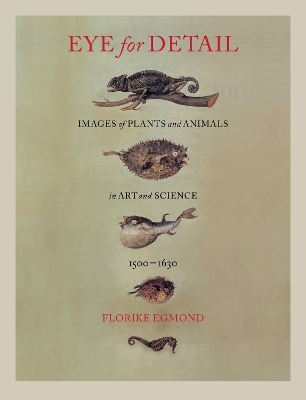
Image-transforming techniques such as close-up, time lapse, and layering are generally associated with the age of photography, but as Florike Egmond shows in this book, they were already being used half a millennium ago. Exploring the world of natural history drawings from the Renaissance, Eye for Detail
Image-transforming techniques such as close-up, time lapse and layering are often linked to the age of photography, but they were already being used half a millennium ago for the purposes of identification and study. This is why Renaissance drawings of plants and animals are immediately recognizable to the modern viewer. Discussing natural history images made throughout Europe during the sixteenth century, Eye for Detail traces the early history of image manipulation techniques.
Florike Egmond shows how the roles and formats of images in nature study changed dramatically during this period, as high-definition naturalistic representation became the rule, and large image collections of plants and animals were created for identification and illustration. She investigates what the use of visual techniques like magnification can tell us about how early modern Europeans studied and ordered living nature, and focuses on how attention to visual detail reveals the overriding question that continued to occupy the minds of naturalists from antiquity well into the modern age: the secret of how life originates.
Featuring many striking colour illustrations that have never been published before, this beautiful volume is an arresting guide to the large Continental collections of naturalia drawings and an absorbing study of natural history art of the sixteenth century.
Image-transforming techniques such as close-up, time lapse and layering are often linked to the age of photography, but they were already being used half a millennium ago for the purposes of identification and study. This is why Renaissance drawings of plants and animals are immediately recognizable to the modern viewer. Discussing natural history images made throughout Europe during the sixteenth century, Eye for Detail traces the early history of image manipulation techniques.
Florike Egmond shows how the roles and formats of images in nature study changed dramatically during this period, as high-definition naturalistic representation became the rule, and large image collections of plants and animals were created for identification and illustration. She investigates what the use of visual techniques like magnification can tell us about how early modern Europeans studied and ordered living nature, and focuses on how attention to visual detail reveals the overriding question that continued to occupy the minds of naturalists from antiquity well into the modern age: the secret of how life originates.
Featuring many striking colour illustrations that have never been published before, this beautiful volume is an arresting guide to the large Continental collections of naturalia drawings and an absorbing study of natural history art of the sixteenth century.
Florike Egmond is a cultural historian specializing in 16th-century natural history. She works at the Dutch National Archive in The Hague, The Netherlands.
| Erscheinungsdatum | 12.01.2017 |
|---|---|
| Zusatzinfo | 128 colour illustrations |
| Verlagsort | London |
| Sprache | englisch |
| Maße | 190 x 250 mm |
| Themenwelt | Kunst / Musik / Theater ► Kunstgeschichte / Kunststile |
| Kunst / Musik / Theater ► Malerei / Plastik | |
| ISBN-10 | 1-78023-640-9 / 1780236409 |
| ISBN-13 | 978-1-78023-640-7 / 9781780236407 |
| Zustand | Neuware |
| Informationen gemäß Produktsicherheitsverordnung (GPSR) | |
| Haben Sie eine Frage zum Produkt? |
Mehr entdecken
aus dem Bereich

aus dem Bereich
kleine Kulturgeschichte einer brillanten Allianz
Buch | Softcover (2025)
Iudicium (Verlag)
CHF 33,90


