


Cezanne
Landscape into Art
Seiten
1996
Yale University Press (Verlag)
978-0-300-06701-9 (ISBN)
Yale University Press (Verlag)
978-0-300-06701-9 (ISBN)
- Titel ist leider vergriffen;
keine Neuauflage - Artikel merken
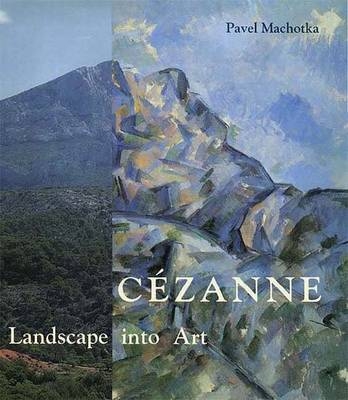
Offering the author's own approach to the paintings of Cezanne, this work presents a critical study of his relation to landscape. The study is based on new identifications of the sites he used, and on comparisons between Cezanne's paintings and specially commissioned photographs.
This book presents a new perspective on Paul Cezanne, one of the towering figures of 19th-century art. Pavel Machotka has photographed the sites of Cezanne's landscape paintings - whenever possibe from the same spot and at the same time of day that Cezanne painted the scenes. Juxtaposing these colour photographs with reproductions of the paintings, he offers a range of evidence to investigate how the painter transformed nature into works of art. Machotka, himself an artist, moves from painting to painting, examining textures and surfaces, pictorial rhythms, and inflections of tone. As he analyzes Cezanne's treatment of individual sites, their transposition into forms and colours, and the artist's responsiveness to the demands of each composition, we begin to see Cezanne as he saw himself: not as an early Cubist but as a painter who explored his motif for its compositional potential and presented a parallel and faithful conception of it. Using colour to define form, while retaining hues that are anchored in reality, Cezanne achieved reconstructions rather than intellectual depictions like those of the Cubists.
This book presents a new perspective on Paul Cezanne, one of the towering figures of 19th-century art. Pavel Machotka has photographed the sites of Cezanne's landscape paintings - whenever possibe from the same spot and at the same time of day that Cezanne painted the scenes. Juxtaposing these colour photographs with reproductions of the paintings, he offers a range of evidence to investigate how the painter transformed nature into works of art. Machotka, himself an artist, moves from painting to painting, examining textures and surfaces, pictorial rhythms, and inflections of tone. As he analyzes Cezanne's treatment of individual sites, their transposition into forms and colours, and the artist's responsiveness to the demands of each composition, we begin to see Cezanne as he saw himself: not as an early Cubist but as a painter who explored his motif for its compositional potential and presented a parallel and faithful conception of it. Using colour to define form, while retaining hues that are anchored in reality, Cezanne achieved reconstructions rather than intellectual depictions like those of the Cubists.
| Erscheint lt. Verlag | 27.3.1996 |
|---|---|
| Zusatzinfo | 45 b&w illustrations, 100 colour plates |
| Sprache | englisch |
| Maße | 245 x 275 mm |
| Gewicht | 1240 g |
| Themenwelt | Kunst / Musik / Theater ► Allgemeines / Lexika |
| Kunst / Musik / Theater ► Kunstgeschichte / Kunststile | |
| Kunst / Musik / Theater ► Malerei / Plastik | |
| ISBN-10 | 0-300-06701-1 / 0300067011 |
| ISBN-13 | 978-0-300-06701-9 / 9780300067019 |
| Zustand | Neuware |
| Informationen gemäß Produktsicherheitsverordnung (GPSR) | |
| Haben Sie eine Frage zum Produkt? |
Mehr entdecken
aus dem Bereich


aus dem Bereich
Vorlesungen März-Juni 1981 : die legendären Vorlesungen des großen …
Buch | Hardcover (2025)
Suhrkamp (Verlag)
CHF 53,90
verlorene Techniken der Alten Meister wiederentdeckt von David …
Buch | Hardcover (2025)
Frölich & Kaufmann (Verlag)
CHF 27,90


