


Barry Le Va
The Aesthetic Aftermath
Seiten
2015
University of Minnesota Press (Verlag)
978-0-8166-9468-6 (ISBN)
University of Minnesota Press (Verlag)
978-0-8166-9468-6 (ISBN)
- Titel z.Zt. nicht lieferbar
- Versandkostenfrei
- Auch auf Rechnung
- Artikel merken
Conceptual artist Barry
Le Va's installations were designed to erode the economic and political
authority of the art establishment. Michael Maizels explores how Le Va
challenged the interlocking assumptions behind blind faith in lasting beauty,
just government, and perfectible knowledge.
Of the conceptual artists who began their careers in the 1960s and 1970s-Bruce Nauman, Chris Burden, Vito Acconci, and Mel Bochner among them-Barry Le Va may be the most elusive. As this first study of his work reveals, his rigorously planned art was instigated to mask its creator’s intentions and methods, presenting itself as an “aftermath” of modernism’s claim to permanency and civil society’s preferred mode of monumentalism.
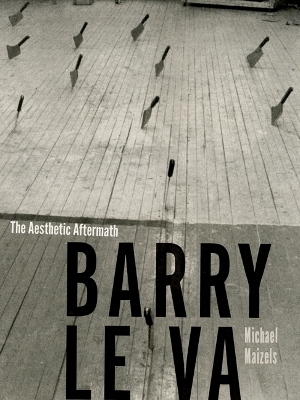
For Michael Maizels, Le Va’s work constitutes a particularly productive subject of inquiry because it clearly articulates the interconnection between the avant-garde’s distrust of autonomous art objects, two decades of social unrest, the emergence of information theory, and lingering notions of scientific objectivity. Barry Le Va: The Aesthetic Aftermath explores how Le Va used such materials as shattered glass, spent bullets, sound recordings, scattered flour, and meat cleavers embedded in a floor to challenge the interlocking assumptions behind blind faith in lasting beauty, just government, and perfectible knowledge. Taking inspiration from popular crime novels as well as contemporary art theory, Le Va charged his viewers to attempt, like detectives at a crime scene, to decipher an order underlying the apparent chaos.
Le Va’s installations were designed to erode not simply the presumed autonomy of the art object but also the economic and political authority of the art establishment. In his concluding chapter, Maizels looks at the more fixed work of the past two decades in which Le Va turned to architectural themes and cast concrete to probe the limits of dynamism and the idea of permanence.
Le Va's installations were designed to erode the economic and political
authority of the art establishment. Michael Maizels explores how Le Va
challenged the interlocking assumptions behind blind faith in lasting beauty,
just government, and perfectible knowledge.
Of the conceptual artists who began their careers in the 1960s and 1970s-Bruce Nauman, Chris Burden, Vito Acconci, and Mel Bochner among them-Barry Le Va may be the most elusive. As this first study of his work reveals, his rigorously planned art was instigated to mask its creator’s intentions and methods, presenting itself as an “aftermath” of modernism’s claim to permanency and civil society’s preferred mode of monumentalism.
For Michael Maizels, Le Va’s work constitutes a particularly productive subject of inquiry because it clearly articulates the interconnection between the avant-garde’s distrust of autonomous art objects, two decades of social unrest, the emergence of information theory, and lingering notions of scientific objectivity. Barry Le Va: The Aesthetic Aftermath explores how Le Va used such materials as shattered glass, spent bullets, sound recordings, scattered flour, and meat cleavers embedded in a floor to challenge the interlocking assumptions behind blind faith in lasting beauty, just government, and perfectible knowledge. Taking inspiration from popular crime novels as well as contemporary art theory, Le Va charged his viewers to attempt, like detectives at a crime scene, to decipher an order underlying the apparent chaos.
Le Va’s installations were designed to erode not simply the presumed autonomy of the art object but also the economic and political authority of the art establishment. In his concluding chapter, Maizels looks at the more fixed work of the past two decades in which Le Va turned to architectural themes and cast concrete to probe the limits of dynamism and the idea of permanence.
Michael Maizels earned his PhD in art history from the University of Virginia. He is Mellon New Media Curator/Lecturer at the Davis Museum of Wellesley College.
Contents
Introduction: The Clues Left Behind
1. Violence and Sculpture
2. Can the Mystery Be Solved?
3. Measure, Mind, and Matter
4. The Built Environment
5. The Aftermath, Again
Epilogue: Minor Saint of Postminimalism
Acknowledgments
Notes
Index
| Zusatzinfo | 53 |
|---|---|
| Verlagsort | Minnesota |
| Sprache | englisch |
| Maße | 152 x 203 mm |
| Themenwelt | Kunst / Musik / Theater ► Kunstgeschichte / Kunststile |
| Kunst / Musik / Theater ► Malerei / Plastik | |
| ISBN-10 | 0-8166-9468-0 / 0816694680 |
| ISBN-13 | 978-0-8166-9468-6 / 9780816694686 |
| Zustand | Neuware |
| Informationen gemäß Produktsicherheitsverordnung (GPSR) | |
| Haben Sie eine Frage zum Produkt? |
Mehr entdecken
aus dem Bereich

aus dem Bereich
kleine Kulturgeschichte einer brillanten Allianz
Buch | Softcover (2025)
Iudicium (Verlag)
CHF 33,90


