


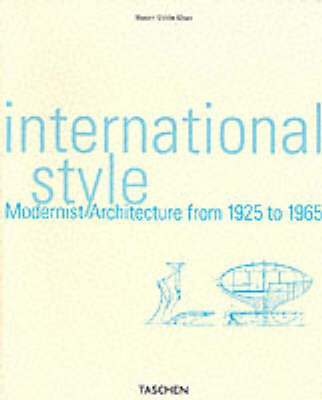
International Style
Modernist Architecture from 1925 to 1965
Seiten
2001
TASCHEN GmbH (Verlag)
978-3-8228-1229-7 (ISBN)
TASCHEN GmbH (Verlag)
978-3-8228-1229-7 (ISBN)
- Titel ist leider vergriffen;
keine Neuauflage - Artikel merken
In the 1930s, the term "International Style" came into use to describe a new form of architecture evolved from Bauhaus and its conviction that "form follows function". This book traces the evolution of the style and analyzes the ideals and realities of architectural visions of utopia.
"Modern architecture is not a new branch of an old tree - it is an altogether new shoot rising beside the old roots." Thus claimed Walter Gropius, one of the pioneers of modern architecture, on the radical departures of the 20th century. In the 1930s, the term "International Style" came into use to describe a new form of architecture evolved from Bauhaus and its conviction that "form follows function". Until the 1980s, international style set the standard in modern building, with its logical formal idiom and rational solutions to construction problems. Combining steel, glass and concrete, it established an aesthetic founded on the sheer thrill of pushing to the limits of technical and economic viability. Hence the exhilarating skylines of metropolises worldwide - but also the desolate anonymity of modern suburban environments. This book traces the evolution of a style while examining the individual and regional forms it took, and analyzes the ideals and realities of architectural visions of utopia.
"Modern architecture is not a new branch of an old tree - it is an altogether new shoot rising beside the old roots." Thus claimed Walter Gropius, one of the pioneers of modern architecture, on the radical departures of the 20th century. In the 1930s, the term "International Style" came into use to describe a new form of architecture evolved from Bauhaus and its conviction that "form follows function". Until the 1980s, international style set the standard in modern building, with its logical formal idiom and rational solutions to construction problems. Combining steel, glass and concrete, it established an aesthetic founded on the sheer thrill of pushing to the limits of technical and economic viability. Hence the exhilarating skylines of metropolises worldwide - but also the desolate anonymity of modern suburban environments. This book traces the evolution of a style while examining the individual and regional forms it took, and analyzes the ideals and realities of architectural visions of utopia.
| Erscheint lt. Verlag | 30.3.2001 |
|---|---|
| Reihe/Serie | Architecture & Design S. |
| Zusatzinfo | 290 illustrations |
| Verlagsort | Cologne |
| Sprache | englisch |
| Maße | 242 x 300 mm |
| Gewicht | 1185 g |
| Themenwelt | Kunst / Musik / Theater ► Kunstgeschichte / Kunststile |
| Technik ► Architektur | |
| ISBN-10 | 3-8228-1229-3 / 3822812293 |
| ISBN-13 | 978-3-8228-1229-7 / 9783822812297 |
| Zustand | Neuware |
| Informationen gemäß Produktsicherheitsverordnung (GPSR) | |
| Haben Sie eine Frage zum Produkt? |
Mehr entdecken
aus dem Bereich

aus dem Bereich
kleine Kulturgeschichte einer brillanten Allianz
Buch | Softcover (2025)
Iudicium (Verlag)
CHF 33,90


