


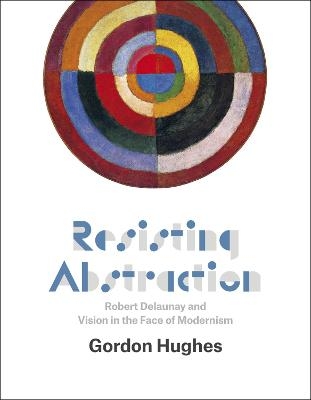
Resisting Abstraction
Robert Delaunay and Vision in the Face of Modernism
Seiten
2014
University of Chicago Press (Verlag)
978-0-226-15906-5 (ISBN)
University of Chicago Press (Verlag)
978-0-226-15906-5 (ISBN)
- Titel z.Zt. nicht lieferbar
- Versandkostenfrei
- Auch auf Rechnung
- Artikel merken
Robert Delaunay was one of the leading artists working in Paris in the early decades of the twentieth century, and his paintings have been admired ever since as among the earliest purely abstract works. This study mounts a powerful argument that Delaunay was not only one of the earliest artists to tackle abstraction.
Robert Delaunay was one of the leading artists working in Paris in the early decades of the twentieth century, and his paintings have been admired ever since as among the earliest purely abstract works. With Resisting Abstraction, the first English-language study of Delaunay in more than thirty years, Gordon Hughes mounts a powerful argument that Delaunay was not only one of the earliest artists to tackle abstraction, but the only artist to present his abstraction as a response to new scientific theories of vision. The colorful, optically driven canvases that Delaunay produced, Hughes shows, set him apart from the more ethereal abstraction of contemporaries like Kandinsky, Mondrian, Kazimir Malevich, and Frantisek Kupka. In fact, Delaunay emphatically rejected the spiritual motivations and idealism of that group, rooting his work instead in contemporary science and optics. Thus he set the stage not only for the modern artists who would follow, but for the critics who celebrated them as well.
Robert Delaunay was one of the leading artists working in Paris in the early decades of the twentieth century, and his paintings have been admired ever since as among the earliest purely abstract works. With Resisting Abstraction, the first English-language study of Delaunay in more than thirty years, Gordon Hughes mounts a powerful argument that Delaunay was not only one of the earliest artists to tackle abstraction, but the only artist to present his abstraction as a response to new scientific theories of vision. The colorful, optically driven canvases that Delaunay produced, Hughes shows, set him apart from the more ethereal abstraction of contemporaries like Kandinsky, Mondrian, Kazimir Malevich, and Frantisek Kupka. In fact, Delaunay emphatically rejected the spiritual motivations and idealism of that group, rooting his work instead in contemporary science and optics. Thus he set the stage not only for the modern artists who would follow, but for the critics who celebrated them as well.
Gordon Hughes is the Mellon Assistant Professor of Art History at Rice University, the editor of Nothing But the Clouds Unchanged: Artists in World War One, and coeditor of October Files: Richard Serra.
| Sprache | englisch |
|---|---|
| Maße | 22 x 29 mm |
| Gewicht | 1077 g |
| Themenwelt | Kunst / Musik / Theater ► Kunstgeschichte / Kunststile |
| Kunst / Musik / Theater ► Malerei / Plastik | |
| ISBN-10 | 0-226-15906-X / 022615906X |
| ISBN-13 | 978-0-226-15906-5 / 9780226159065 |
| Zustand | Neuware |
| Informationen gemäß Produktsicherheitsverordnung (GPSR) | |
| Haben Sie eine Frage zum Produkt? |
Mehr entdecken
aus dem Bereich

aus dem Bereich
kleine Kulturgeschichte einer brillanten Allianz
Buch | Softcover (2025)
Iudicium (Verlag)
CHF 33,90


