


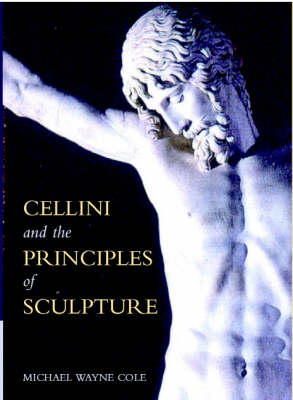
Cellini and the Principles of Sculpture
Seiten
2002
Cambridge University Press (Verlag)
978-0-521-81321-1 (ISBN)
Cambridge University Press (Verlag)
978-0-521-81321-1 (ISBN)
- Titel ist leider vergriffen;
keine Neuauflage - Artikel merken
Benvenuto Cellini is an incomparable source on the nature of art-making in sixteenth century Italy. Michael Cole's book explores Cellini the artist who worked in gold, bronze, marble, and Cellini the author, whose treatises, discourses, poems and letters remain relevant to the broader study of artistic theory today.
Benvenuto Cellini is an incomparable source on the nature of art-making in sixteenth century Italy. A practicing artist who worked in gold, bronze, marble, and on paper, he was also the author of treatises, discourses, poems and letters about his own work and the works of contemporaries. Collectively, these works show Cellini to be an authority on the reigning ideas about the virtues and properties of artists' materials, and a vivid witness to the poetically charged processes of transforming these materials into meaningful forms. In this study, Michael Cole analyzes the media in which Cellini worked as well as his theoretical writings. Examining how Cellini and those around him viewed the act of sculpture in the late Renaissance, he situates Cellini's views in the context of the history of art, science, poetics, and ethics. Cole demonstrates Cellini's continuing relevance to the broader study of artistic theory and practice in his time.
Benvenuto Cellini is an incomparable source on the nature of art-making in sixteenth century Italy. A practicing artist who worked in gold, bronze, marble, and on paper, he was also the author of treatises, discourses, poems and letters about his own work and the works of contemporaries. Collectively, these works show Cellini to be an authority on the reigning ideas about the virtues and properties of artists' materials, and a vivid witness to the poetically charged processes of transforming these materials into meaningful forms. In this study, Michael Cole analyzes the media in which Cellini worked as well as his theoretical writings. Examining how Cellini and those around him viewed the act of sculpture in the late Renaissance, he situates Cellini's views in the context of the history of art, science, poetics, and ethics. Cole demonstrates Cellini's continuing relevance to the broader study of artistic theory and practice in his time.
1. Salt, composition, and the goldsmith's intelligence; 2. Casting, blood and bronze; 3. The Ars Apollinea and the mastery of marble; 4. The design of virtue.
| Erscheint lt. Verlag | 14.10.2002 |
|---|---|
| Zusatzinfo | 8 Plates, color; 63 Halftones, unspecified; 3 Line drawings, unspecified |
| Verlagsort | Cambridge |
| Sprache | englisch |
| Maße | 179 x 259 mm |
| Gewicht | 710 g |
| Themenwelt | Kunst / Musik / Theater ► Kunstgeschichte / Kunststile |
| Kunst / Musik / Theater ► Malerei / Plastik | |
| ISBN-10 | 0-521-81321-2 / 0521813212 |
| ISBN-13 | 978-0-521-81321-1 / 9780521813211 |
| Zustand | Neuware |
| Informationen gemäß Produktsicherheitsverordnung (GPSR) | |
| Haben Sie eine Frage zum Produkt? |
Mehr entdecken
aus dem Bereich

aus dem Bereich
kleine Kulturgeschichte einer brillanten Allianz
Buch | Softcover (2025)
Iudicium (Verlag)
CHF 33,90


