


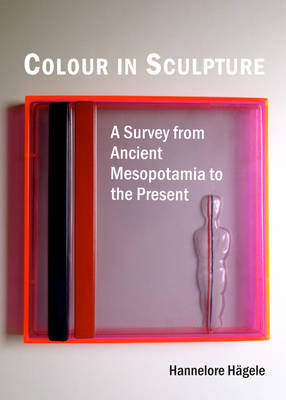
Colour in Sculpture
A Survey from Ancient Mesopotamia to the Present
Seiten
2013
|
Unabridged edition
Cambridge Scholars Publishing (Verlag)
978-1-4438-5027-8 (ISBN)
Cambridge Scholars Publishing (Verlag)
978-1-4438-5027-8 (ISBN)
This book introduces the reader to the art of sculpture across five millennia up to the present, and from the Near East to the west. In each of the eleven chapters, a number of selected works are discussed to exemplify the circumstances and conditions for making pieces of sculpture - objects peculiar to place, time and context.
This book introduces the reader to the art of sculpture across five millennia up to the present, and from the Near East to the west. In each of the eleven chapters, a number of selected works are discussed to exemplify the circumstances and conditions for making pieces of sculpture – objects peculiar to place, time and context. Within each cultural framework, characteristics are observable that suggest various reasons for the use of colour in sculpture. These encompass local preferences, customs or cultural requirements; and others point to an impulse to enhance the expression of the phenomenal. Whether colour is really necessary or even essential to sculpted works of art is a question especially pertinent since the Renaissance. Surface finishes of sculptural representations may allude to the sensory world of colour without even having pigment applied to them. What makes polychromy so special is that it functions as an overlay of another dimension that sometimes carries further encoded meaning. In nature, the colour is integral to the given object. What the present survey suggests is that the relationship between colour and sculpture is a matter of intentional expression, even where the colour is intrinsic – as in the sculptor's materials.
This book introduces the reader to the art of sculpture across five millennia up to the present, and from the Near East to the west. In each of the eleven chapters, a number of selected works are discussed to exemplify the circumstances and conditions for making pieces of sculpture – objects peculiar to place, time and context. Within each cultural framework, characteristics are observable that suggest various reasons for the use of colour in sculpture. These encompass local preferences, customs or cultural requirements; and others point to an impulse to enhance the expression of the phenomenal. Whether colour is really necessary or even essential to sculpted works of art is a question especially pertinent since the Renaissance. Surface finishes of sculptural representations may allude to the sensory world of colour without even having pigment applied to them. What makes polychromy so special is that it functions as an overlay of another dimension that sometimes carries further encoded meaning. In nature, the colour is integral to the given object. What the present survey suggests is that the relationship between colour and sculpture is a matter of intentional expression, even where the colour is intrinsic – as in the sculptor's materials.
Hannelore Hägele trained as a sculptor in Paris, Stuttgart and London before studying art history and philosophy, then obtained a PGCE. Ill-health ended her teaching career, but marked the beginning of her research in colour in sculpture. Her PhD and post-doctoral research fellowship at Cambridge have led to three books.
| Erscheint lt. Verlag | 10.10.2013 |
|---|---|
| Verlagsort | Newcastle upon Tyne |
| Sprache | englisch |
| Maße | 148 x 212 mm |
| Themenwelt | Kunst / Musik / Theater ► Malerei / Plastik |
| ISBN-10 | 1-4438-5027-6 / 1443850276 |
| ISBN-13 | 978-1-4438-5027-8 / 9781443850278 |
| Zustand | Neuware |
| Informationen gemäß Produktsicherheitsverordnung (GPSR) | |
| Haben Sie eine Frage zum Produkt? |
Mehr entdecken
aus dem Bereich


aus dem Bereich


