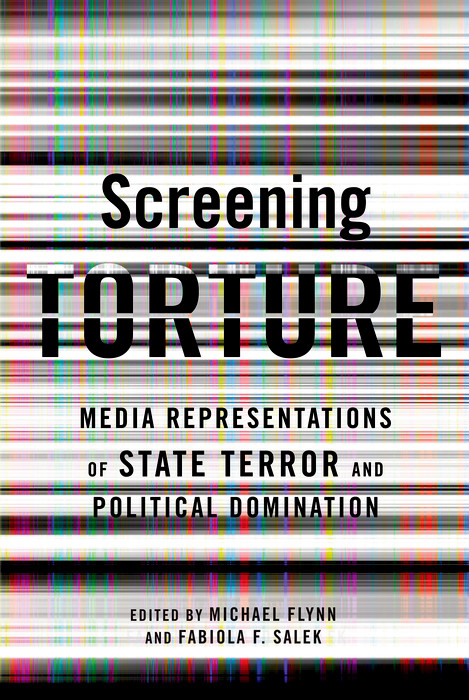
Screening Torture (eBook)
Columbia University Press (Verlag)
978-0-231-52697-5 (ISBN)
Michael Flynn is associate professor of psychology at York College, City University of New York, and associate director of the Center on Terrorism at John Jay College of Criminal Justice. He is the coeditor, with Charles B. Strozier, of Genocide, War, and Human Survival; Trauma and Self; and The Year 2000: Essays on the End; and, with David C. Brotherton, of Globalizing the Streets: Cross-Cultural Perspectives on Youth, Social Control, and Empowerment.
Fabiola F. Salek is the chair of the Department of Foreign Languages, ESL, and Humanities and coordinator of women's studies at York College, City University of New York. She is also a research fellow at the Center on Terrorism at John Jay College of Criminal Justice. Her research focuses on film and contemporary culture and their relationship to human rights, immigration, gender, and the construction of identity and nationality.
Before 9/11, films addressing torture outside of the horror/slasher genre depicted the practice in a variety of forms. In most cases, torture was cast as the act of a desperate and depraved individual, and the viewer was more likely to identify with the victim rather than the torturer. Since the terrorist attacks of September 11, 2001, scenes of brutality and torture in mainstream comedies, dramatic narratives, and action films appear for little other reason than to titillate and delight. In these films, torture is devoid of any redeeming qualities, represented as an exercise in brutal senselessness carried out by authoritarian regimes and institutions.This volume follows the shift in the representation of torture over the past decade, specifically in documentary, action, and political films. It traces and compares the development of this trend in films from the United States, Europe, China, Latin America, South Africa, and the Middle East. Featuring essays by sociologists, psychologists, historians, journalists, and specialists in film and cultural studies, the collection approaches the representation of torture in film and television from multiple angles and disciplines, connecting its aesthetics and practices to the dynamic of state terror and political domination.
Michael Flynn is associate professor of psychology at York College, City University of New York, and associate director of the Center on Terrorism at John Jay College of Criminal Justice. He is the coeditor, with Charles B. Strozier, of Genocide, War, and Human Survival; Trauma and Self; and The Year 2000: Essays on the End; and, with David C. Brotherton, of Globalizing the Streets: Cross-Cultural Perspectives on Youth, Social Control, and Empowerment.Fabiola F. Salek is the chair of the Department of Foreign Languages, ESL, and Humanities and coordinator of women's studies at York College, City University of New York. She is also a research fellow at the Center on Terrorism at John Jay College of Criminal Justice. Her research focuses on film and contemporary culture and their relationship to human rights, immigration, gender, and the construction of identity and nationality.
Screening Torture: An IntroductionPart I. Torture and the Implications of Masculinity1. Countering the Jack Bauer Effect: An Examination of How to Limit the Influence of TV's Most Popular, and Most Brutal, Hero2. Mel Gibson's Tortured Heroes: From the Symbolic Function of Blood to Spectacles of Pain3. It's a Perfect World: Torture, Confession, and SacrificePart II. Torture and the Sadomasochistic Impulse4. Lust, Caution: Torture, Sex, and Passion in Chinese Cinema5. The Art of Photogenic Torture6. Beyond Susan Sontag: The Seduction of Psychological Torture7. Stanley Kubrick's A Clockwork Orange as Art Against TorturePart III. Confronting the Legacies of Torture and State Terror8. "Accorded a Place in the Design": Torture in Post-Apartheid Cinema9. Confessing Without Regret: An Israeli Film GenrePart IV. Torture and the Shortcomings of Film10. Movies of Modern Torture as Convenient Truths11. Torture at the Limit of Politics12. Doing Torture in Film: Confronting Ambiguity and Ambivalence13. Documenting the Documentaries on Abu Ghraib: Facts Versus DistortionList of ContributorsIndex
| Erscheint lt. Verlag | 18.9.2012 |
|---|---|
| Zusatzinfo | <B>Color Photos: </B>17, |
| Verlagsort | New York |
| Sprache | englisch |
| Themenwelt | Kunst / Musik / Theater ► Film / TV |
| Kunst / Musik / Theater ► Theater / Ballett | |
| Recht / Steuern ► EU / Internationales Recht | |
| Recht / Steuern ► Öffentliches Recht ► Verfassungsrecht | |
| Recht / Steuern ► Strafrecht ► Besonderes Strafrecht | |
| Sozialwissenschaften ► Kommunikation / Medien ► Medienwissenschaft | |
| Sozialwissenschaften ► Pädagogik | |
| Sozialwissenschaften ► Politik / Verwaltung | |
| Sozialwissenschaften ► Soziologie | |
| ISBN-10 | 0-231-52697-0 / 0231526970 |
| ISBN-13 | 978-0-231-52697-5 / 9780231526975 |
| Informationen gemäß Produktsicherheitsverordnung (GPSR) | |
| Haben Sie eine Frage zum Produkt? |
 PDF (Wasserzeichen)
Größe: 5,1 MB
DRM: Digitales Wasserzeichen
Dieses eBook enthält ein digitales Wasserzeichen und ist damit für Sie personalisiert. Bei einer missbräuchlichen Weitergabe des eBooks an Dritte ist eine Rückverfolgung an die Quelle möglich.
Dateiformat: PDF (Portable Document Format)
Mit einem festen Seitenlayout eignet sich die PDF besonders für Fachbücher mit Spalten, Tabellen und Abbildungen. Eine PDF kann auf fast allen Geräten angezeigt werden, ist aber für kleine Displays (Smartphone, eReader) nur eingeschränkt geeignet.
Systemvoraussetzungen:
PC/Mac: Mit einem PC oder Mac können Sie dieses eBook lesen. Sie benötigen dafür einen PDF-Viewer - z.B. den Adobe Reader oder Adobe Digital Editions.
eReader: Dieses eBook kann mit (fast) allen eBook-Readern gelesen werden. Mit dem amazon-Kindle ist es aber nicht kompatibel.
Smartphone/Tablet: Egal ob Apple oder Android, dieses eBook können Sie lesen. Sie benötigen dafür einen PDF-Viewer - z.B. die kostenlose Adobe Digital Editions-App.
Buying eBooks from abroad
For tax law reasons we can sell eBooks just within Germany and Switzerland. Regrettably we cannot fulfill eBook-orders from other countries.
 EPUB (Adobe DRM)
Kopierschutz: Adobe-DRM
Adobe-DRM ist ein Kopierschutz, der das eBook vor Mißbrauch schützen soll. Dabei wird das eBook bereits beim Download auf Ihre persönliche Adobe-ID autorisiert. Lesen können Sie das eBook dann nur auf den Geräten, welche ebenfalls auf Ihre Adobe-ID registriert sind.
Details zum Adobe-DRM
Dateiformat: EPUB (Electronic Publication)
EPUB ist ein offener Standard für eBooks und eignet sich besonders zur Darstellung von Belletristik und Sachbüchern. Der Fließtext wird dynamisch an die Display- und Schriftgröße angepasst. Auch für mobile Lesegeräte ist EPUB daher gut geeignet.
Systemvoraussetzungen:
PC/Mac: Mit einem PC oder Mac können Sie dieses eBook lesen. Sie benötigen eine
eReader: Dieses eBook kann mit (fast) allen eBook-Readern gelesen werden. Mit dem amazon-Kindle ist es aber nicht kompatibel.
Smartphone/Tablet: Egal ob Apple oder Android, dieses eBook können Sie lesen. Sie benötigen eine
Geräteliste und zusätzliche Hinweise
Buying eBooks from abroad
For tax law reasons we can sell eBooks just within Germany and Switzerland. Regrettably we cannot fulfill eBook-orders from other countries.
aus dem Bereich