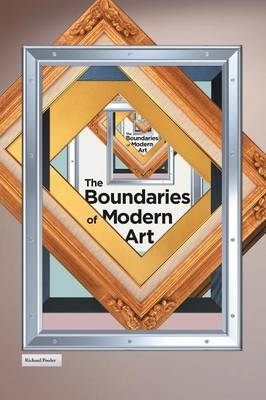
The Boundaries of Modern Art
Arena Books (Verlag)
978-1-909421-01-1 (ISBN)
- Keine Verlagsinformationen verfügbar
- Artikel merken
'Conceptual art in the Western world is in crisis.' That is the view of many people who are disillusioned with what they regard as its attention-seeking antics, where artists themselves have proudly proclaimed 'the death of art'. Why has art been on this road to destruction, and how did it get there? How does one make sense of the bewildering complexity of Conceptual art, and how does one extract meaning from its diverse and sometimes bizarre manifestations? This predicament needs explanation, and an exploration of the theoretical underpinnings of modern and contemporary art, and a means to evaluate it. This book starts with a summarised overview of the major art movements since the beginning of the twentieth century, a tracing of the extraordinary journey that art has followed in modern times. The next part considers contemporary art movements, to explore whether they have value, and how that value can be determined. Are the activities that take place in the name of art actually art? Or, as some would have it, is it a gigantic sham, manipulated by clowns to make a trap for fools?
To some, it is an outrage that modern and contemporary artists can splash paint around quickly and freely, with a modicum of skill, or assemble a range of found objects, and regard themselves as gifted and creative artists. Others see this as a new, forward-rolling wave, with art at last released from the suffocation and restrictions of the past. The rules have been cast aside. There are fresh ways of exploring and seeing the world, and expressing it freely. The world is constantly changing, and art must change with it. Modern art has followed a long journey. Traditions have been largely cast aside, and replaced with an unceasing search for the new. Our apparent progress is now being questioned. Where do we go from here? Are we on the right road? The second half of this book discusses how we can make sense of contemporary art and assign value to an artwork. Traditional painting and sculpture have physical limits, Conceptual art does not. This is a new freedom - but is it freedom for art, or freedom from art?
Richard Pooler obtained several degrees from the University of Cape Town, studying philosophy with an interest in philosophical aesthetics. His work is presently focused on the writings of Leonardo da Vinci, and a study of his Treatise of Painting, and his lost manuscripts. He has worked in the publishing industry all his life, editing and writing educational and general books. His hobby and major interest is in watercolour painting, and he has held several joint and one-man exhibitions. He lives in Cape Town, and is married with four children, and an increasing number of grandchildren.
Introduction 9; PART I; Art Movements Since 1900; 1 Art Nouveau 17; 2 Fauvists 19; 3 German Expressionism 22; 4 Cubism 23; 5 Futurism 25; 6 Orphism 26; 7 Synchromism 27; 8 Vorticism 27; 9 Dada 28; 10 Purism 30; 11 Art Deco 31; 12 Streamline Moderne 31; 13 Surrealism 32; 14 Suprematism 34; 15 Constructivism 34; 16 De Stijl 35; 17 Bauhaus 36; 18 Social Realism 37; 19 Socialist Realism 38; 20 Abstract Expressionism 39; 21 Abstraction 42; 22 Kinetic Art 42; 23 Assemblage Art 44; 24 Op Art 45; 25 Pop Art 46; 26 Minimalism 47; 27 American Lyrical Abstraction - Neo Expressionism 49; 28 Fluxus 50; 29 Process Art 52; 30 Institutional Critique 00; PART II; Conceptual Art; 31 Ready-Mades and Found Objects 54; 32 Installation Art 57; 33 Lowbrow Art - Pop Surrealism - Conceptual Realism 58; 34 Media Based Art 58; 35 Performance Art 60; 36 Non-Visual Art 62; 37 Sound Art 63; 38 Air Art 63; 39 Site Specific Art and Land Art 64; 40 Photography as Art 65; 41 Conceptual Art and Controversy 66; 42 Hyper-Realism or Photorealism 67; 43 Stuckism 68; 44 Outsider Art 69; PART III; Conceptual Art Revisited; 45 Art as Conceptual Metaphor 75; 46 Art and Language 77; 47 The Art Critic 80; 48 Intention 83; 49 Identity in Art 85; 50 Categories in Art 87; 51 The Description and Classification of Aesthetic Properties 91; PART IV; The Value of Art; 52 Added Value through Interpretation 93; 53 Value Derived from Pleasure 94; 54 Value Derived from Beauty 95; 55 The Value of Art as a Source of Knowledge 97; 56 The Value of Emotion in Art 98; 57 Art and its Value as Social Commentary 100; 58 Art and Commercial Value 101; 59 Value as Defined by Experts 103; 60 Art and the Value of a Tradition or Movement 105; 61 Value in Excellence 106; 62 Value in the Search for the New 107; 63 Value in Art and the Test of Time 110; 64 Value of Art as Entertainment 111; 65 Evaluating Art 112; 66 Aesthetic and Objective Value 116; 67 Art and Aesthetic Feeling 116; 68 Aesthetic Feeling from Direct Experience 117; 69 Aesthetic Experience and Intrinsic Value 118; 70 Aesthetic Properties in Artworks 119; 71 The Search for Balance 121; Postmodernity; 72 What Next? 130; Selected Bibliography 131; Index 133; Illustrated examples of modern art will be found between pages 74 and 75.
| Erscheint lt. Verlag | 4.2.2013 |
|---|---|
| Zusatzinfo | 1, black & white illustrations |
| Verlagsort | Bury St Edmunds |
| Sprache | englisch |
| Maße | 156 x 234 mm |
| Gewicht | 234 g |
| Themenwelt | Kunst / Musik / Theater ► Kunstgeschichte / Kunststile |
| ISBN-10 | 1-909421-01-4 / 1909421014 |
| ISBN-13 | 978-1-909421-01-1 / 9781909421011 |
| Zustand | Neuware |
| Informationen gemäß Produktsicherheitsverordnung (GPSR) | |
| Haben Sie eine Frage zum Produkt? |
aus dem Bereich