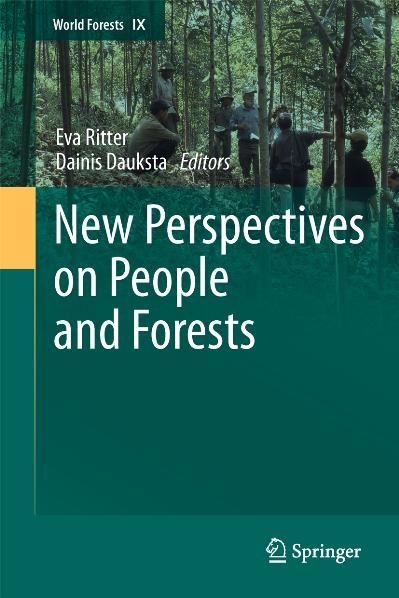
New Perspectives on People and Forests (eBook)
250 Seiten
Springer Netherland (Verlag)
978-94-007-1150-1 (ISBN)
The aim of this book is to elucidate the role of forests as part of a landscape in the life of people. Most landscapes today are cultural landscapes that are influenced by human activity and that in turn have a profound effect on our understanding of and identification with a place. The book proposes that a better understanding of the bond between people and forests as integrated part of a landscape may be helpful in landscape planning, and may contribute to the discussion of changes in forest cover which has been motivated by land use changes, rural development and the global climate debate. To this end, people’s perception of forest landscapes, the reasons for different perceptions, and future perspectives are discussed.
Given the wide range of forest landscapes, and cultural perspectives which exist across the world, the book focuses on Europe as a test case to explore the various relationships between society, culture, forests and landscapes. It looks at historical evidence of the impacts of people on forests and vice versa, explores the current factors affecting people’s physical and emotional comfort in forest landscapes, and looks ahead to how changes in forest cover may alter the present relationships of people to forests.
Drawing together a diverse literature and combining the expertise of natural and social scientists, this book will form a valuable reference for students and researchers working in the fields of landscape ecology and landscape architecture, geography, social science, environmental psychology orenvironmental history. It will also be of interest to researchers, government agencies and practitioners with an interest in issues such as sustainable forest management, sustainable tourism, reserve management, urban planning and environmental interpretation.
The aim of this book is to elucidate the role of forests as part of a landscape in the life of people. Most landscapes today are cultural landscapes that are influenced by human activity and that in turn have a profound effect on our understanding of and identification with a place. The book proposes that a better understanding of the bond between people and forests as integrated part of a landscape may be helpful in landscape planning, and may contribute to the discussion of changes in forest cover which has been motivated by land use changes, rural development and the global climate debate. To this end, people's perception of forest landscapes, the reasons for different perceptions, and future perspectives are discussed. Given the wide range of forest landscapes, and cultural perspectives which exist across the world, the book focuses on Europe as a test case to explore the various relationships between society, culture, forests and landscapes. It looks at historical evidence of the impacts of people on forests and vice versa, explores the current factors affecting people's physical and emotional comfort in forest landscapes, and looks ahead to how changes in forest cover may alter the present relationships of people to forests. Drawing together a diverse literature and combining the expertise of natural and social scientists, this book will form a valuable reference for students and researchers working in the fields of landscape ecology and landscape architecture, geography, social science, environmental psychology orenvironmental history. It will also be of interest to researchers, government agencies and practitioners with an interest in issues such as sustainable forest management, sustainable tourism, reserve management, urban planning and environmental interpretation.
New Perspectives on People and Forests 4
Preface 6
Contents 12
About the Authors 14
Contributors 18
Part I 20
Chapter 1: Introduction – The Crooked Timber of Humanity 21
References 27
Chapter 2: Forests in Landscapes – The Myth of Untouched Wilderness 29
2.1 People and Forests in Prehistoric Times 30
2.1.1 Hunter-Gatherers in Europe 30
2.1.2 The Mid-Holocene Elm Decline 31
2.1.3 The Great Transition 33
2.1.4 Early Agricultural Impacts on Forests 34
2.2 Forest Development in Historical Times 35
2.2.1 The Great Deforestation of the Ancient World 35
2.2.2 Impacts on Forests in Northern and Central Europe 37
2.2.3 Forest Protection and Forest Expansion 40
2.3 Conclusion 42
References 43
Chapter 3: Overcoming Physicophobia – Forests as the Sacred Source of Our Human Origins 46
3.1 The Forest as Nothing More than Useful 47
3.2 Rousseau: Friend of the Forest 47
3.2.1 The Demystification of the Forest 48
3.2.2 The “Savage Man” 49
3.3 Nietzsche and the Sacredness of Nature 51
3.3.1 Nietzsche’s Criticism of Modernity 51
3.3.2 Nietzsche’s “Religious” Experience 52
3.4 Conclusion 55
References 55
Part II 56
Chapter 4: Royal Forests – Hunting and Other Forest Use in Medieval England 57
4.1 Forests as Game Reserves 57
4.1.1 The Location of Forests 58
4.1.2 Forest Rights and Administration 60
4.2 Medieval Hunting 62
4.2.1 Anglo-Saxon Hunting and Game Reserves 62
4.2.2 Medieval Hunting Methods 65
4.2.3 Hunting Iconography in Medieval Literature 66
4.3 The Use of Other Forest Resources 67
4.3.1 Forest Pasture 68
4.3.2 Other Forest Products 69
4.4 The Decline of the Forests 70
4.5 Hunting in Post-medieval Times 72
4.6 Conclusion 73
Relevant Manuscripts 73
References 73
Chapter 5: Forests as Commons – Changing Traditions and Governance in Europe 76
5.1 Introduction to the Commons 76
5.2 History of Forests as Commons in Europe 78
5.2.1 Northwestern Europe and the Alps 78
5.2.2 Southern Europe 79
5.2.3 United Kingdom 80
5.3 How the Role and Use of Forests is Changing 82
5.4 The Relationship Between People and Forest Commons 84
5.5 Conclusion 86
References 87
Chapter 6: New Forest Owners – Small-Scale Forestry and Changes in Forest Ownership 90
6.1 What is Small-Scale Forestry? 90
6.2 Characteristics of Small-Scale Forests 91
6.3 Owners of Small-Scale Forests 93
6.3.1 Ownership Structure 93
6.3.2 Objectives of Small-Scale Forest Owners 94
6.4 Nature of Small-Scale Forests 95
6.5 Consequences of the Changing Ownership Structure 96
6.5.1 Forest Fragmentation 96
6.5.2 Recreation and Access 97
6.5.3 Timber Production 97
6.5.4 Nature Conservation 98
6.6 Conclusion 99
References 99
Chapter 7: Forests and Recreation – New Functions of Afforestation as Seen in Denmark 102
7.1 Forest Recreation: A Policy Perspective 103
7.2 Forest Use in Denmark 104
7.3 Afforestation: Creation of Recreation Opportunities 106
7.4 Conclusion 108
References 109
Part III 111
Chapter 8: From Post to Pillar – The Development and Persistence of an Arboreal Metaphor 112
8.1 The Wooden Post in Prehistory and the Growth of Symbols 112
8.1.1 Timber Circles 113
8.1.2 Celtic and La Tène Sites 115
8.2 The Layering of Connected Symbols 117
8.2.1 The Anthropomorphic Tree 117
8.2.2 The Lopped Tree, the Axe and the Thunder God 118
8.2.3 The Maypole 122
8.3 The Classical Column 123
8.4 Two Modern Vestiges of the Sacred Pillar 126
8.5 Conclusion 128
References 129
Chapter 9: Landscape Painting and the Forest – The Influence of Cultural Factors in the Depiction of Trees and Forests 131
9.1 Medieval Symbolic and Factual Landscapes 132
9.1.1 Symbols of Christ, Crucifixion and Redemption 132
9.1.2 Perspective, Nature and Classical Mythology 134
9.1.3 Hunting, Forestry and Country Life 136
9.2 Poetic Landscapes as Concept 137
9.3 New Symbolic and Factual Landscapes 138
9.4 Modern Transcendentalism and Symbolism 142
9.4.1 David Jones a Coalescence of Ancient Themes
9.4.2 Modern Symbolism: Irony, the Sacred and the Secular 146
9.5 Conclusion 147
References 148
Chapter 10: Space and Place – Popular Perceptions of Forests 150
10.1 Space and Place 151
10.1.1 A Range of Perceptions, a Range of Perspectives 151
10.1.2 Understanding Popular Perceptions of Forests 153
10.2 Forests in the Landscape and the Popular Imagination 156
10.2.1 Changing Meanings, Changing Contexts 156
10.2.2 Forests as Places Apart 158
10.3 The Cultural Distinctiveness of Forests 161
10.3.1 Floral and Faunal Cultures 161
10.3.2 Everyday Cultures 162
10.4 Conclusions: Persistences and Reimaginings 165
References 166
Chapter 11: Materiality and Identity – Forests, Trees and Senses of Belonging 170
11.1 Introduction 170
11.2 Identity 171
11.3 Forests, Identity and Place 173
11.3.1 Forests as Material Places of Becoming 173
11.3.2 Forests of Places of (Sensed) Dwelling 174
11.4 Forests and Practices of Identities 175
11.4.1 Global Sense of Identity 176
11.4.2 National Sense of Identity 177
11.4.3 Regional Sense of Identity 179
11.4.4 Local and Individual Sense of Identity 180
11.5 Complex and Contested Identities 181
11.5.1 Forests as Spaces of Otherness 181
11.5.2 Forests as Places to Lose Identity 183
11.5.3 Forests as Places to Find Identity 184
11.5.4 Forests: Gender and Identity 184
11.6 Conclusion 185
References 186
Chapter 12: Definitions and Concepts – The Etymology and Use of the Terms Forest and Landscape 189
12.1 The Use of Concepts 189
12.2 Forest 190
12.2.1 Etymology 190
12.2.2 Present Use 191
12.3 Landscape 194
12.3.1 Etymology 194
12.3.2 Present Use 196
12.4 Conclusion 198
References 198
Part IV 201
Chapter 13: Tree Use and Landscape Changes – Development of a Woodland Area in Sweden 202
13.1 The Area of Bråbygden 202
13.2 Tree Species in the Bråbygden Area 205
13.2.1 The Natural Tree Vegetation 205
13.2.2 The Function and Use of Tree Species 206
13.3 Human Impact on Forests, Trees and the Landscape 207
13.3.1 Grazing and Browsing 207
13.3.2 Forest Fires and Slash-and-Burn Cultivation 208
13.3.3 Tar Distillation and Charcoal Production 209
13.3.4 Pollards and Leaf-Fodder Harvesting 209
13.3.5 Population Growth 210
13.4 Landscape Development During Medieval Times 210
13.5 Landscape Development Since the Eighteenth Century 212
13.5.1 Forest Description and Forest Functions 212
13.5.2 Landscape Development 214
13.5.3 Land Use Changes During the Twentieth Century 217
13.6 Some Thoughts About the Future 217
References 219
Chapter 14: Forest Landscapes in Europe – Visual Characteristics and the Role of Arboriculture 220
14.1 Landscape Perception and Analysis 220
14.1.1 Landscape Perception and Preferences 220
14.1.2 Concepts of Landscape Analysis 221
14.2 Visual Landscape Characteristics 223
14.2.1 Degree of Openness 225
14.2.2 Complexity and Contrast 230
14.3 Tree Use and Landscape Development 231
14.4 Aesthetics in Landscape Management 233
14.5 Conclusion 234
References 235
Part V 239
Chapter 15: Conclusion – Towards a Symbiotic Relationship 240
15.1 Contradicting Forest Values 240
15.2 Changing Attitudes and Relationships 243
15.3 Future Perspectives 245
Index 247
| Erscheint lt. Verlag | 29.4.2011 |
|---|---|
| Reihe/Serie | World Forests | World Forests |
| Zusatzinfo | XVIII, 250 p. |
| Verlagsort | Dordrecht |
| Sprache | englisch |
| Themenwelt | Literatur ► Biografien / Erfahrungsberichte |
| Kunst / Musik / Theater | |
| Geisteswissenschaften ► Geschichte ► Hilfswissenschaften | |
| Geisteswissenschaften ► Psychologie ► Sozialpsychologie | |
| Naturwissenschaften ► Biologie ► Botanik | |
| Naturwissenschaften ► Biologie ► Ökologie / Naturschutz | |
| Naturwissenschaften ► Geowissenschaften ► Geografie / Kartografie | |
| Sozialwissenschaften ► Politik / Verwaltung | |
| Technik | |
| Schlagworte | forests • human ecology • Landscape develoopment • Landscape/Regional and Urban Planning • Perceptions • Trees |
| ISBN-10 | 94-007-1150-6 / 9400711506 |
| ISBN-13 | 978-94-007-1150-1 / 9789400711501 |
| Informationen gemäß Produktsicherheitsverordnung (GPSR) | |
| Haben Sie eine Frage zum Produkt? |
 PDF (Wasserzeichen)
Größe: 7,9 MB
DRM: Digitales Wasserzeichen
Dieses eBook enthält ein digitales Wasserzeichen und ist damit für Sie personalisiert. Bei einer missbräuchlichen Weitergabe des eBooks an Dritte ist eine Rückverfolgung an die Quelle möglich.
Dateiformat: PDF (Portable Document Format)
Mit einem festen Seitenlayout eignet sich die PDF besonders für Fachbücher mit Spalten, Tabellen und Abbildungen. Eine PDF kann auf fast allen Geräten angezeigt werden, ist aber für kleine Displays (Smartphone, eReader) nur eingeschränkt geeignet.
Systemvoraussetzungen:
PC/Mac: Mit einem PC oder Mac können Sie dieses eBook lesen. Sie benötigen dafür einen PDF-Viewer - z.B. den Adobe Reader oder Adobe Digital Editions.
eReader: Dieses eBook kann mit (fast) allen eBook-Readern gelesen werden. Mit dem amazon-Kindle ist es aber nicht kompatibel.
Smartphone/Tablet: Egal ob Apple oder Android, dieses eBook können Sie lesen. Sie benötigen dafür einen PDF-Viewer - z.B. die kostenlose Adobe Digital Editions-App.
Buying eBooks from abroad
For tax law reasons we can sell eBooks just within Germany and Switzerland. Regrettably we cannot fulfill eBook-orders from other countries.
aus dem Bereich