


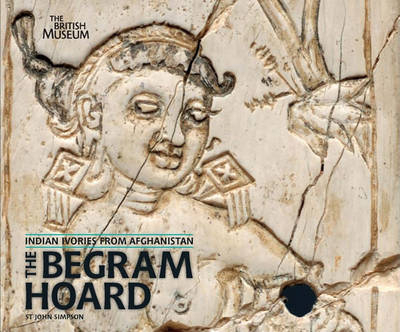
The Begram Hoard
Indian Ivories from Afghanistan
Seiten
2011
British Museum Press (Verlag)
978-0-7141-1178-0 (ISBN)
British Museum Press (Verlag)
978-0-7141-1178-0 (ISBN)
- Titel ist leider vergriffen;
keine Neuauflage - Artikel merken
Features furniture inlays, carved in the 1st century AD, that were discovered in the 1930s by French archaeologists in the ancient city of Begram, north of Kabul. This title presents the hoarded treasure of the Kushan rulers which are some of the most important antiquities ever discovered in Afghanistan.
These beautiful furniture inlays, carved in the 1st century AD, were discovered in the 1930s by French archaeologists in the ancient city of Begram, north of Kabul. In two strong-rooms hidden at the heart of a palace in the Kushan summer capital of Kapisi lay a wealth of luxury goods: bronzes and glassware from Roman Egypt, lacquered bowls from China and over a thousand ivory and bone inlays that were originally attached to wooden furniture. This spectacular collection of objects probably represents the hoarded treasure of the Kushan rulers and they are some of the most important antiquities ever discovered in Afghanistan. The ivories feature an array of motifs, styles and themes: young women with elaborate jewellery and hairstyles are seen dancing or simply lounging sensuously in their private quarters; around them, mythical beasts, wildlife and foliage are rendered in exquisite detail. The ivories are Indian, but controversy over their exact origin and date continues, and the fragile nature of ivory means that very few pieces like these have been found to provide close comparison.
Feared lost for many years after the outbreak of war in Afghanistan in 1979, these ivories have at last been recovered and, restored to their former glory, will be returning to Kabul.
These beautiful furniture inlays, carved in the 1st century AD, were discovered in the 1930s by French archaeologists in the ancient city of Begram, north of Kabul. In two strong-rooms hidden at the heart of a palace in the Kushan summer capital of Kapisi lay a wealth of luxury goods: bronzes and glassware from Roman Egypt, lacquered bowls from China and over a thousand ivory and bone inlays that were originally attached to wooden furniture. This spectacular collection of objects probably represents the hoarded treasure of the Kushan rulers and they are some of the most important antiquities ever discovered in Afghanistan. The ivories feature an array of motifs, styles and themes: young women with elaborate jewellery and hairstyles are seen dancing or simply lounging sensuously in their private quarters; around them, mythical beasts, wildlife and foliage are rendered in exquisite detail. The ivories are Indian, but controversy over their exact origin and date continues, and the fragile nature of ivory means that very few pieces like these have been found to provide close comparison.
Feared lost for many years after the outbreak of war in Afghanistan in 1979, these ivories have at last been recovered and, restored to their former glory, will be returning to Kabul.
| Erscheint lt. Verlag | 21.3.2011 |
|---|---|
| Zusatzinfo | 62 colour illustrations |
| Verlagsort | London |
| Sprache | englisch |
| Gewicht | 280 g |
| Themenwelt | Kunst / Musik / Theater ► Kunstgeschichte / Kunststile |
| Kunst / Musik / Theater ► Malerei / Plastik | |
| ISBN-10 | 0-7141-1178-3 / 0714111783 |
| ISBN-13 | 978-0-7141-1178-0 / 9780714111780 |
| Zustand | Neuware |
| Informationen gemäß Produktsicherheitsverordnung (GPSR) | |
| Haben Sie eine Frage zum Produkt? |
Mehr entdecken
aus dem Bereich

aus dem Bereich
kleine Kulturgeschichte einer brillanten Allianz
Buch | Softcover (2025)
Iudicium (Verlag)
CHF 33,90


