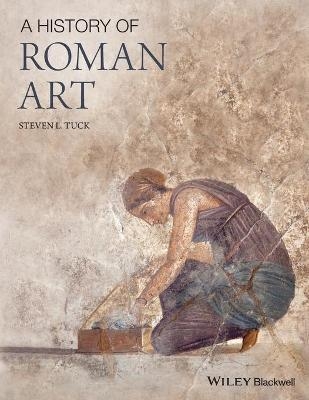
A History of Roman Art
Wiley-Blackwell (Verlag)
978-1-4443-3026-7 (ISBN)
- Titel erscheint in neuer Auflage
- Artikel merken
Extensively illustrated with 375 color photographs and line drawings
Broadly defines Roman art to include the various cultures that contributed to the Roman system
Focuses throughout on the overarching themes of Rome's cultural inclusiveness and art's important role in promoting Roman values
Discusses a wide range of Roman painting, mosaic, sculpture, and decorative arts, as well as architecture and associated sculptures within the cultural contexts they were created and developed
Offers helpful and instructive pedagogical features for students, such as timelines; key terms defined in margins; a glossary; sidebars with key lessons and explanatory material on artistic technique, stories, and ancient authors; textboxes on art and literature, art from the provinces, and important scholarly perspectives; and primary sources in translation
A book companion website is available at www.wiley.com/go/romanart with the following resources: PowerPoint slides, glossary, and timeline
Steven Tuck is the 2014 recipient of the American Archaeological Association's Excellence in Undergraduate Teaching Award.
Steven L. Tuck is Professor and Chair of Classics at Miami University. In 2012, he received the E. Phillips Knox award, Miami University's highest honor for innovative and effective undergraduate teaching. He is the author of Latin Inscriptions in the Kelsey Museum: The Dennison and De Criscio Collections (2006).
List of Illustrations xii
Preface xxi
Note to Students xxiii
Acknowledgments xxv
Walk Through Tour xxvi
Timeline xxviii
About the Website xxxiii
1 Introduction to Roman Art History 1
Cultural Property Controversies 2
Dating Dilemmas in Roman Art History 3
Restoration Issues in Roman Art History 4
The Role of Elites in Public Art and Architecture 4
Italic versus Classical Styles and Forms I: Temples 5
Italic versus Classical Styles and Forms II: Portraiture 7
Female Portraiture and Embedded Values 9
Romans Judging Roman Art: Values and Class 11
Art, Context, and Social Status I: The Tomb of Vestorius Priscus 12
Art, Context, and Social Status II: The Roman House 14
Narrative Moment 16
Suggestions for Further Reading 17
2 Regal Period, 753–509 bce 18
The Etruscans and the Question of Etruscan Dominance Timeline 18
Introduction to the World of Early Rome and Italy 19
The Etruscans 21
Art in Latium, the Region around Rome 27
Archaic Rome: City Planning and Architecture 29
Etruscan Tomb Paintings 41
Greco-Italic Archaic Architecture: A Doric Temple at Pompeii 45
Conclusion 46
Suggestions for Further Reading 46
3 The Early Republic, 509–211 bce 48
The Spread of Roman Power and Forms Timeline 48
Introduction to Early Roman Republican Art 49
Lucanian Tomb Painting, Paestum 55
Roman Architecture and Urban Planning 70
Conclusion 75
Suggestions for Further Reading 76
4 The Later Republic, 211–31 bce 77
The Origins of a Hellenistic Roman Culture Timeline 77
Introduction 78
Architecture and Urban Planning 78
Roman Wall Painting in the Late Republic 94
Late Republican Sculpture 108
Conclusion 111
Suggestions for Further Reading 112
5 The Age of Augustus, 31 bce–14 ce 113
The Art of Empire Timeline 113
Augustus 114
The Portraits of Augustus 115
Augustus and the City of Rome 118
Third Style Wall Painting 132
The Emulation of Augustan Art 133
Traditional Italic Style in the Age of Augustus 137
Concrete Architecture 140
Conclusion 141
Suggestions for Further Reading 143
6 The Julio-Claudians, 14–68 ce 145
The Rise of Roman Dynastic Art
Timeline 145
Introduction 146
Tiberius, 14–37 ce, and Caligula, 37–41 ce 146
Claudius, 41–54 ce 157
Nero, 54–68 ce 163
Public Buildings and Interior Decoration, Pompeii 171
Conclusion 177
Suggestions for Further Reading 177
7 The Flavians, 69–96 ce 178
Civil War, Disaster, and Response Timeline 178
Civil War of 68–69 ce 179
Vespasian and Titus, 69–81 ce 180
Domitian, 81–96 ce 197
Conclusion 209
Suggestions for Further Reading 210
8 Trajan and Hadrian, 98–138 ce 211
Emperors from the Provinces Timeline 211
Nerva, 96–98 ce 212
Trajan, 98–117 ce, and Hadrian, 117–138 ce 213
Sculpture 225
Conclusion 244
Suggestions for Further Reading 244
9 Antonine Emperors, 138–192 ce 245
From an Empire of Gold to One of Rust Timeline 245
Introduction 246
Antonine Portraiture 247
Architectural Sculpture 253
Architecture 257
Wall Painting and Mosaics 260
Sarcophagi 263
Fayum Mummy Portraits 268
Conclusion 271
Suggestions for Further Reading 272
10 Civil War and Severan Dynasty, 193–235 ce 273
Calm before the Storm Timeline 273
Introduction 274
Trends and Developments in Severan Art 274
Conclusion 299
Suggestions for Further Reading 300
11 The Third Century and the Tetrarchy, 235–306 ce 301
Crisis and Renewal Timeline 301
Third-Century Emperors and the Tetrarchy 302
Coin Portraits of the Third Century ce 309
Historical Reliefs 311
Imperial Architecture 320
Conclusion 330
Suggestions for Further Reading 332
12 Constantine, 306–337 ce 334
Christian Empire and the Decline of the West Timeline 334
Constantine, the First Christian Emperor 335
Conclusion 356
Epilogue: The Fall of Rome and the Rise of New Romes 357
Suggestions for Further Reading 362
Glossary 363
Guide to Further Reading 366
Index 368
| Erscheint lt. Verlag | 30.1.2015 |
|---|---|
| Verlagsort | Hoboken |
| Sprache | englisch |
| Maße | 213 x 277 mm |
| Gewicht | 1134 g |
| Themenwelt | Kunst / Musik / Theater ► Kunstgeschichte / Kunststile |
| Geschichte ► Allgemeine Geschichte ► Altertum / Antike | |
| Sozialwissenschaften ► Soziologie | |
| ISBN-10 | 1-4443-3026-8 / 1444330268 |
| ISBN-13 | 978-1-4443-3026-7 / 9781444330267 |
| Zustand | Neuware |
| Informationen gemäß Produktsicherheitsverordnung (GPSR) | |
| Haben Sie eine Frage zum Produkt? |
aus dem Bereich