


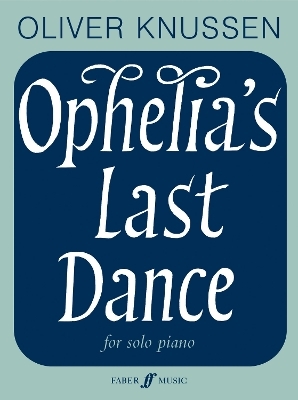
Ophelia's Last Dance
Seiten
2011
Faber Music Ltd (Verlag)
978-0-571-51930-9 (ISBN)
Faber Music Ltd (Verlag)
978-0-571-51930-9 (ISBN)
Ophelia's Last Dance for piano solo was commissioned by the Gilmore International Keyboard Festival and was first performed by the 2010 Gilmore Artist Kirill Gerstein on 3rd May 2010 at the Chenery Auditorium, Kalamazoo, Michigan, USA.
Ophelia's Last Dance (Ophelia Dances, Book 2) is based on a melody dating from early in 1974, which was among several ideas intended for - but ultimately excluded from - Oliver Knussen's Third Symphony (1973-79). Some of these evolved into the ensemble piece Ophelia Dances, Book 1 (1975), but this one, which nonetheless continued to haunt him from time to time over the years. After the death of his wife, Sue Knussen, it reminded the composer of a happier time and eventually, on the occasion of Paul Crossley's 60th birthday recital in 2004, he decided to give it a tiny frame of its own so it could be shared with listeners other than the one in his head. The present 10-minute work - written in 2009/10 - is the result. A number of other 'homeless' dance-fragments, related more by personal history and mood than by anything more concrete, are bound together by means of variously wrought transitions to and from rondo-like recurrences of the original melody.
'Superb... In it, darkness, dissonance and freezing high notes creep into the childlike idyll of the opening. The effect is one of austere sophistication.'
The New York Times (Zachary Woolfe), 23 April 2012
'A gorgeous, nostalgia-drenched, Scriabin-like waltz.'
The Guardian (Andrew Clements), 28 May 2012
Ophelia's Last Dance (Ophelia Dances, Book 2) is based on a melody dating from early in 1974, which was among several ideas intended for - but ultimately excluded from - Oliver Knussen's Third Symphony (1973-79). Some of these evolved into the ensemble piece Ophelia Dances, Book 1 (1975), but this one, which nonetheless continued to haunt him from time to time over the years. After the death of his wife, Sue Knussen, it reminded the composer of a happier time and eventually, on the occasion of Paul Crossley's 60th birthday recital in 2004, he decided to give it a tiny frame of its own so it could be shared with listeners other than the one in his head. The present 10-minute work - written in 2009/10 - is the result. A number of other 'homeless' dance-fragments, related more by personal history and mood than by anything more concrete, are bound together by means of variously wrought transitions to and from rondo-like recurrences of the original melody.
'Superb... In it, darkness, dissonance and freezing high notes creep into the childlike idyll of the opening. The effect is one of austere sophistication.'
The New York Times (Zachary Woolfe), 23 April 2012
'A gorgeous, nostalgia-drenched, Scriabin-like waltz.'
The Guardian (Andrew Clements), 28 May 2012
| Erscheint lt. Verlag | 21.12.2011 |
|---|---|
| Verlagsort | Harlow |
| Sprache | englisch |
| Maße | 232 x 311 mm |
| Gewicht | 86 g |
| Themenwelt | Kunst / Musik / Theater ► Musik ► Instrumentenkunde |
| Kunst / Musik / Theater ► Musik ► Klassik / Oper / Musical | |
| Sachbuch/Ratgeber ► Freizeit / Hobby ► Singen / Musizieren | |
| ISBN-10 | 0-571-51930-X / 057151930X |
| ISBN-13 | 978-0-571-51930-9 / 9780571519309 |
| Zustand | Neuware |
| Informationen gemäß Produktsicherheitsverordnung (GPSR) | |
| Haben Sie eine Frage zum Produkt? |
Mehr entdecken
aus dem Bereich
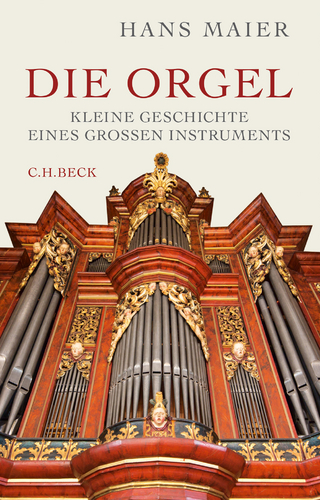
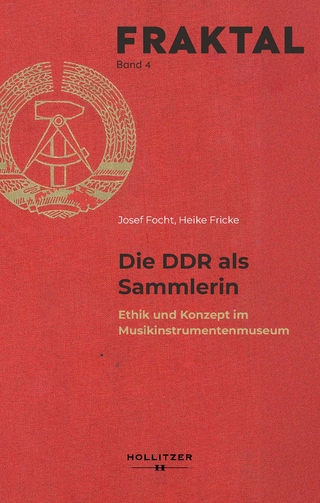

aus dem Bereich
kleine Geschichte eines großen Instruments
Buch | Hardcover (2025)
C.H.Beck (Verlag)
CHF 34,90
Ethik und Konzept im Musikinstrumentenmuseum
Buch | Hardcover (2025)
Hollitzer Wissenschaftsverlag
CHF 43,90
Buch | Hardcover (2025)
Annette Betz im Ueberreuter Verlag
CHF 41,90


